Net metering, explained
Your grid connection becomes your battery. Extra power your panels make in summer turns into credits you spend in winter, and your utility does the accounting for you.
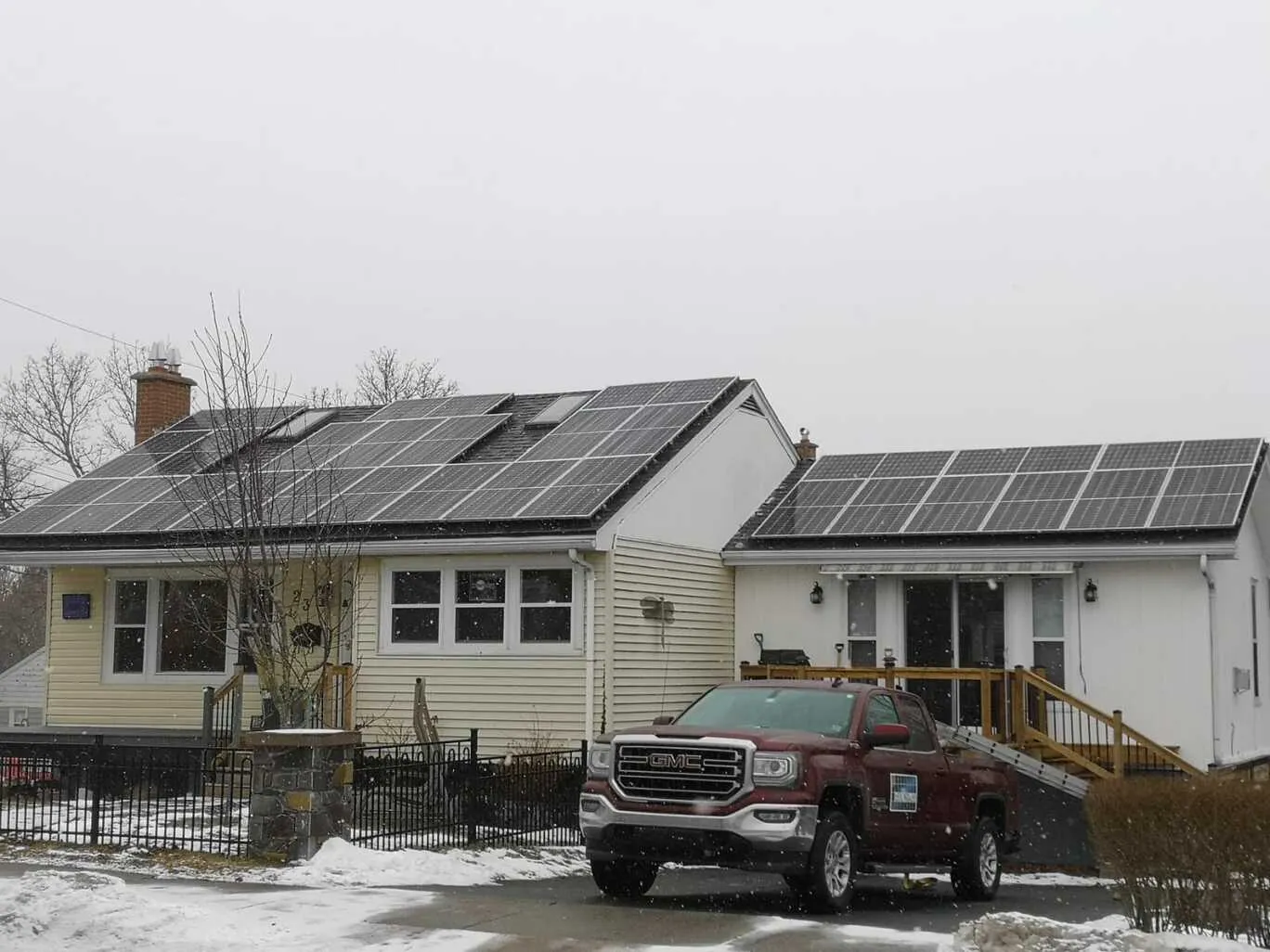
Credit for what you export
A kilowatt-hour sent to the grid comes back to you as a kilowatt-hour of credit in most programs where we install.
The billing cycle that matters
Credits carry across seasons, so a summer surplus is what pays for December. Programs settle up annually.
Paperwork on your plate
Xolar files the interconnection application, coordinates the meter swap and handles the utility back and forth.
How a net meter works
A standard meter only counts electricity flowing into your home. A bi-directional net meter counts both directions, so your utility can tell the difference between the power you used and the power you sent back.
Panels produce
Your array generates DC power, the inverter converts it, and your home draws from it first.
Surplus exports
Anything your home is not using at that moment flows out through the meter to the grid.
Credits accrue
The utility logs the export and posts a credit to your account for that amount.
You draw it back
At night and through winter you pull from the grid and your banked credits cover it.
Programs where we install
Every utility runs its own version. The size cap, the credit expiry and the paperwork all differ. Pick your province to see the terms we design your system around.
New Brunswick
- Program:
- Net Metering Program
- Rate Type:
- Rolled forward as kWh
- Max System:
- Up to 100 kW
- Rollover:
- 12 months (March true-up)
Applications go in before the install and are approved against your historical consumption, so oversizing is not permitted. We size to your usage and keep the paperwork on file for you.
Nova Scotia
- Program:
- Enhanced Net Metering
- Rate Type:
- kWh credits on your bill
- Max System:
- Up to 100 kW
- Rollover:
- 12 months
Interconnection is handled through Nova Scotia Power with an approved installer. Credits offset the energy portion of your bill; fixed service charges still apply each month.
Prince Edward Island
- Program:
- Net Metering Service
- Rate Type:
- kWh credits carried forward
- Max System:
- Up to 100 kW
- Rollover:
- Credits expire Oct 31 annually
PEI pairs net metering with one of the strongest provincial rebate programs in the country. Maritime Electric credits 1:1, and we check your eligibility for both in the same visit.
Newfoundland & Labrador
- Program:
- Net Metering Service
- Rate Type:
- kWh credits on your account
- Max System:
- Up to 100 kW
- Rollover:
- 12 months
Winter loads here are high, which means most of the year your system offsets directly rather than banking. Sizing accuracy matters more than in milder provinces.
Ontario
- Program:
- Ontario Net Metering (O. Reg. 541/05)
- Rate Type:
- Dollar credits at your retail rate
- Max System:
- Up to 500 kW
- Rollover:
- Up to 12 months
Ontario credits are dollar-based, so the value of a banked kilowatt-hour depends on the rate plan you are on. Time-of-use and tiered plans produce meaningfully different results.
Alberta
- Program:
- Micro-Generation Regulation
- Rate Type:
- Dollar credit for exported energy
- Max System:
- Up to 5 MW
- Rollover:
- Indefinite
Alberta is a retail market, so your export rate is a term of your energy contract rather than a fixed provincial rule. It is worth comparing retailers before you activate.
British Columbia
- Program:
- Net Metering
- Rate Type:
- ~10 cents/kWh export rate (new systems)
- Max System:
- Up to 100 kW
- Rollover:
- 12 months (annual true-up)
BC Hydro closed net metering to new customers on July 1, 2026. New systems are credited at a fixed export rate rather than the retail rate, which changes the sizing maths considerably.
Saskatchewan
- Program:
- Net Metering
- Rate Type:
- 7.5 cents/kWh (about half retail)
- Max System:
- Up to 100 kW
- Rollover:
- Credits held until account closure
SaskPower credits exports at 7.5 cents/kWh under a program extended to 2029. With retail around 18 cents, self-consumption is worth more than export here.
Manitoba
- Program:
- Net Billing
- Rate Type:
- Export rate (below retail)
- Max System:
- Up to 200 kW
- Rollover:
- Monthly settlement
Manitoba settles monthly rather than annually and credits below retail, so there is no seasonal banking to rely on. This is the province where a battery changes the answer most.
Quebec
- Program:
- Net Metering
- Rate Type:
- Retail rate
- Max System:
- Up to 50 kW (residential)
- Rollover:
- 12 months
Hydro-Quebec credits at the retail rate, but Quebec's retail rate is the lowest in the country, which lengthens payback relative to the Maritimes.
| Province | Program Name | Rate Type | Max System | Credit Rollover | Key Highlights |
|---|---|---|---|---|---|
| New Brunswick | Net Metering Program | Rolled forward as kWh | Up to 100 kW | 12 months (March true-up) | Applications go in before the install and are approved against your historical consumption, so oversizing is not permitted. We size to your usage and keep the paperwork on file for you. |
| Nova Scotia | Enhanced Net Metering | kWh credits on your bill | Up to 100 kW | 12 months | Interconnection is handled through Nova Scotia Power with an approved installer. Credits offset the energy portion of your bill; fixed service charges still apply each month. |
| Prince Edward Island | Net Metering Service | kWh credits carried forward | Up to 100 kW | Credits expire Oct 31 annually | PEI pairs net metering with one of the strongest provincial rebate programs in the country. Maritime Electric credits 1:1, and we check your eligibility for both in the same visit. |
| Newfoundland & Labrador | Net Metering Service | kWh credits on your account | Up to 100 kW | 12 months | Winter loads here are high, which means most of the year your system offsets directly rather than banking. Sizing accuracy matters more than in milder provinces. |
| Ontario | Ontario Net Metering (O. Reg. 541/05) | Dollar credits at your retail rate | Up to 500 kW | Up to 12 months | Ontario credits are dollar-based, so the value of a banked kilowatt-hour depends on the rate plan you are on. Time-of-use and tiered plans produce meaningfully different results. |
| Alberta | Micro-Generation Regulation | Dollar credit for exported energy | Up to 5 MW | Indefinite | Alberta is a retail market, so your export rate is a term of your energy contract rather than a fixed provincial rule. It is worth comparing retailers before you activate. |
| British Columbia | Net Metering | ~10 cents/kWh export rate (new systems) | Up to 100 kW | 12 months (annual true-up) | BC Hydro closed net metering to new customers on July 1, 2026. New systems are credited at a fixed export rate rather than the retail rate, which changes the sizing maths considerably. |
| Saskatchewan | Net Metering | 7.5 cents/kWh (about half retail) | Up to 100 kW | Credits held until account closure | SaskPower credits exports at 7.5 cents/kWh under a program extended to 2029. With retail around 18 cents, self-consumption is worth more than export here. |
| Manitoba | Net Billing | Export rate (below retail) | Up to 200 kW | Monthly settlement | Manitoba settles monthly rather than annually and credits below retail, so there is no seasonal banking to rely on. This is the province where a battery changes the answer most. |
| Quebec | Net Metering | Retail rate | Up to 50 kW (residential) | 12 months | Hydro-Quebec credits at the retail rate, but Quebec's retail rate is the lowest in the country, which lengthens payback relative to the Maritimes. |
Need help understanding your province's program? Our solar experts will explain exactly how net metering works in your area and calculate your potential savings. →
Learn More about Net-Metering
Why Net Metering is Essential for Solar
Net metering maximizes the value of your solar investment and makes solar financially viable across Canada.
- 1
Maximum ROI
Earn full retail rate credits for every kilowatt-hour you export. In Ontario's Time-of-Use system, this means earning $0.203/kWh credits during peak solar hours.
- 2
Year-Round Savings
Excess credits from sunny summer months offset your electricity usage during shorter winter days. Balance your consumption across all seasons.
- 3
No Battery Required
The grid acts as your "virtual battery" storing excess energy as credits. Save $10,000-$15,000 compared to adding physical battery storage.
- 4
Automatic Process
Credits are calculated and applied automatically by your utility company. No manual tracking, no paperwork - it just works seamlessly in the background.
- 5
Increases Home Value
Homes with solar and net metering sell for 3-4% more on average. Buyers value the long-term electricity savings and environmental benefits.
- 6
Grid Stability
Distributed solar generation reduces strain on the grid during peak demand hours. You help your community while earning credits.
Questions we get every week
Do I get paid cash for the power I send back?
In most provinces, no.
You get credits measured in kilowatt-hours or dollars that offset future bills.
Net metering is designed to zero out your own consumption over a year, not to turn your roof into a revenue stream.
What happens to credits I never use?
Every program has a reconciliation date.
Unused credits at that point are generally cleared rather than paid out, which is exactly why we size systems to your consumption instead of to your available roof space.
Will my bill go to zero?
The energy portion can come close.
Fixed monthly service and delivery charges stay on the bill regardless of how much you generate, because you are still connected to the grid and using it as your storage.
Can I add panels later?
Usually yes, but an expansion means a new interconnection application and a fresh review against your consumption.
If you expect an EV or a heat pump within a few years, tell us now and we will design the array and conduit for it.
Does net metering keep my lights on in an outage?
No.
Grid-tied inverters are required to shut down during an outage so crews can work safely on the lines.
Backup power requires a battery and a critical load panel.
Want to know what your credits would look like?
Send us a recent power bill and we will size a system against your actual usage.
Pairing net metering with a battery? See how much a battery saves on Ontario time-of-use rates →