Solar panels in Oakville, Ontario : 4 Xolar installs in Oakville
In Oakville the trees cost you more than the latitude does.
Oakville is modelled at 1,160 kWh per kW a year — within about four per cent of the best figure anywhere in Ontario — with a payback of 9 to 12 years and an average saving of about $2,300. Geography is not what limits solar here. Mature tree cover is, and it varies street by street in a way no city–level number can capture, which makes the roof assessment the part of an Oakville quote worth reading closely.

Updated
Get Your Free Solar Quote
Custom solar solutions for Oakville, ON
Prefer to discuss your project first? Contact us or view our detailed quote form
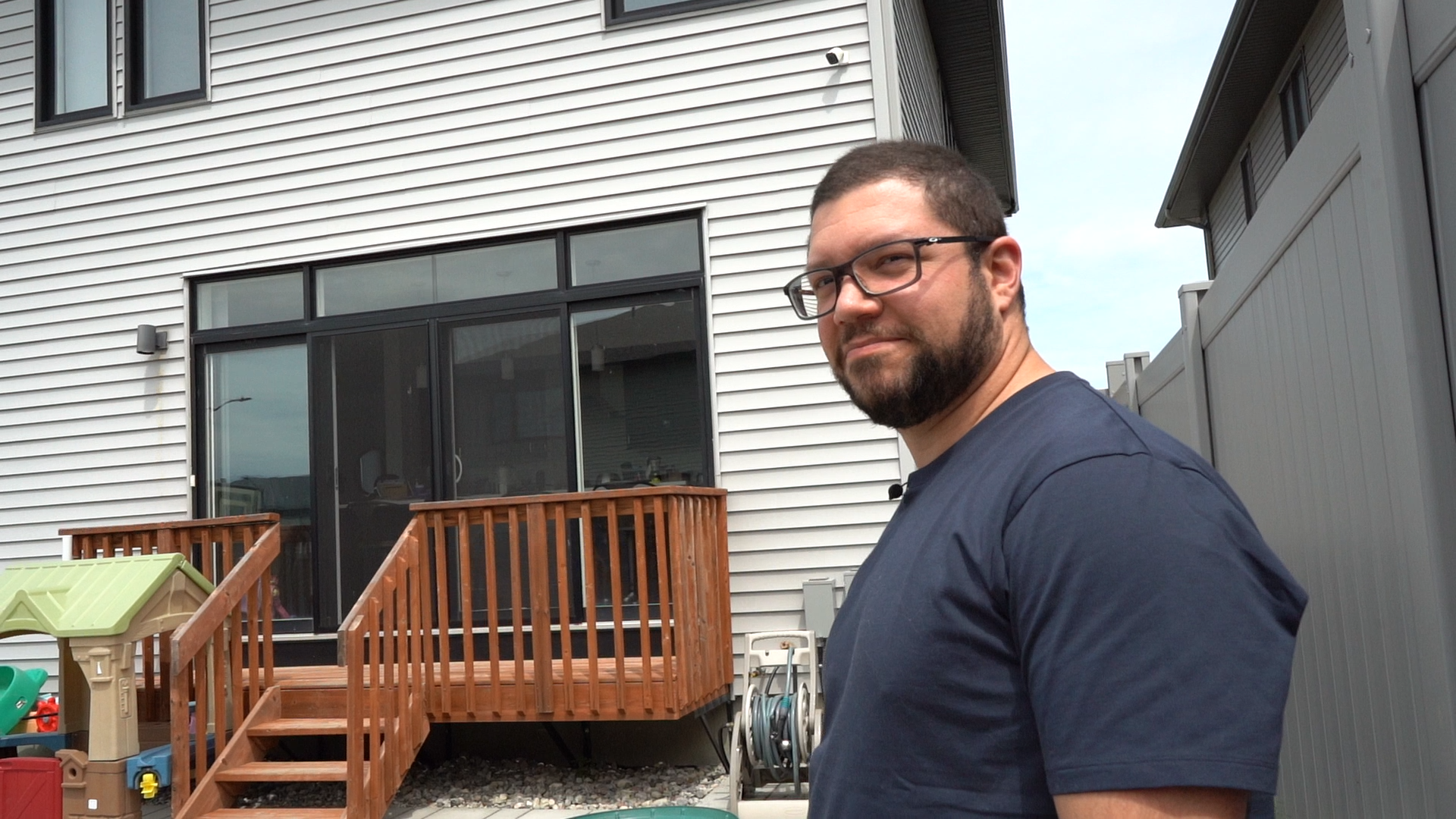
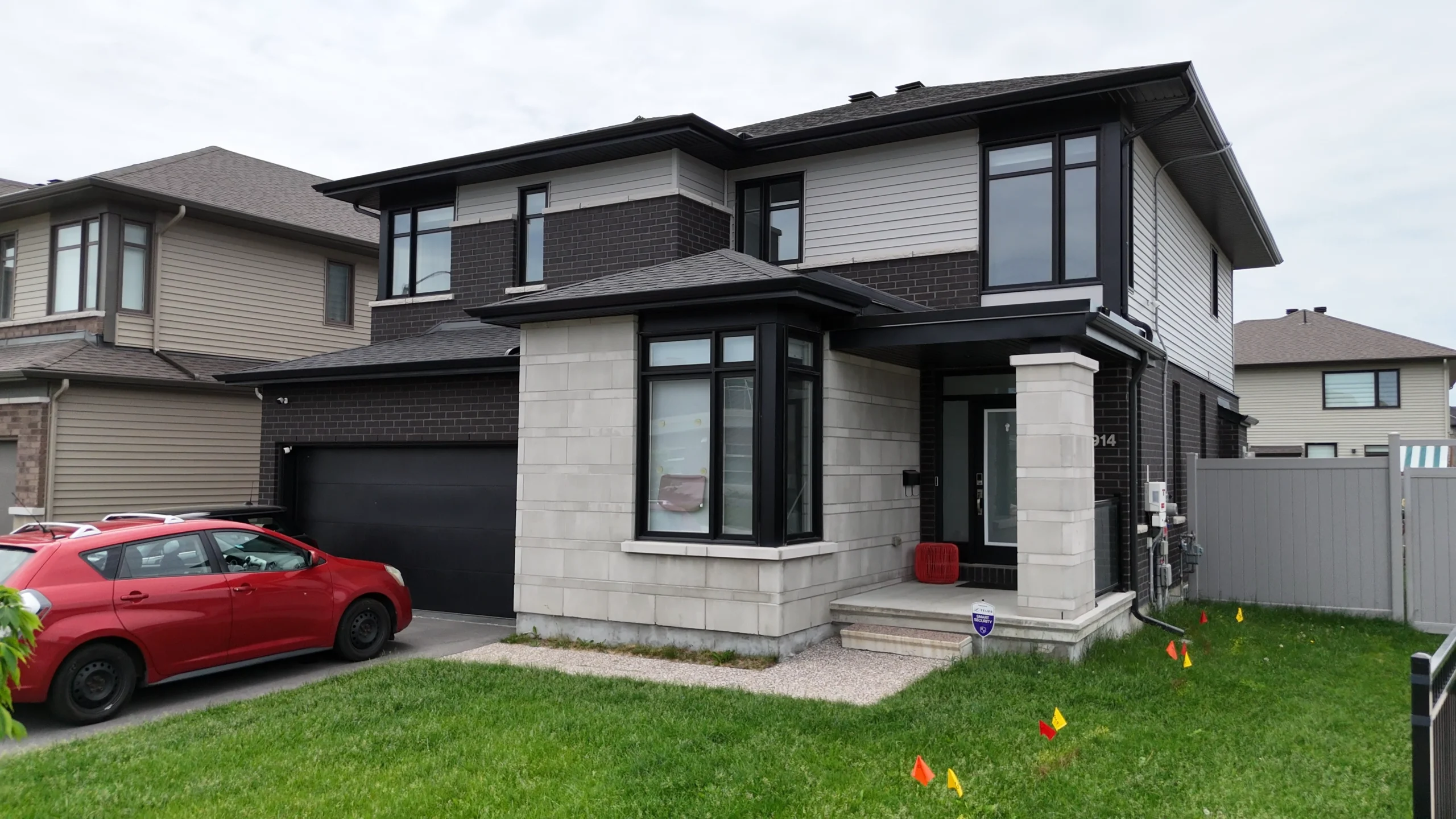
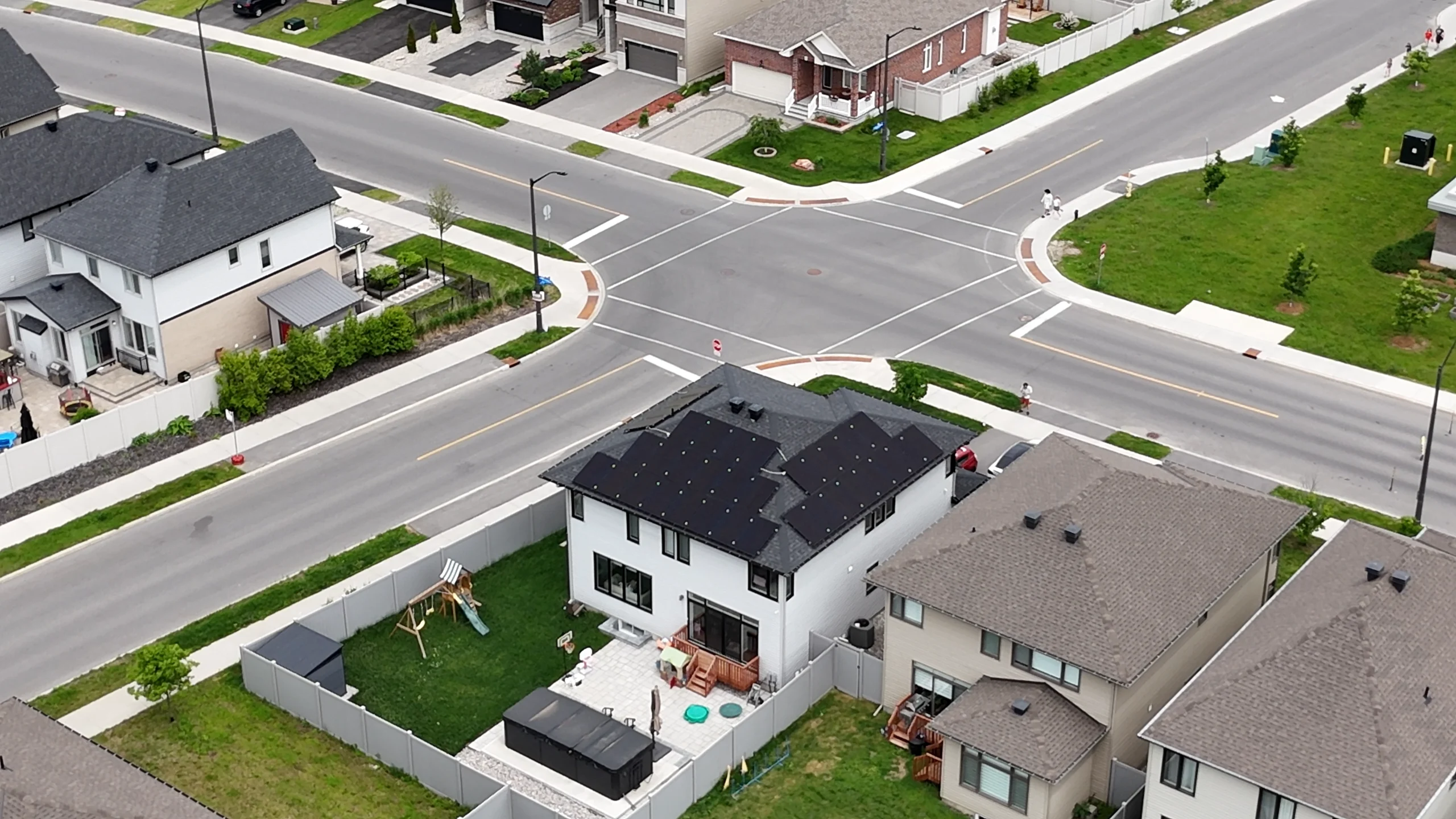
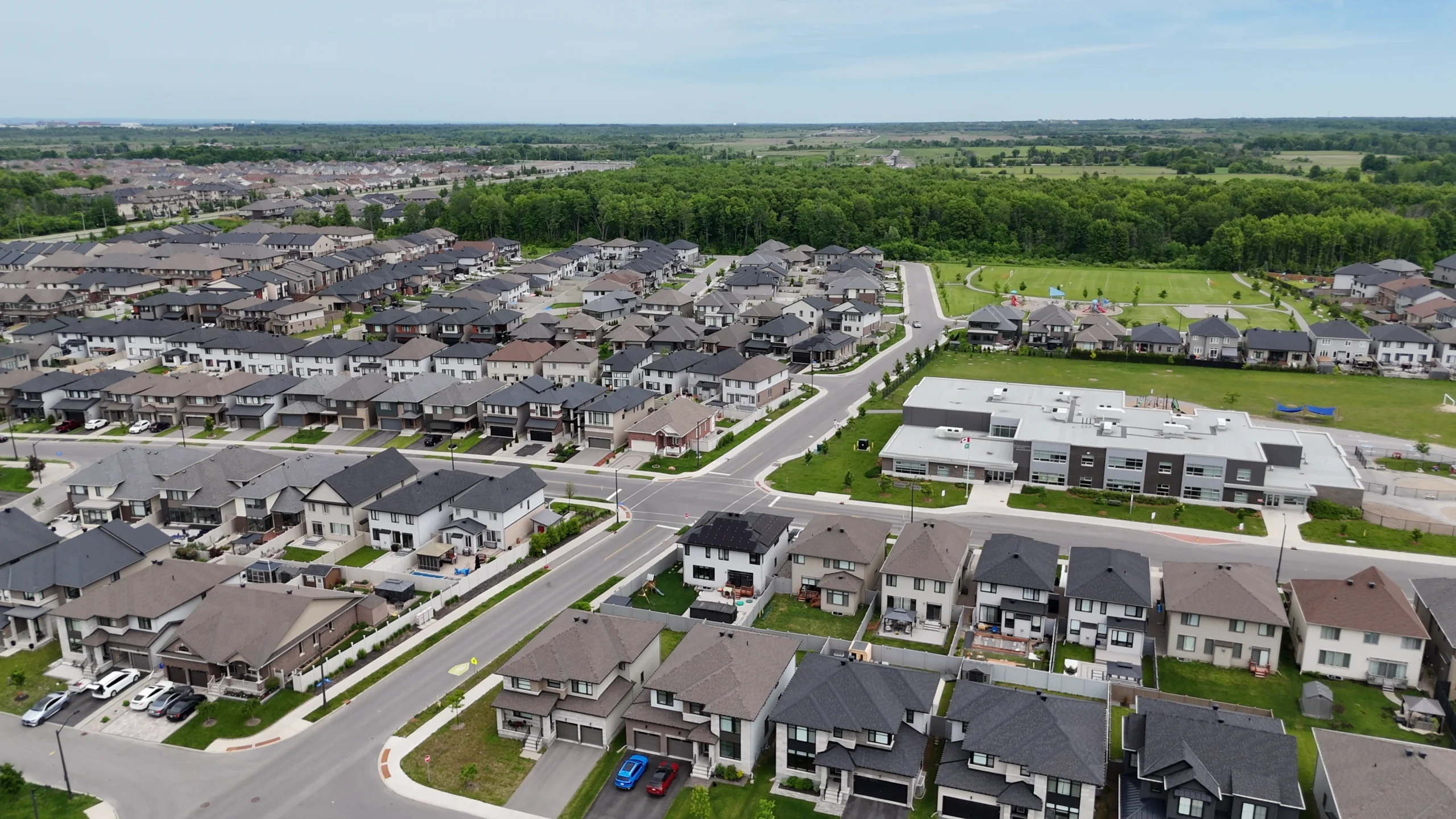
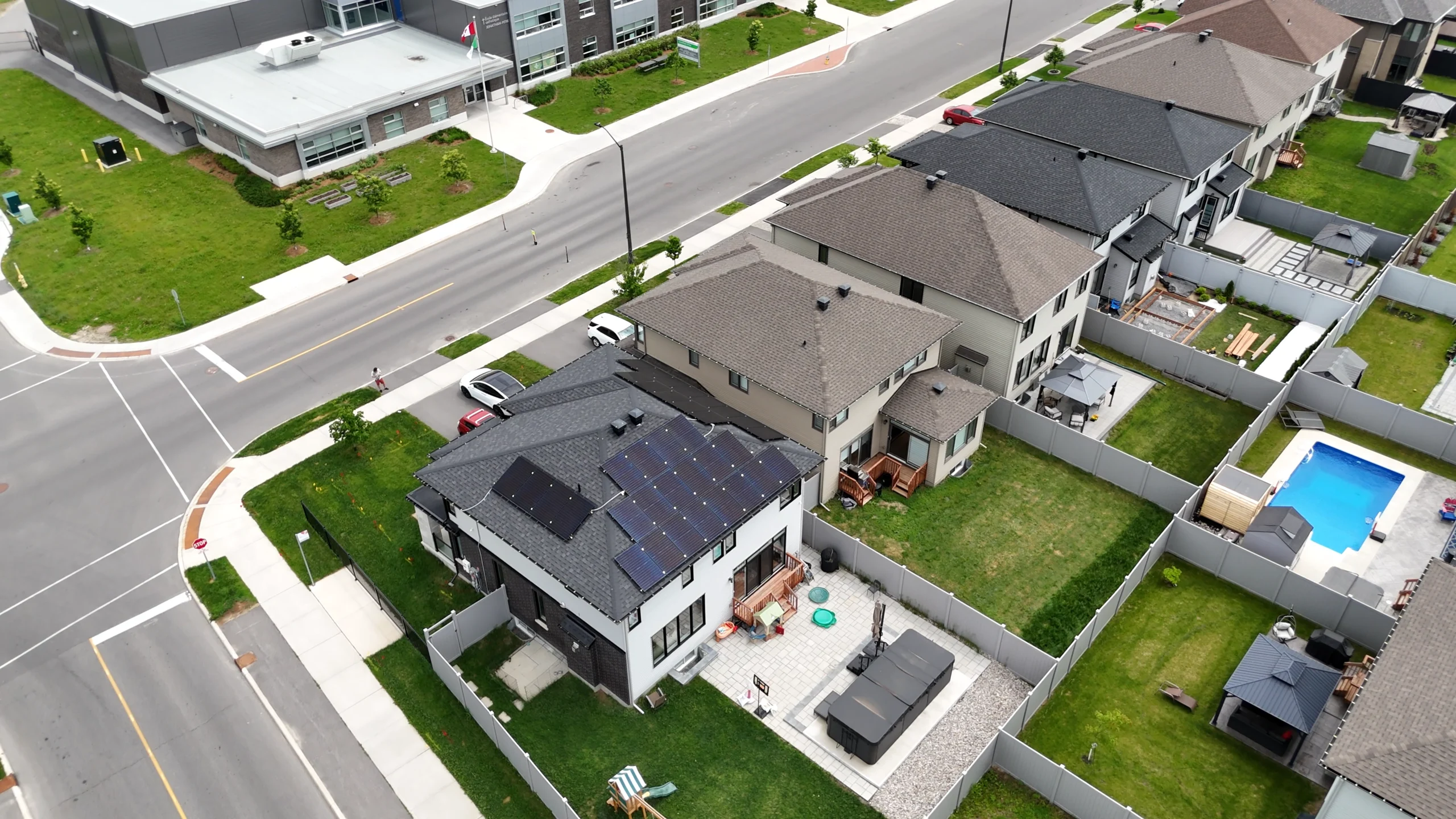
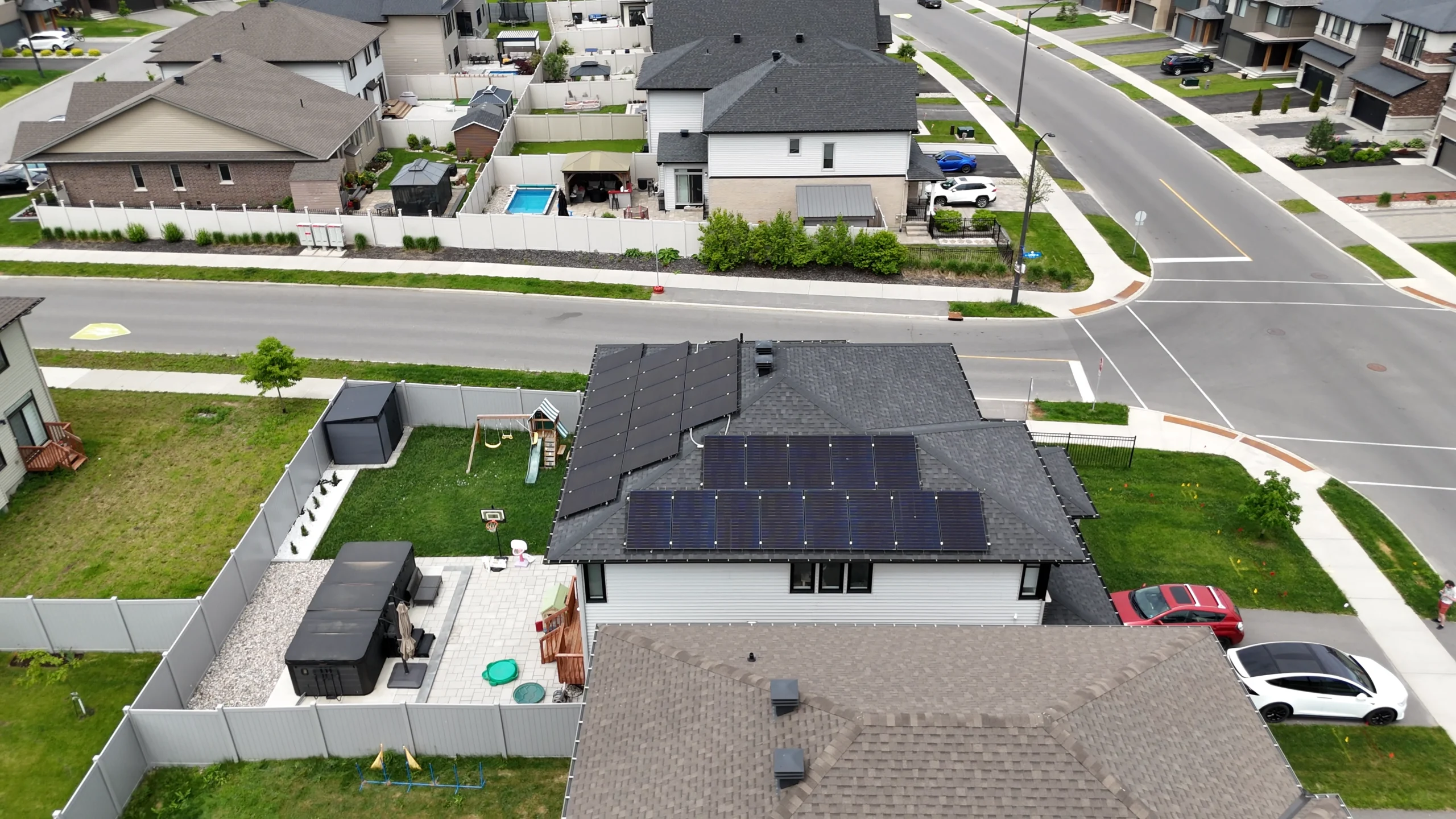
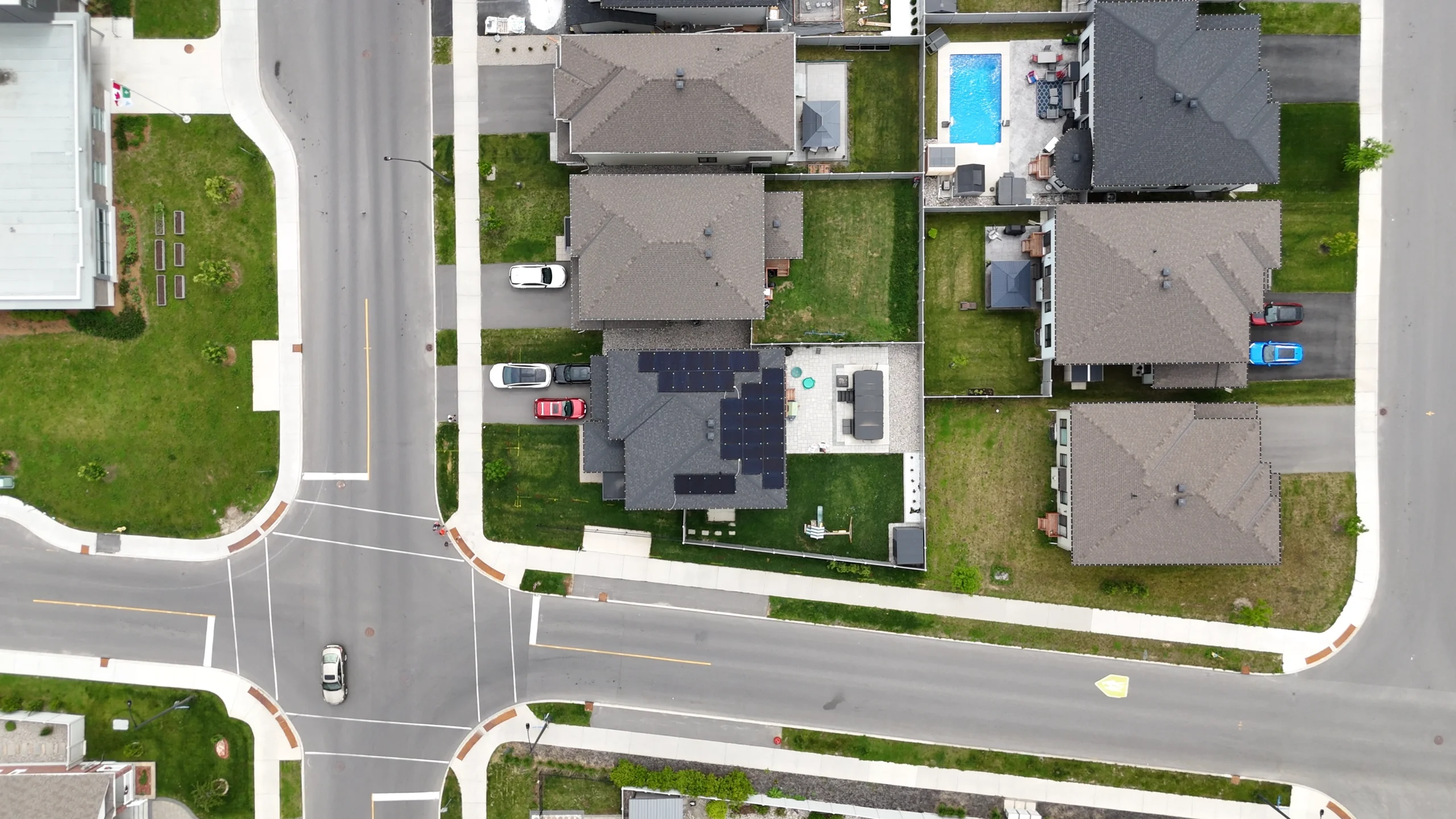


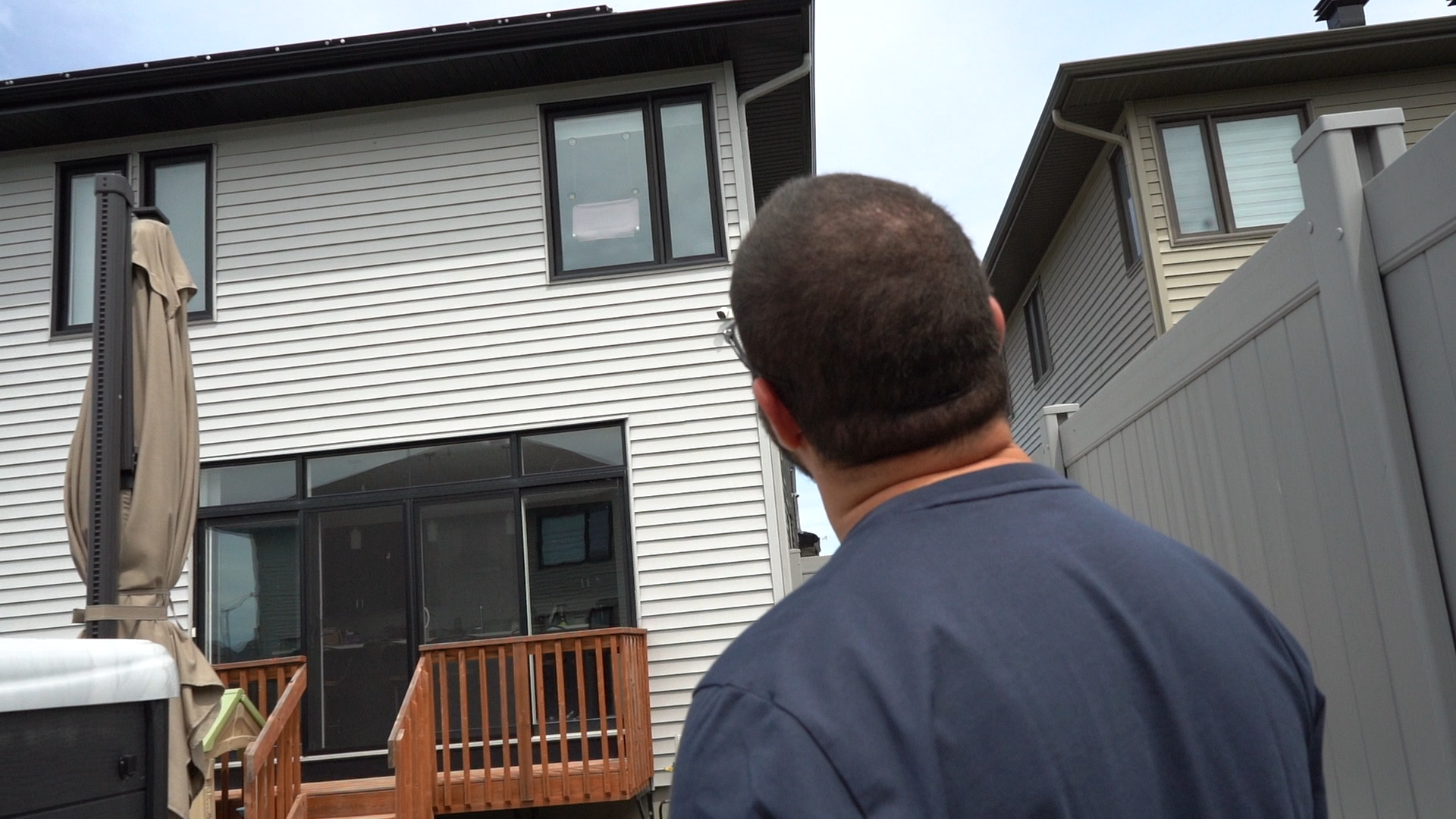
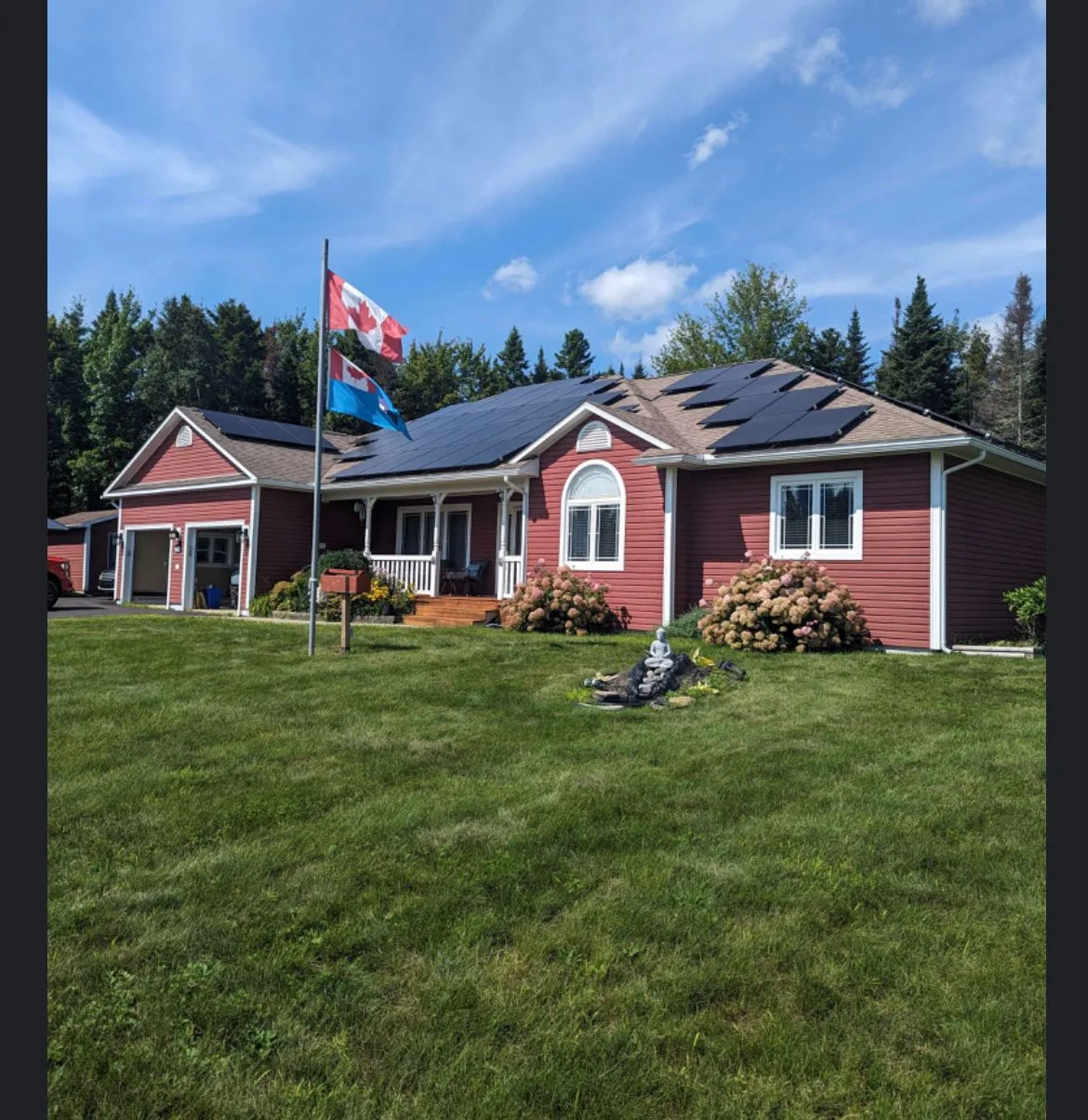
Ottawa — 14.2 kW rooftop
Completed January 2024
"With nearly all my household energy now coming from the sun, my monthly bills have plummeted — and it's not just about the savings, it's the positive environmental impact."
— Real Ottawa homeowner ★★★★★Real Xolar installs in Oakville
Completed systems across the Oakville service area — first-hand specs, not industry averages.
Swipe for more installs →
What 4 real Oakville installs tell us
Aggregated from completed Xolar systems in Oakville — first-hand data, not industry averages.
Oakville energy & net metering
What Oakville Hydro charges here, and how surplus solar is credited in Ontario.
Ontario’s Time–of–Use electricity rates range from 9.8¢/kWh (off–peak) to 20.3¢/kWh (on–peak), with mid–peak at 15.7¢/kWh (OEB RPP, Nov 2025–Oct 2026). Oakville electricity is distributed by Oakville Hydro. Solar panels generate most during daytime on–peak hours, earning you credits at the highest rate. The Ontario Electricity Rebate provides a 23.5% discount on your bill.
Oakville Hydro Time-of-Use rates in Oakville
Electricity prices per kilowatt-hour — OEB Regulated Price Plan, Nov 2025 – Oct 2026. The Ontario Energy Board sets them province-wide; only delivery charges differ by utility.
On-peak power costs 2.1× off-peak, and on summer weekdays (May to October) on-peak runs 11 a.m. to 5 p.m., the hours a rooftop array produces most. So the power a Oakville system offsets is the most expensive power the household buys.
How your system works behind the meter
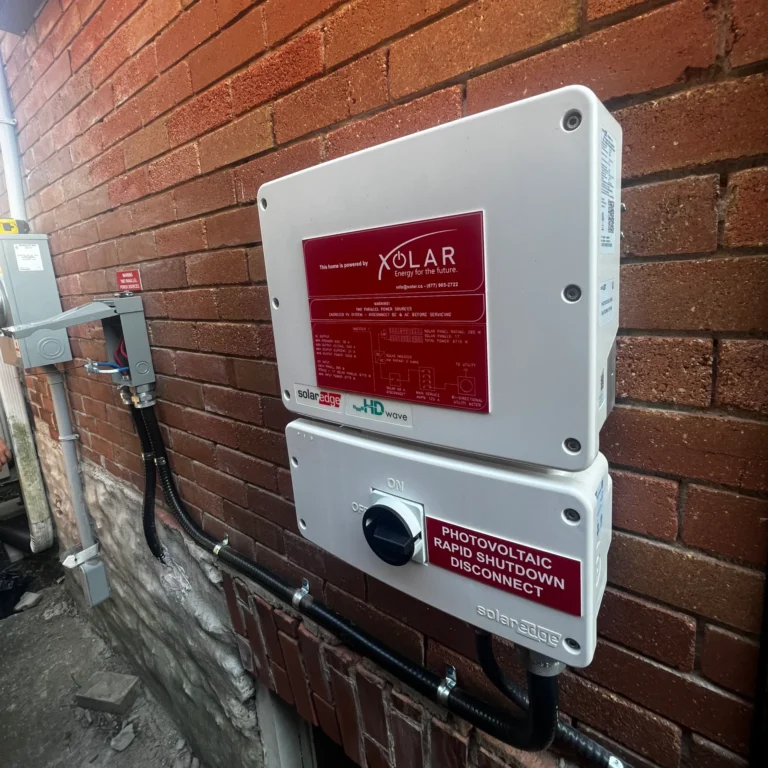
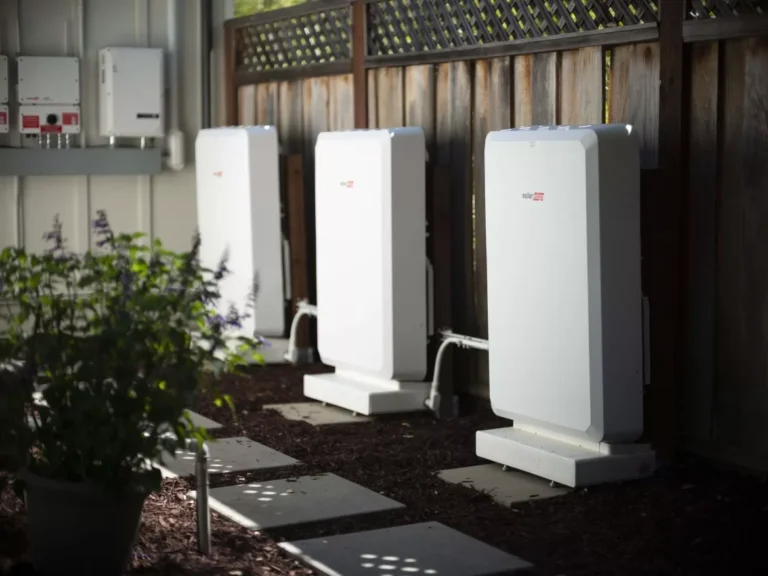
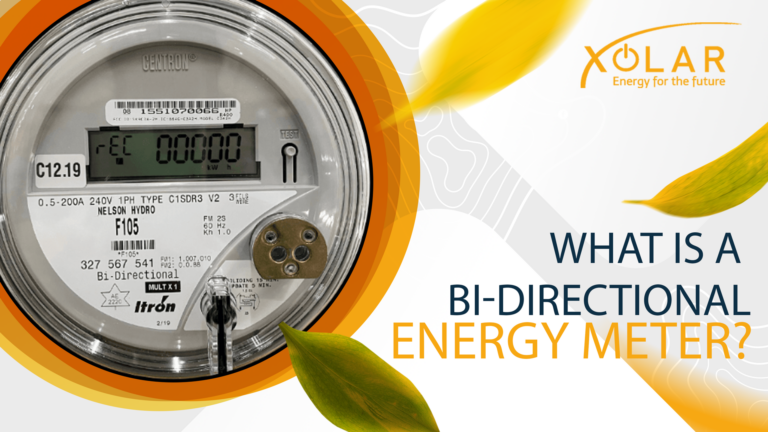
Most of a Oakville system's value comes from power used behind the meter — electricity your panels make and your home uses on the spot, offsetting energy you'd otherwise buy at 9.8–20.3¢/kWh. Only the surplus flows past the meter to Oakville Hydro for net-metering credit.
Rebates & incentives in Oakville
Every active local, provincial, federal and Xolar program a Oakville homeowner can stack. How the HRSP works, who qualifies and how to apply: Ontario solar rebates and incentives .
- Free heat pump install (valued up to $25,000) in Ontario for income-eligible homes with electric or oil heatOil to Heat Pump Affordability (Ontario, via Save on Energy)
- Up to $7,500 (air-source) / $12,000 (ground-source)Home Renovation Savings Program (HRSP) – Heat Pump
- Up to $5,000Home Renovation Savings Program (HRSP) – Solar
- Up to $5,000Home Renovation Savings Program (HRSP) – Battery
- Up to $1625Fall 2026 Sale – Battery
- Up to $2550Fall 2026 Sale – Solar
- Up to $475Fall 2026 Sale – Heat Pump
Heat pump installation in Oakville
Xolar installs cold-climate heat pumps in Oakville as well as solar. A ductless heat pump starts at $13,997 installed for one zone, and a central ducted system at $14,997, before rebates and tax.
The rebate is paid per ton, so a typical 3-ton system earns $3,750 in an electrically heated home. Pre-approval is required before installation.
Heat pump packages and prices → · How the Ontario heat pump rebate works →
Solar Panels in Oakville, Ontario
Oakville produces 1,160 kWh per kW annually. Oakville Hydro distributes electricity. Oakville’s established residential neighbourhoods with mature trees should consider a shading analysis before installation – south-facing roofs with clear exposure perform best.
Ontario’s net metering program credits excess solar at the full retail rate. HRSP ($5K solar + battery at $300/kWh up to $5K) or net metering available – but not both.
Ontario HRSP - Up to $10,000 for Solar + Battery
Ontario’s Home Renovation Savings Program (HRSP), launched January 2025, offers:
- Up to $5,000 for solar panels ($1,000/kW)
- Battery storage at $300/kWh up to $5,000 (about 16.7 kWh of storage reaches the cap)
- HRSP maximums are per category rather than one shared pot: up to $10,000 for solar and storage, up to $12,000 for heat pumps, up to $7,700 for insulation
Important – HRSP vs. Net Metering: Solar installed under HRSP must be sized for on-site load displacement only – net metering is not permitted under HRSP. If you prefer net metering (earning 1:1 credits for excess solar), you would not apply through HRSP. Your Xolar advisor can help determine which option provides the best return.
Note: The Canada Greener Homes Grant (closed February 2024) and Greener Homes Loan (closed October 2025) are no longer available.
Shading Costs an Oakville Roof More Than Its Latitude Ever Will
Oakville is modelled at 1,160 kWh per kW a year. The best figure in Ontario, Chatham-Kent, is 1,210 — so the whole geographic penalty for being here rather than in the sunniest corner of the province is about four per cent.
Partial shading routinely costs more than that, and it is the reason two Oakville houses on the same street can get very different answers from the same installer. Neighbourhoods like Glen Abbey, River Oaks and the older streets around downtown carry mature canopy that a satellite estimate tends to understate, because it sees the roof in a single moment rather than across a day and a season.
What matters is not simply whether trees are present but when their shadow falls. A tree to the north of the house is close to irrelevant. One to the south-west can take a serious bite out of exactly the late-afternoon hours that Ontario prices at 20.3 cents. And the shadow that clears the roof in June may sit across it in October, when the sun is lower — which is why a shading assessment done on a summer afternoon can flatter a roof considerably.
The questions worth asking are therefore specific. Was the shading modelled across the full year or estimated from imagery? Which hours are affected, and do they fall in the on-peak window? And if part of the array is shaded some of the time, how is the system laid out so that one shaded panel does not drag down a whole string?
That last question is the one that separates a considered Oakville design from a generic one.
What to Ask About a Partly Shaded Roof
If part of your roof is shaded for part of the day, the design decisions matter more than the panel choice. Three are worth understanding before you compare quotes.
The first is layout. Panels wired in a series string behave, in the simplest configurations, somewhat like a chain: heavy shade on one panel can pull down the output of others on the same string. Grouping panels so that shaded and unshaded areas sit on separate strings limits that. Ask how the array is divided and why.
The second is module-level electronics. Optimisers and microinverters let each panel operate more independently, so a shaded panel affects itself far more than its neighbours. They cost more per panel and add components to the roof. On a genuinely clear roof they buy you relatively little; on a partly shaded Oakville roof they can be the difference between a design that works and one that disappoints. The right answer is specific to your roof, so be wary of an installer who always recommends the same approach regardless.
The third is simply which planes to use. It is often better to put fewer panels on a good plane than to fill a compromised one. A quote that maximises panel count is not automatically the quote that maximises production, and the two are easy to confuse when you are comparing headline system sizes.
None of this is exotic, and a competent installer will raise it unprompted. If a quote for an Oakville address does not mention shading at all, that is worth a question — at 1,160 kWh per kW the resource is good enough that the roof, not the region, is what decides your result.
Explore More Solar Resources
Showing Ontario — 270 installs · 549 nationwide
Completed Xolar installations — each dot represents a city where we've installed solar.
Areas We Serve in Oakville
Professional solar panel installation available in these Oakville neighborhoods and communities:
What Oakville homeowners say

Swipe for more reviews →
"Solar quote from Sask; Spencer was very informative and prepared for our meeting; summary email and quote was sent immediately after our call; would recommend discussing solar panel options with him;"

"Great feedback! Professional advice in the interest of the client! Definitely considering Xolar!"

"Ross was amazing to speak with. He explained everything very well."

Oakville solar questions
Does tree shading affect solar in Oakville?
It can.
Oakville’s mature tree canopy means a shading analysis is important.
South-facing roofs with clear exposure perform best.
Your Xolar site assessment will identify optimal panel placement.
What solar rebates are available in Oakville?
Ontario’s HRSP provides up to $5,000 for solar ($1,000/kW) + battery storage at $300/kWh up to $5,000.
Important: HRSP solar cannot use net metering – customers must choose one or the other.
The federal Greener Homes Grant and Loan programs are both closed.
Who provides electricity in Oakville?
Oakville Hydro distributes electricity in Oakville.
Ontario’s Time-of-Use rates: 9.8¢ off-peak, 15.7¢ mid-peak, 20.3¢ on-peak (OEB RPP, Nov 2025-Oct 2026).
The Ontario Electricity Rebate provides a 23.5% discount.
How does net metering work in Oakville?
Oakville Hydro offers 1:1 net metering – excess solar earns credits at the full retail rate.
Credits roll over for 12 months.
As of May 1, 2026, systems up to 12 kW qualify for Ontario’s simplified micro-embedded connection process (up from 10 kW); larger systems can still net-meter through the standard connection process.
Note: Solar under HRSP cannot use net metering.
Should I remove trees to make solar work in Oakville?
Usually not, and it is worth resisting the suggestion if it comes from someone selling you panels.
Mature trees carry real value — shade that cuts summer cooling load, stormwater and property value among it — and Oakville regulates the removal of many of them.
The better sequence is to model the shading properly across a full year, see how much production is actually at stake and in which hours, and then design around it: separate strings, module-level electronics where they earn their cost, or simply a smaller array on the clearest plane.
Removal is occasionally the right answer for one badly placed specimen, but it should follow the analysis rather than substitute for it, and it should account for what the tree is doing for you.
How much sun does Oakville get compared with the rest of Ontario?
Oakville is modelled at 1,160 kWh per kW a year, which places it in the upper group of Ontario cities on this site — level with Brampton, Burlington and Hamilton, just behind Mississauga at 1,170, and about four per cent below Chatham-Kent at 1,210, the highest in the province.
That is a small geographic penalty, and it is smaller than what partial shading commonly costs a roof.
In practice an Oakville address is not the limiting factor in a solar decision; the specific roof, its orientation and its canopy are.
Get your free Oakville solar quote
A personalized proposal in 24 hours — system size, real pricing, and every rebate you qualify for. No pressure, no obligation.

Takes about a minute — no pressure, no obligation.
Solar system packages
All include install, permits & 25-yr warrantyMost popular choice for average Canadian homes
Solar installation across Ontario
We serve homeowners province-wide. View all Ontario service areas → Outside Ontario? Find a solar installer near you →