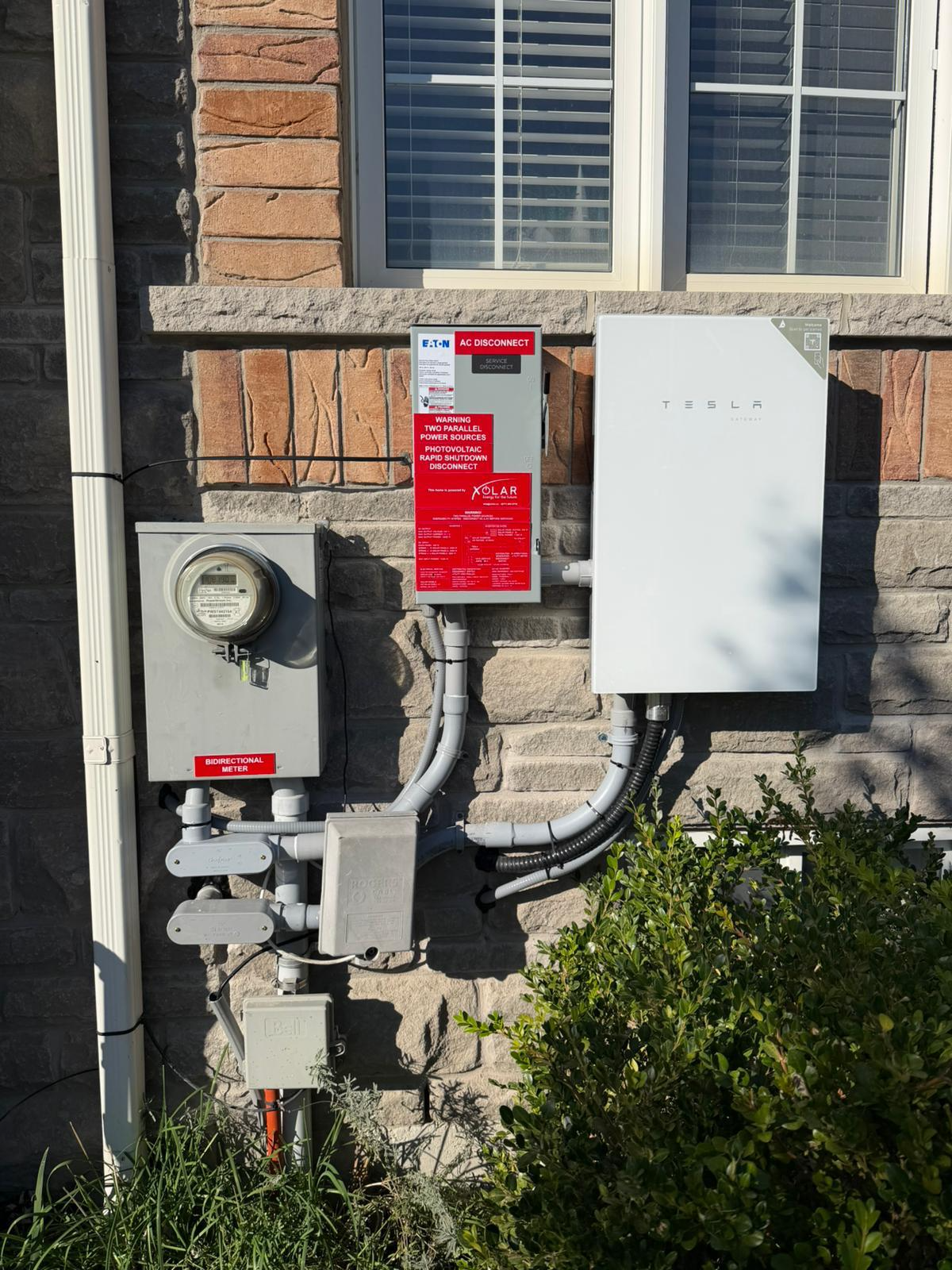
Home battery savings calculator
See what a Renon Xcellent or Tesla Powerwall could save each year by charging overnight at ultra-low rates instead of paying peak prices. Adjust your usage below for a live estimate.
Comparing batteries first? See our guide to home battery backup and Tesla Powerwall installation in Canada.
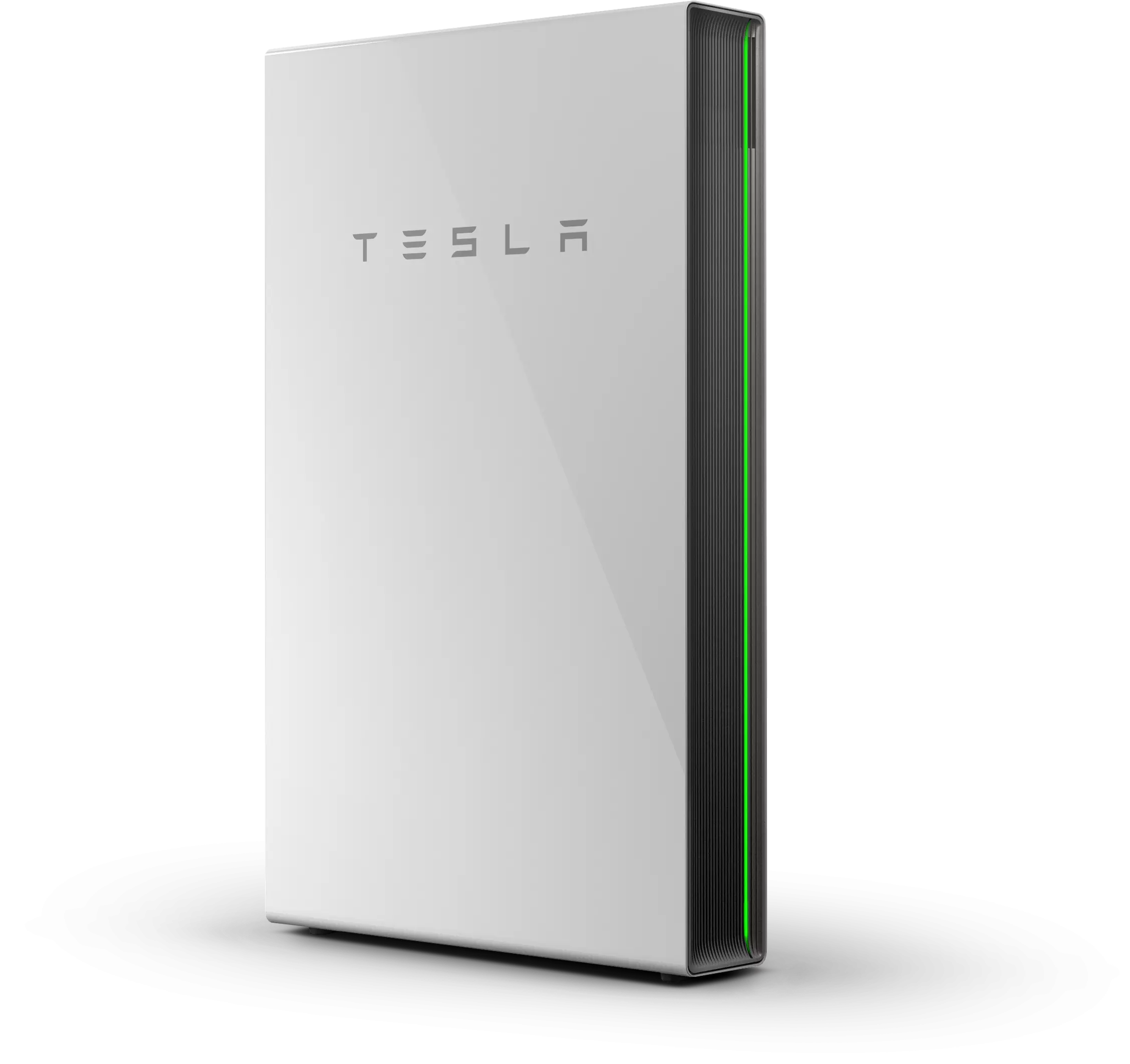
How a battery saves on time-of-use rates
On time-of-use pricing, power costs more at peak hours and far less overnight. A battery charges overnight at the ultra-low rate and runs your home the rest of the day — so every kWh is effectively bought at the overnight price.
More than just bill savings
Tesla Powerwall & home battery FAQ
Cost, rebates, lifespan, and how a battery pays off on time-of-use rates.
How much does a Tesla Powerwall cost in Canada?
A standalone Tesla Powerwall installed by Xolar in Ontario is about $23,997 before tax (roughly $27,100 with 13% HST).
Ontario’s Home Renovation Savings Program battery rebate only applies when the battery is installed together with new solar panels; in that case it pays $300/kWh, about $4,050 for one 13.5 kWh Powerwall 3.
A Powerwall added on its own does not qualify.
Enter your usage in the calculator above for a personalized cost, rebate, and payback estimate.
What is the Ontario battery rebate, and do I qualify?
Ontario’s Home Renovation Savings Program (HRSP) offers up to $5,000 back on a qualifying home battery for Ontario homeowners. The calculator applies it to your net cost automatically. You can see every current program on our Ontario rebates page.
How long does a Tesla Powerwall last?
Tesla warranties the Powerwall for 10 years.
In practice it’s expected to keep a meaningful share of its capacity well beyond that, especially under gentle daily time-of-use cycling rather than heavy fast-charging.
How many Powerwalls do I need for my home?
One Powerwall (about 13.5 kWh) covers the daily peak-shifting and essential backup needs of most homes.
Larger homes, whole-home backup, or pairing with solar can justify a second unit.
This calculator models a single battery.
How long can a Tesla Powerwall power a house?
On essentials — fridge, lights, internet, furnace fan — a single Powerwall typically runs a home for most of a day.
For whole-home loads including heating or air conditioning, expect a few hours.
Pairing with solar lets the battery recharge during an outage and run far longer.
Does a home battery pay off on time-of-use or ULO rates?
A battery saves by charging overnight when power is cheapest and powering your home the rest of the day.
On the Ultra-Low Overnight (ULO) plan that overnight rate is just 3.9¢/kWh, so every kilowatt-hour you’d otherwise buy at peak prices is effectively bought at the overnight price — that swap is what this calculator estimates.
A battery pays off fastest when paired with solar, which adds production and delivery-charge savings on top.
Tesla Powerwall vs. other home batteries?
Xolar’s main battery offering is the Renon Xcellent (16 kWh), a high-capacity battery at a lower installed price.
The Tesla Powerwall (13.5 kWh) remains popular for its built-in inverter and app.
Compare both using the battery selector in the calculator above.
Make the most of your battery
A battery saves more when it's part of a full system — and the rebate above is just the start.