Solar panels in St. Albert, Alberta
Slightly less sun than Edmonton, a slightly better return — and CEIP financing.
St. Albert is modelled at 1,250 kWh per kW a year with an average saving of about $2,050 and a payback of 8 to 11 years — a shorter band than neighbouring Leduc despite Leduc having marginally more sun. St. Albert also participates in Alberta’s Clean Energy Improvement Program, which finances solar through a charge on the property rather than a personal loan.

Updated
Get Your Free Solar Quote
Custom solar solutions for St. Albert, AB
Prefer to discuss your project first? Contact us or view our detailed quote form
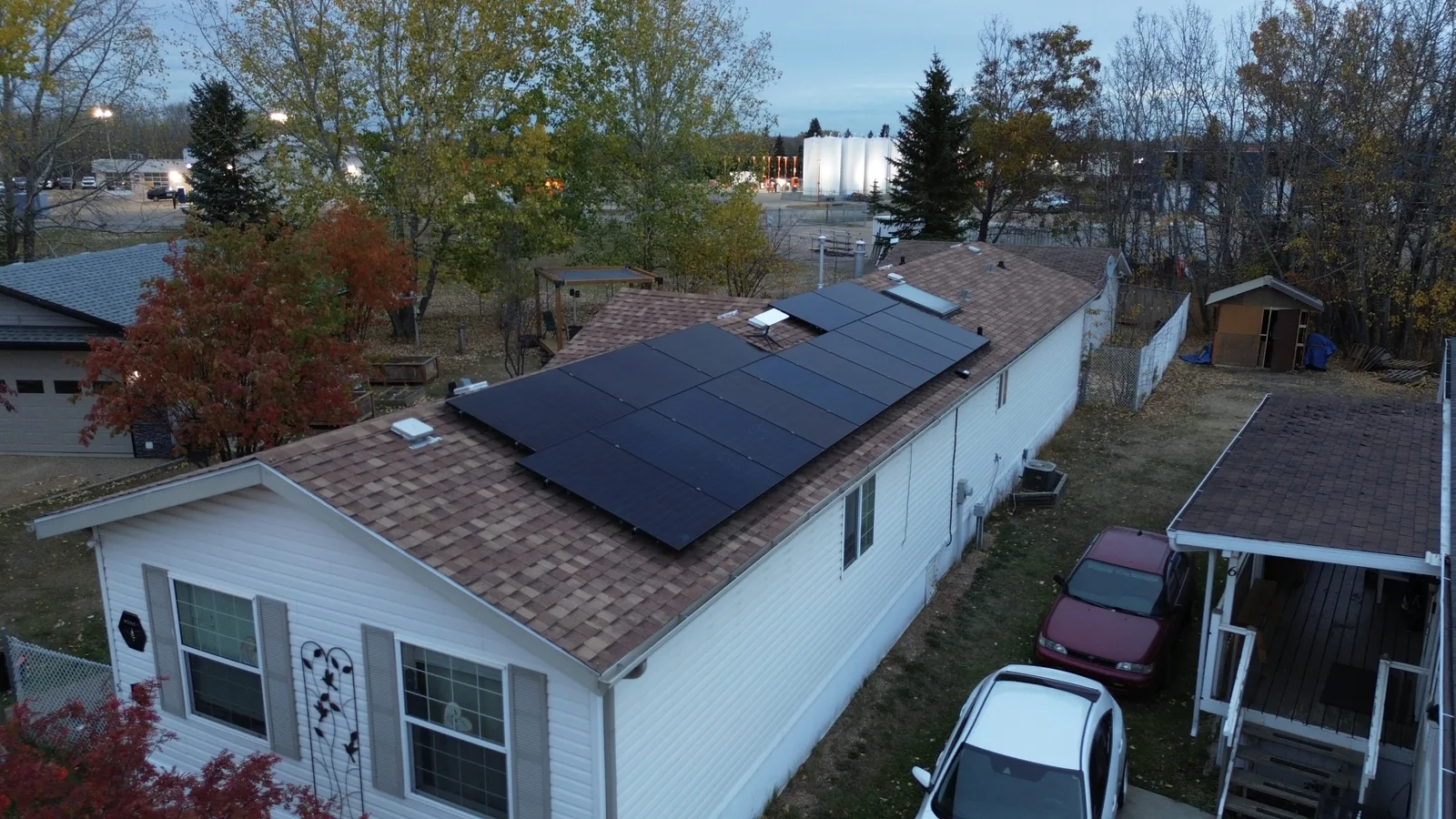
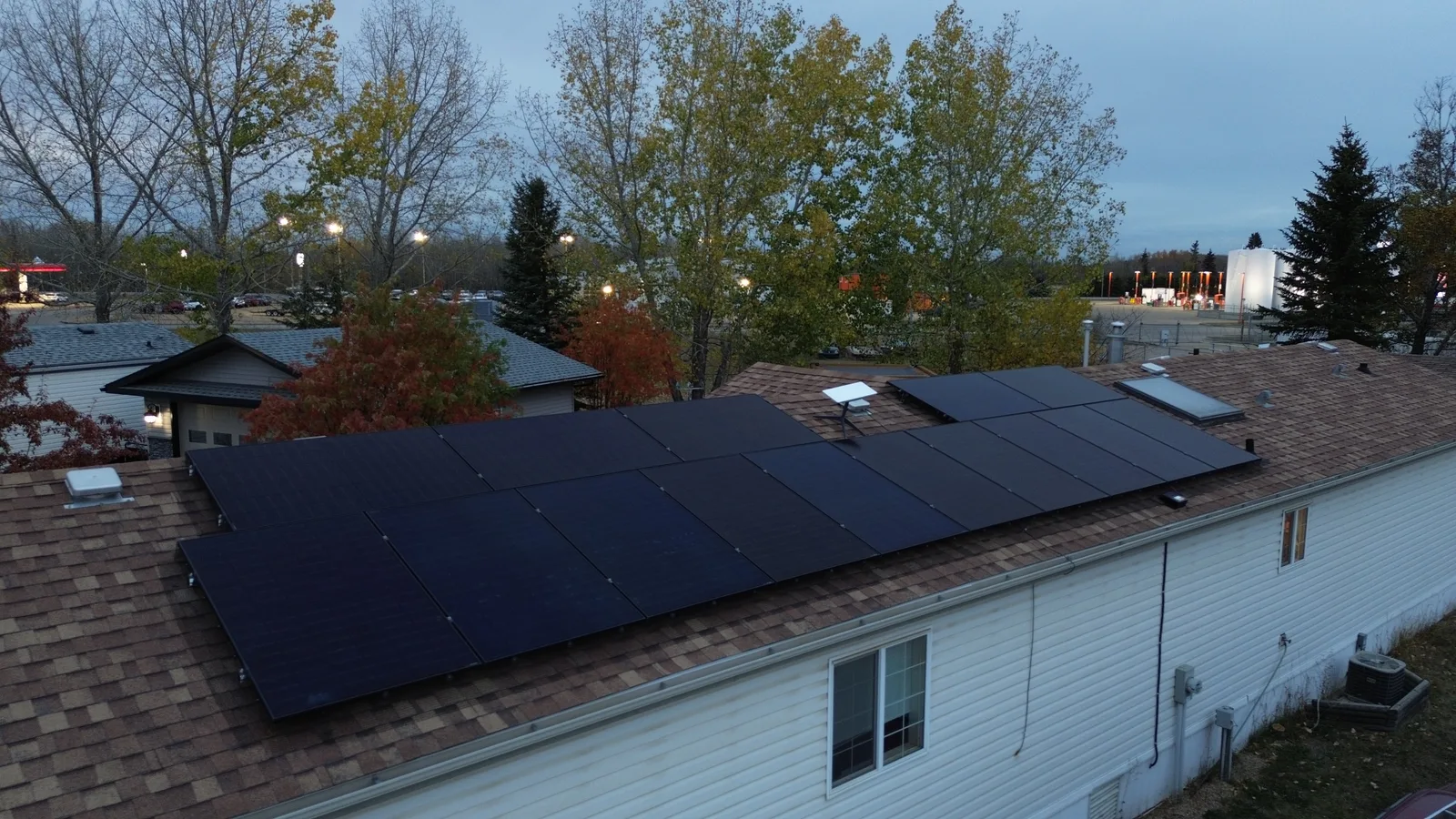
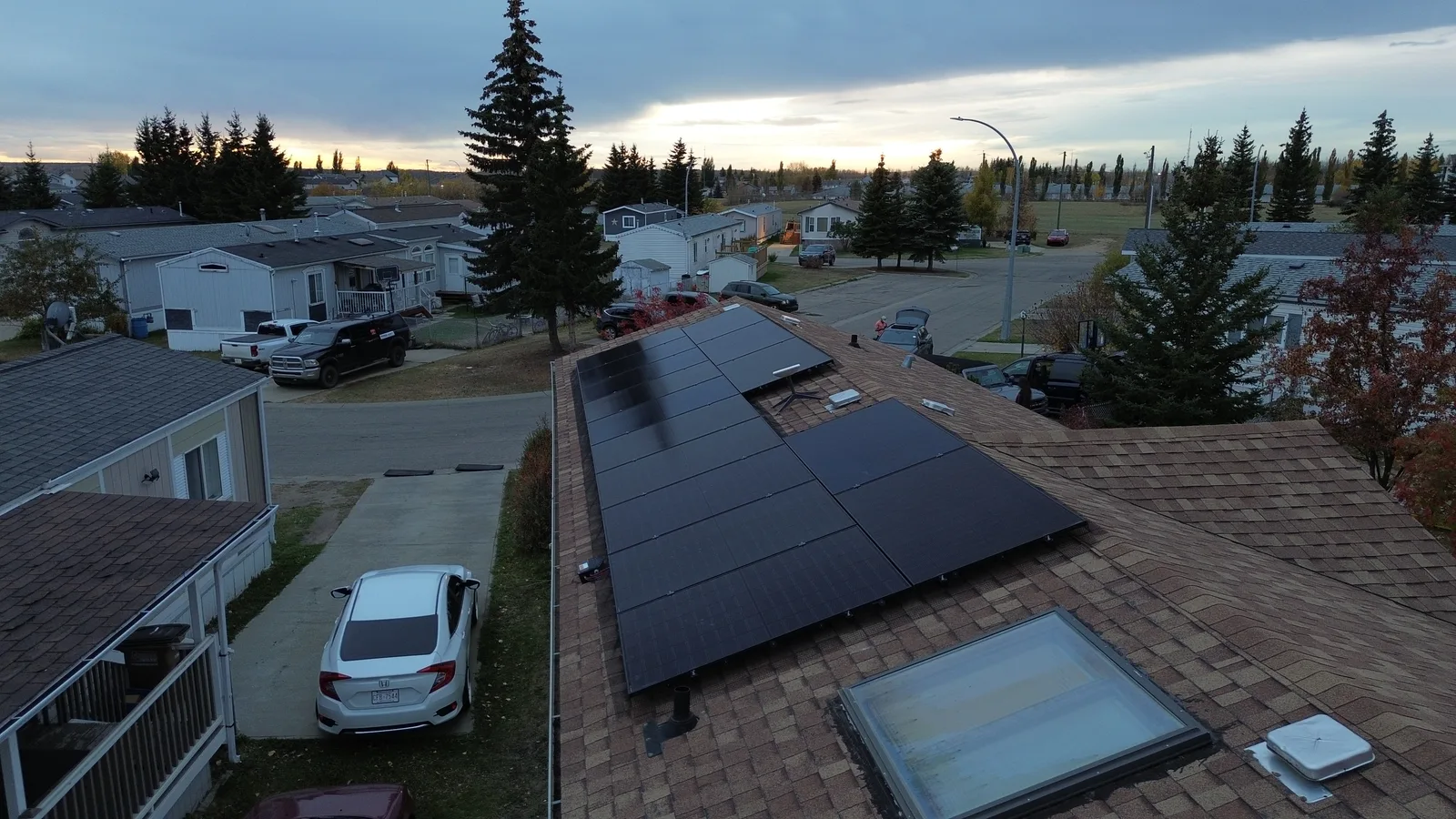
St. Albert — 6.8 kW rooftop
Completed November 2025
Real Xolar installs in St. Albert
Completed systems across the St. Albert service area — first-hand specs, not industry averages.
Swipe for more installs →
St. Albert energy & net metering
What FortisAlberta (distribution) charges here, and how surplus solar is credited in Alberta.
Alberta’s Rate of Last Resort is 12.01–12.06¢/kWh, fixed through December 2026. St. Albert benefits from Edmonton–area programs including CEIP financing.
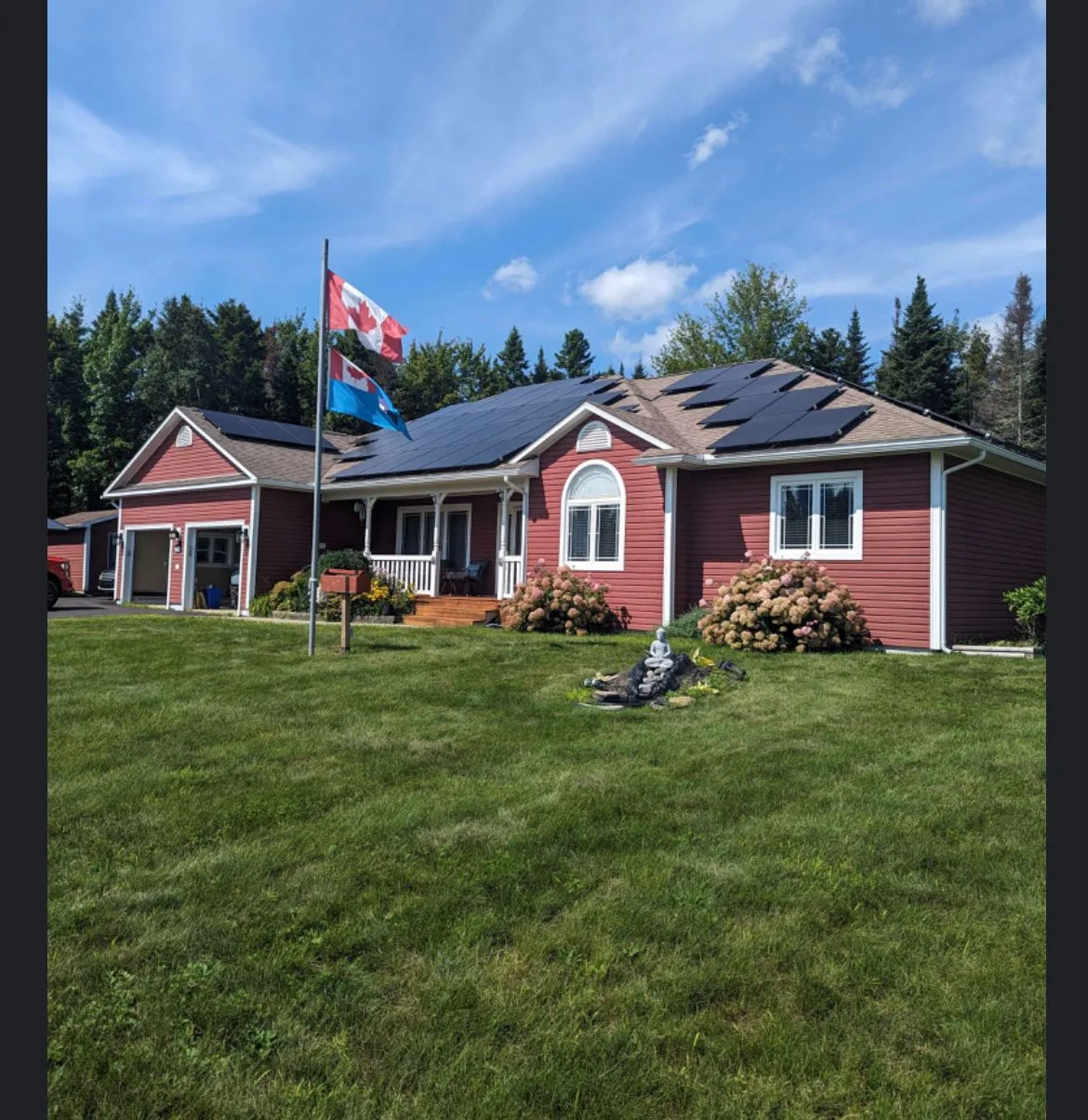
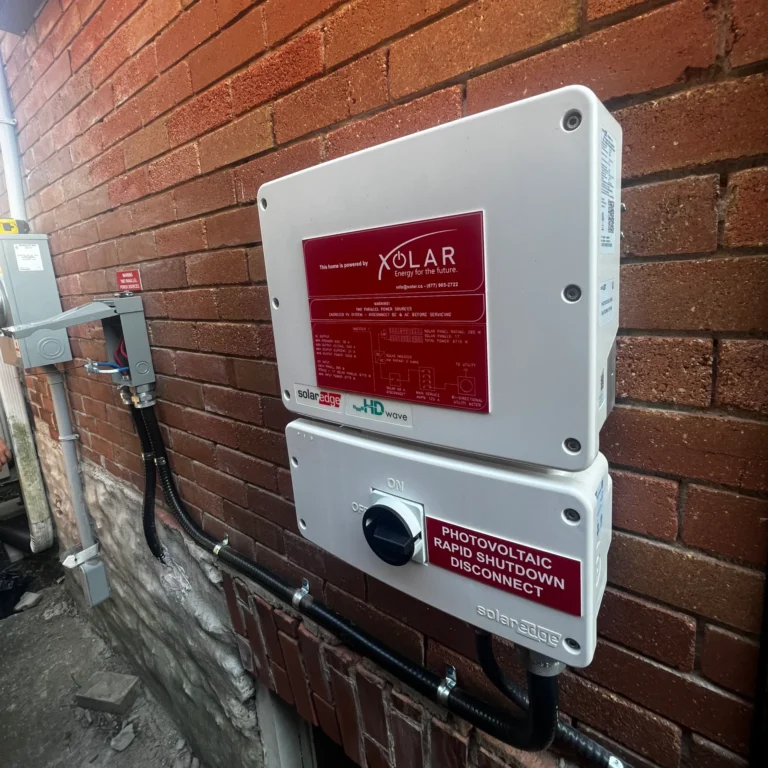
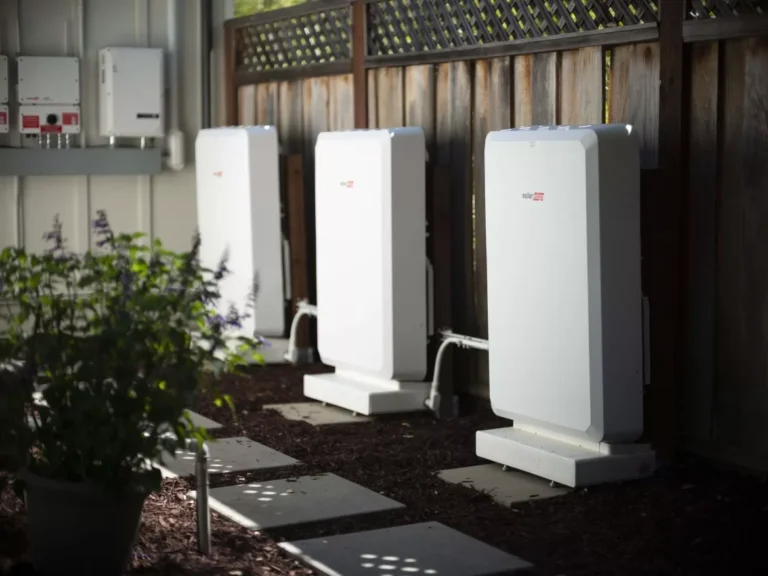
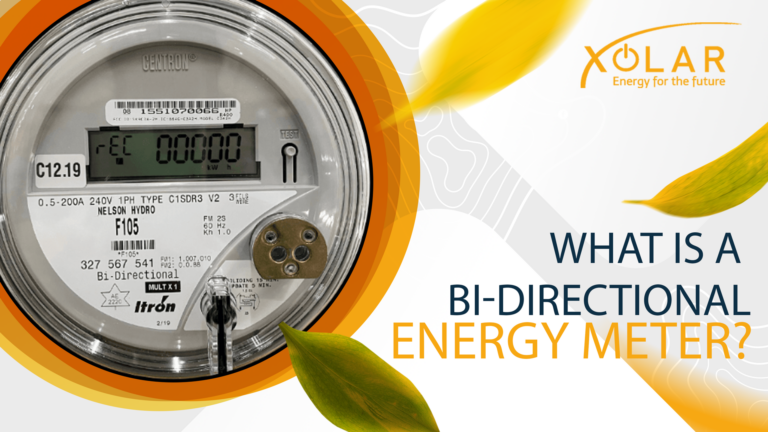
How your system works behind the meter
Most of a St. Albert system's value comes from power used behind the meter — electricity your panels make and your home uses on the spot, offsetting energy you'd otherwise buy at 12¢/kWh. Only the surplus flows past the meter to FortisAlberta (distribution) for net-metering credit.
Rebates & incentives in St. Albert
Every active local, provincial, federal and Xolar program a St. Albert homeowner can stack.
- Property-tax financing up to 100% (max $50,000); rates from 0% to about 6.1% by municipalityClean Energy Improvement Program (CEIP)
- 35¢/kWh HI export rate + 3% cash back (retail plan, not a rebate)Solar Club
- Up to $1625Fall 2026 Sale – Battery
- Up to $2550Fall 2026 Sale – Solar
- Up to $475Fall 2026 Sale – Heat Pump
Solar Panels in St. Albert
St. Albert, adjacent to Edmonton, benefits from the same excellent solar conditions and Edmonton-area programs including the CEIP financing option (where available). FortisAlberta handles distribution, and residents can choose their electricity retailer in Alberta’s deregulated market.
Alberta’s micro-generation regulation ensures full retail-rate credits with no interconnection fees.
In Alberta, Your Distributor and Your Energy Retailer Are Different Companies
This is the thing that most often confuses an Alberta homeowner comparing a quote against one from Ontario or BC, and it is worth settling before reading a savings estimate.
FortisAlberta owns and operates the wires reaching your St. Albert home and handles your solar interconnection. It does not sell you electricity. That comes from a retailer you choose — ENMAX, ATCO Energy, Direct Energy and others compete for it — so your bill splits into regulated distribution charges from FortisAlberta and a contracted energy rate from your retailer.
Under Alberta’s Micro-Generation Regulation you earn credits at the full retail rate for exported electricity, there are no interconnection fees, and credits are applied monthly. The phrase carrying the weight is “full retail rate”, because in a deregulated market that means your retailer’s rate rather than a provincial tariff. Two St. Albert households with identical arrays and identical production can be credited differently because they signed different contracts.
The Rate of Last Resort quoted on this page, about 12.01 cents per kilowatt-hour, is the fallback for customers who have not chosen a retailer. Treat it as a planning figure rather than as yours.
So the first step before comparing quotes is not to look at panels. It is to find the energy rate on your own bill, and then ask each installer which rate their projection assumed. In a deregulated province that single number moves the payback more than most equipment decisions do.
Less Sun Than Leduc, a Shorter Payback, and Why That Is Not a Contradiction
St. Albert is modelled at 1,250 kWh per kW a year. Leduc, on the other side of Edmonton, is 1,255 — marginally more. And yet this page quotes a payback of 8 to 11 years against Leduc’s 8 to 12, and an average saving of about $2,050 against Leduc’s $2,000.
The five kilowatt-hours per kilowatt separating the two towns are meaningless; a rounding difference in the modelling. What is doing the work is the household. A saving is production multiplied by the consumption it displaces, and the assumed St. Albert household draws slightly more — so the system is sized slightly larger, displaces slightly more, and recovers its cost slightly faster.
This is worth understanding because it generalises. Across this site, cities with weaker sun frequently show better savings than sunnier neighbours, and the reason is never meteorological. It is that solar systems are sized to bills, not to latitudes.
The practical consequence for you is that neither the St. Albert figure nor the Leduc one describes your house. If you heat with electricity, run a heat pump, or charge a car at home, your consumption is above the assumed average and your system — and your saving — will be larger. If you are in a compact, gas-heated house, both figures overstate your case.
Which is the long way of saying that twelve months of your own bills is the only input that matters, and any installer who quotes you a system without asking for them is guessing.
St. Albert Participates in the Clean Energy Improvement Program
Alberta has no residential solar rebate. There is no provincial cheque towards a system here, which is the single biggest difference from Ontario, where up to $10,000 is available. What Alberta has instead, in participating municipalities, is the Clean Energy Improvement Program.
CEIP finances energy upgrades through a charge on the property rather than a personal loan, so the obligation attaches to the property and transfers to the next owner on sale. St. Albert is a participating municipality, alongside Edmonton, Calgary, Airdrie, Canmore, Okotoks, Leduc, Lethbridge and Grande Prairie, but its program closed to new pre-qualifications on October 1, 2026.
Two things follow. First, the terms — rate, maximum, repayment period — are set by each municipality rather than provincially, so confirm them with the City of St. Albert directly rather than assuming a neighbour’s numbers apply. Second, participation is not universal: Chestermere and Cochrane, both on the same distribution network, are not on the list at all.
So the financing available to an Alberta homeowner depends on a municipal boundary in a way that the sunshine and the utility do not. If you are comparing notes with someone in another town, check whether they are comparing the same programme.
Because there is no rebate to reduce the sticker price, financing is where the negotiation happens in Alberta. Ask your installer whether they have run projects through St. Albert’s CEIP process before — familiarity with a specific municipality’s administration is worth real time.
Explore More Solar Resources
Showing Alberta — 36 installs · 549 nationwide
Completed Xolar installations — each dot represents a city where we've installed solar.
Areas We Serve in St. Albert
Professional solar panel installation available in these St. Albert neighborhoods and communities:
What St. Albert homeowners say
Swipe for more reviews →
"You should cover by summary the down payment and investment payment of goods and services required to complete the project installation for government approval up front on first contact to client and conversation to fully disclose the client’s initial cost and eventual return once government approval repays the client this way you come across honest by transparency instead of back loading the cost at the end of the proposalSteve Kitching"

"Robin was a joy to work with! She was knowledgeable and answered all of our questions plus helped us all the way along."

"Dylan provided a very thorough quote and was very helpful answering questions. Very knowledgeable!"

St. Albert solar questions
Does St. Albert qualify for solar financing programs?
St.
Albert residents may qualify for CEIP property-tax financing (check municipal availability) and Alberta’s retail-rate micro-generation credits.
FortisAlberta handles distribution.
Who distributes electricity in St. Albert?
FortisAlberta.
You choose your electricity retailer in Alberta’s deregulated market – all retailers must honour micro-generation retail-rate credits.
Does St. Albert have solar financing available?
Not for new applicants right now.
St.
Albert runs Alberta’s Clean Energy Improvement Program, but its pre-qualification form closed on October 1, 2026.
St.
Albert participates alongside Edmonton, Calgary, Airdrie, Canmore, Okotoks, Leduc, Lethbridge and Grande Prairie.
CEIP finances upgrades through a charge on the property rather than a personal loan, so the balance transfers if you sell.
Terms are set by each municipality rather than provincially, so confirm the rate, maximum and repayment period with the City before budgeting around them.
Alberta has no residential solar rebate — unlike Ontario, where up to $10,000 is available — so CEIP is the financing route rather than one option among several.
How much sun does St. Albert get compared with Edmonton?
Slightly less.
St.
Albert is modelled at 1,250 kWh per kW a year against Edmonton’s 1,280 next door — about two per cent, which is smaller than the difference between a south-facing roof and a west-facing one.
The two are on different distribution networks — St.
Albert on FortisAlberta, Edmonton on EPCOR — but both fall under Alberta’s Micro-Generation Regulation and both participate in the Clean Energy Improvement Program.
So if a St.
Albert quote and an Edmonton quote differ, the location is not the reason; the two roofs, the two households and the two retail electricity contracts are.
How are solar exports credited in Alberta?
Under Alberta’s Micro-Generation Regulation you earn credits at the full retail rate for exported electricity, with no interconnection fees, and credits applied monthly.
Because the province is deregulated, “full retail rate” means whatever your energy retailer charges — so the value of your credits follows your contract rather than a provincial tariff, and two St.
Albert homes with identical systems can be credited differently.
The Rate of Last Resort of about 12.01 cents per kilowatt-hour quoted on this page applies only to customers who have not chosen a retailer, so check your own bill before accepting any savings projection built on it.
What actually decides the price of a St. Albert solar system?
Three things, and none of them is the city you live in.
The system size, which should come from twelve months of your own bills rather than available roof area — at 1,250 kWh per kW, every kilowatt installed produces around 1,250 kilowatt-hours a year, so your consumption works backwards to the capacity you need.
The energy rate on your retail contract, because Alberta is deregulated and your export credits follow your retailer’s rate rather than a provincial tariff.
And the financing, which in St.
Albert can run through the Clean Energy Improvement Program as a charge on the property rather than a personal loan.
Alberta has no solar rebate to reduce the sticker price, so the installed price and the financing rate are the two levers you have.
Get your free St. Albert solar quote
A personalized proposal in 24 hours — system size, real pricing, and every rebate you qualify for. No pressure, no obligation.

Takes about a minute — no pressure, no obligation.
Solar system packages
All include install, permits & 25-yr warrantyMost popular choice for average Canadian homes
Solar installation across Alberta
We serve homeowners province-wide. View all Alberta service areas → Outside Alberta? Find a solar installer near you →