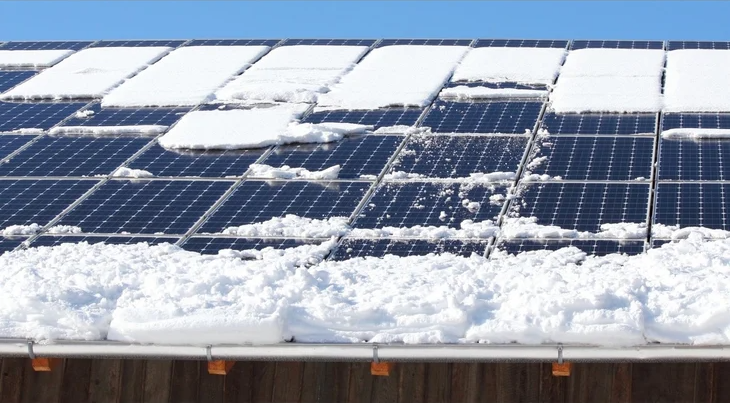
Quick answer: A solar panel snow guard is a small bracket, pad or rail that holds snow on the roof so it melts or slides off in small amounts instead of one heavy sheet. Smooth panel glass sheds snow quickly, so guards usually go on the roof below the array to protect people, gutters and cars underneath.
Key takeaways
- Snow guards are about safety and roof protection, not extra power. Plan them when you install solar panels on a Canadian roof.
- Snow slides off panel glass easily once the sun warms the panels, so the guards go on the roof below the array, not on the panels.
- In heavy-snow areas, one snow guard maker advises leaving about 15% of the roof between the array and the guards.
- Panel frames are not built to hold back snow, so guards should attach to the roof, not to the panels.
- Winter output is low anyway: in Toronto, a solar array makes about 40% as much power in December as in July.
What is a Snow Guard?
A snow guard is a protective device installed on a roof to help control the release of accumulated snow. Snow guards prevent large, heavy sheets of snow and ice from sliding off all at once, instead allowing it to melt and fall off gradually. They’re particularly helpful in snowy climates where heavy snowfall on a pitched roof can create a safety hazard as well as potential damage to your roof and property. They’re worth considering when you install solar panels on a snowy roof; where a roof isn’t suitable, roof vs ground-mounted solar compares the alternative.
How Snow Guards Work:
- Breaking Up Snow Accumulation: Snow guards work as small barriers that break up large piles of snow on the roof, keeping it from sliding down in one big sheet.
- Controlled Snow Release: By holding snow in place, snow guards let it melt gradually or release in smaller, manageable amounts, reducing the chance of sudden snow slides.
- Protecting Property Below: Snow guards help shield everything below, vehicles, landscaping, walkways, and doorways, from damage caused by unexpected snow avalanches off the roof.
Why Are Snow Guards Important for Solar Panels?
Solar panels can be prone to snow buildup in areas of heavy snow simply because they are mounted on your home’s roof. While snow covers the panels they produce little or no power, but their smooth glass sheds snow quickly. As the sun warms the panels through the snow, a layer of meltwater forms underneath and the whole load can let go at once; S-5!, a snow retention manufacturer, explains the same effect on metal roofs. Snow guards help manage this issue by holding the snow in place until it melts or releases in smaller amounts.
Snow guards add a layer of safety by keeping heavy snow from sliding off solar panels, protecting people, pets, and property below from sudden snow slides.
They also shield your roof from damage. When heavy snow releases all at once, it can put stress on the roof, gutters, and fixtures. Snow guards allow the snow to melt gradually, easing the load and protecting your roof.
Snow guards do not clear your panels any faster. Snow on the panels still has to melt or slide off before they produce again, and winter output is small in any case: Natural Resources Canada’s solar data puts December production in Toronto at 51 kWh per kW of panels, against 128 kWh in July.
Types of Snow Guards
Snow guards come in various designs, allowing them to work effectively on different types of roofs, including those with solar panels.
1. Pad-Style Snow Guards
Pad-style snow guards are small, low-profile barriers that attach directly to the roof, keeping snow from sliding off. Perfect for both metal and shingled roofs, they can be placed strategically to control snow release exactly where you need it. On a solar roof they go on the open roof below the array, so they don’t interfere with the panels.
2. Bar-Style Snow Guards
Bar-style snow guards use metal bars that run horizontally across the roof, holding back larger sections of snow and releasing it in smaller, manageable amounts. On a solar roof, bars are mounted below the array with a gap, and they must not shade the lowest row of panels.
3. Fence-Style Snow Guards
Fence-style snow guards form a fence-like barrier along the roof’s edge, holding back snow just like bar-style guards. They’re super effective but typically used more on commercial or industrial buildings.
Get your exact solar price
A free, no-obligation quote and custom design for your home — in about 24 hours.
Get Your Free Solar Quote
Get a personalized solar proposal in 24 hours
Prefer to discuss your project first? Contact us or view our detailed quote form
Installing Snow Guards with Solar Panels
If you’re installing solar panels in a snowy area, your installer might suggest adding snow guards to the setup. They are usually placed on the roof below the array, with open roof between the bottom row of panels and the guards so sliding snow has room to settle against them.
Getting the placement right is essential for snow guards to work effectively without blocking or shading your solar panels. Installers position them strategically, ensuring they maximize both safety and energy production.
In heavy-snow areas, S-5!’s guide for installers recommends leaving about 15% of the roof surface, from eave to ridge, between the array and the snow retention below it, and warns that guards mounted beside or above the lowest row of panels can shade them. The same manufacturer notes that panel frames are not designed to hold back snow, so guards should attach to the roof, not the panels.
Snow guards need to be tough enough to handle the weight of heavy snow. That’s why high-quality materials like stainless steel or durable plastic are the go-to choice, built to last through all kinds of winter weather.
And there’s no need to worry about looks, snow guards come in various styles to match your roof. Many are low-profile and blend seamlessly, keeping your home’s appearance sharp and clean.
Are Snow Guards Right for Your Home?
Snow guards are particularly beneficial for homes in regions with significant winter snowfall. Here are a few signs that snow guards might be a good addition to your home:
- Heavy Snowfall: If you live in an area that experiences frequent, heavy snowfall, snow guards can help prevent sudden slides and protect your property.
- Sloped Roofs: Homes with sloped roofs are more susceptible to snow slides. The steeper the roof, the more easily snow slides off it in one go.
- Solar Panels: Solar panels create a slick surface where snow builds up and then melts from the heat of the panels and slides off in sheets. Snow guards can control the release of snow and keep your property safe.
Frequently asked questions
Do solar panels need snow guards?
Not always. Snow guards make sense where snow sliding off the roof could land on a walkway, entrance, deck, driveway or lower roof, or could tear off gutters. Where snow falls onto open lawn, many homeowners skip them. Panel glass sheds snow faster than shingles, so adding solar can make an existing problem spot worse.
Where do snow guards go on a roof with solar panels?
Usually on the open roof below the array, not on the panels. S-5!, a snow retention manufacturer, recommends leaving about 15% of the roof surface between the array and the guards in heavy-snow areas, so sliding snow has room to settle against them. Guards placed beside or above the lowest row of panels can shade them.
Can snow guards be attached to the solar panel frames?
It is not recommended. Panel frames are designed to hold the panel, not to resist the drag of a sliding snow load, and S-5! warns that panels can be damaged when they are used as snow retention. Snow guards should attach to the roof itself, with fasteners or clamps rated for your roof type.
Do snow guards reduce solar panel output?
Not when they are placed correctly below the array. A guard that sits beside or above the lowest row of panels can cast a shadow and cut output, which is why placement matters. Snow guards do not increase output either: snow on the panels still has to melt or slide off before they produce again.
How do I keep snow off my solar panels?
In most cases, let it melt or slide off on its own. Panel glass is smooth and dark, so snow usually clears once the sun comes out. Climbing onto a snowy roof is dangerous, and scraping can scratch the glass. If you must clear snow, use a soft roof rake from the ground, never a metal tool or a shovel.
How much do solar panels produce in winter in Canada?
Much less than in summer. Natural Resources Canada’s figures for Toronto give 51 kWh per kW of panels in December and 128 kWh in July, for a south-facing array. An 8 kW system would make about 410 kWh in December and about 1,020 kWh in July. Our guide to how many solar panels you need shows how to size for a full year.
Are snow guards worth it on a metal roof with solar panels?
The case is stronger on metal, because metal roofs shed snow faster than shingles. On standing-seam metal roofs, snow guards can attach with clamps on the seams, so the roof itself is not drilled. Leave open roof below the array so the guards have room to work.
Should snow guards be installed at the same time as solar panels?
It is usually easier. The installer can leave space below the array for the guards and plan both layouts together while the crew and equipment are already on site. Adding guards later is possible, but the existing array may limit where they can go on the roof.
Plan Snow Guards with Your Solar Install
Snow guards are a valuable addition to any home in a snowy climate, especially for roofs with solar panels. By controlling the release of snow, they help protect your property, enhance safety, and reduce the risk of roof damage. If you’re considering solar panels or already have a solar system installed, snow guards can provide peace of mind during winter weather. Installing snow guards alongside a new solar system may be more cost- effective than adding them later. They will also help prevent potential damage costs from sliding snow, which may be worth the initial investment for homeowners in snowy regions.
Interested in learning more about going solar?
The first step is to acquire a solar proposal. By understanding your energy consumption, sunlight exposure, and roof orientation and space, we can design a solar solution that meets your needs both now and in the future. A well-sized solar system can help you achieve your energy goals and reduce your carbon footprint.
Our Solar Specialists and Project Managers can cleanly walk you through the steps of what is required and make sure you maximize the value of any provincial or federal programs in your area. We’ll also get you started on the vital first step of acquiring a tailor-made solar proposal for your residential project’s energy needs.
Schedule a consultation for our solar specialist’s expert guidance here.