"Ross was very knowledgeable, explained well, and answered all my questions politely and thoroughly."

Doug Flowers
Xolar is a certified Tesla Powerwall installer, providing you with reliable home energy. Power your home during outages and maximize savings with Tesla's advanced home battery.
Updated
Join Canadian homes with backup power

Rebate eligibility varies by location. Final amounts confirmed during consultation.
A Tesla Powerwall 3, Tesla's home battery (13.5 kWh, 11.5 kW), installed by Xolar costs $23,997 before tax in 2026, or about $27,117 with 13% HST. In Ontario, the Home Renovation Savings Program pays up to $5,000 toward a battery installed with new solar panels. Until December 22, 2026, Xolar's Fall Sale also takes up to $1,625 off a battery bought with solar.
| 1 Powerwall 3, installed | $23,997 before tax |
|---|---|
| 2 Powerwalls (27 kWh) | $37,346 before tax |
| 3 Powerwalls (40.5 kWh) | $50,695 before tax |
| Ontario battery rebate (with new solar) | up to $5,000 |
| Xolar Fall Sale (battery with solar, until December 22, 2026) | up to $1,625 off |
| Included | Design, permits, Tesla-certified installation, 10-year warranty |
A system that takes the Ontario rebate can't also use net metering. BC Hydro's battery rebate doesn't cover Tesla products. Your quote confirms the exact price for your home.
One battery, four jobs — backup power, bill savings, energy independence and a bigger rebate stack.
13.5 kWh of storage capacity, Powerwall's extended battery life provides whole-home backup during outages.
Powerwall saves you money by automatically charging when power is cheap, and discharging when power is expensive.
Storm Watch software detects severe weather forecasts in your area and will charge your Powerwall to full, ensuring you are prepared for the coming storm.
Monitor and control both your Powerwall and Tesla vehicle from anywhere all within the all-in-one Tesla app.
Tesla's 10-year warranty, with unlimited cycles for solar, time-of-use and backup use (battery kept online).
Stack Powerwall units for more power and more backup.
Powerwall owners can partner with the electricity distribution company to earn money by lending your battery storage, providing stability to the grid during peak times.
Tesla Powerwall systems installed in Canadian homes by Xolar.
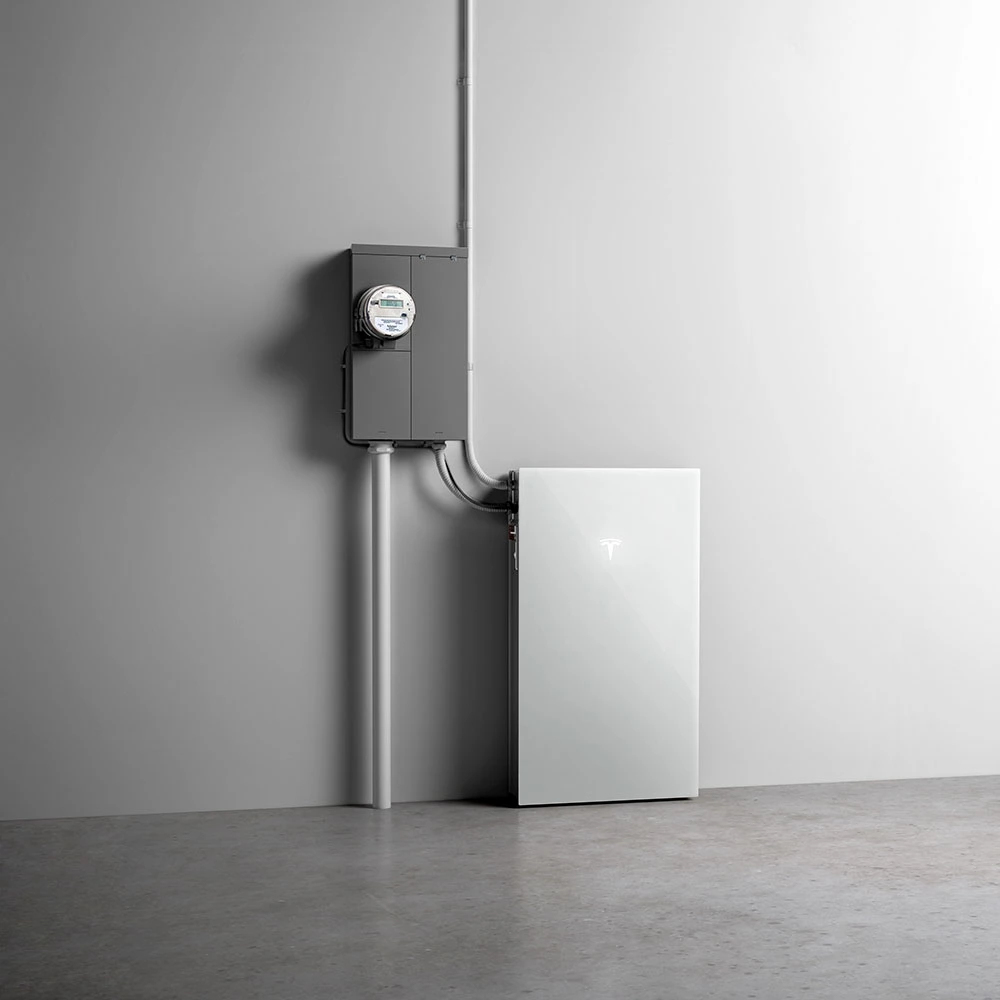
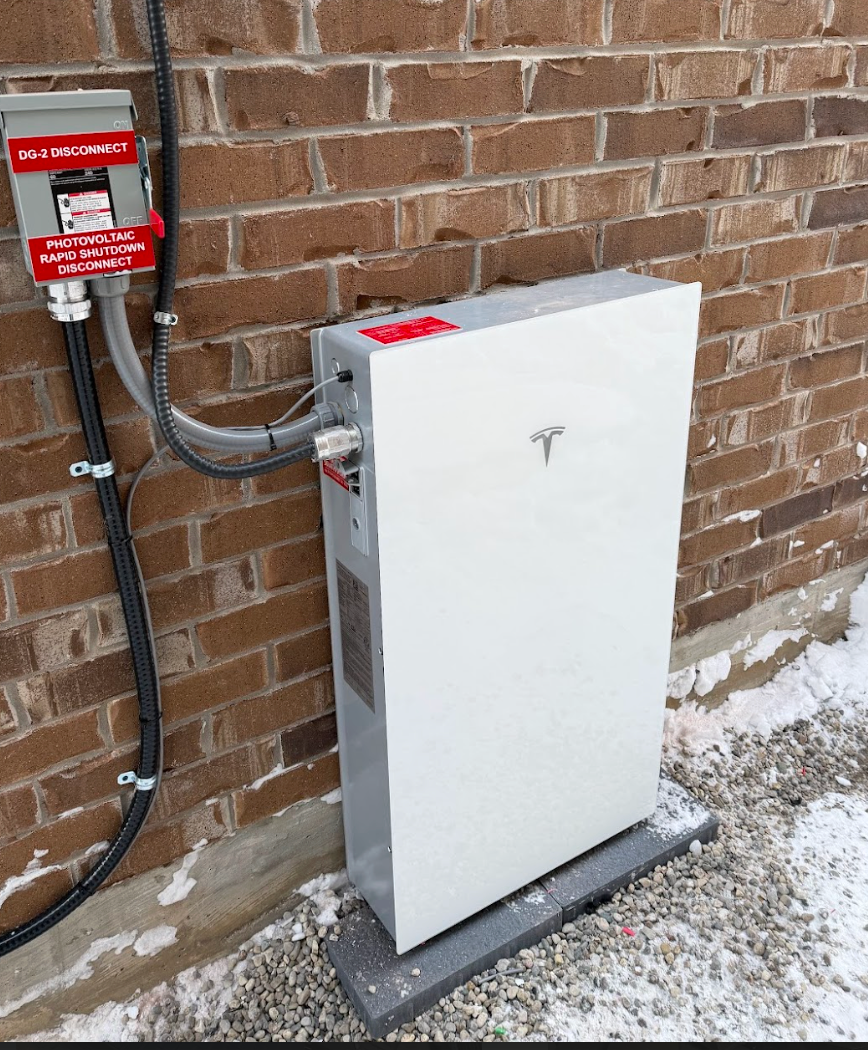
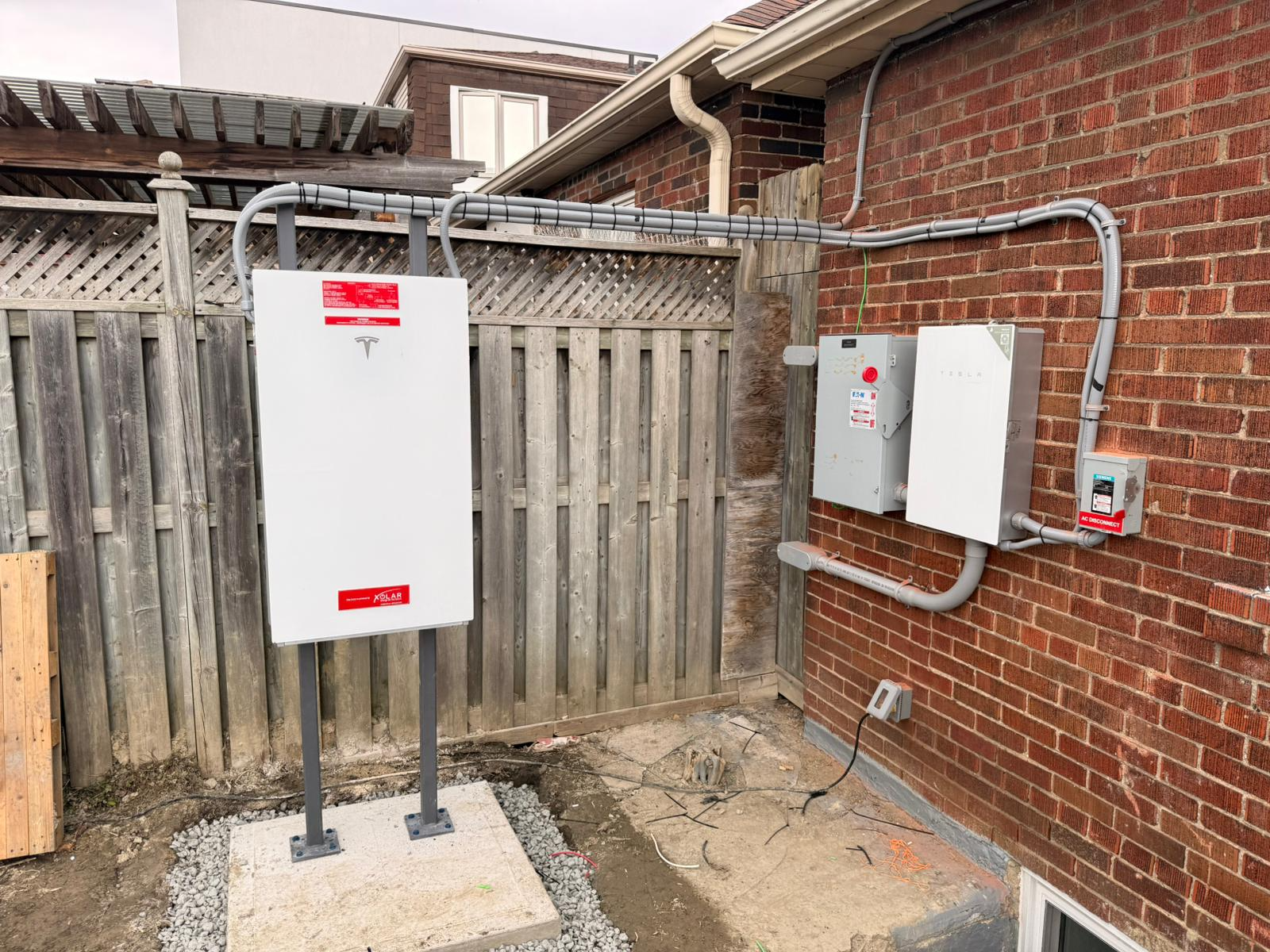
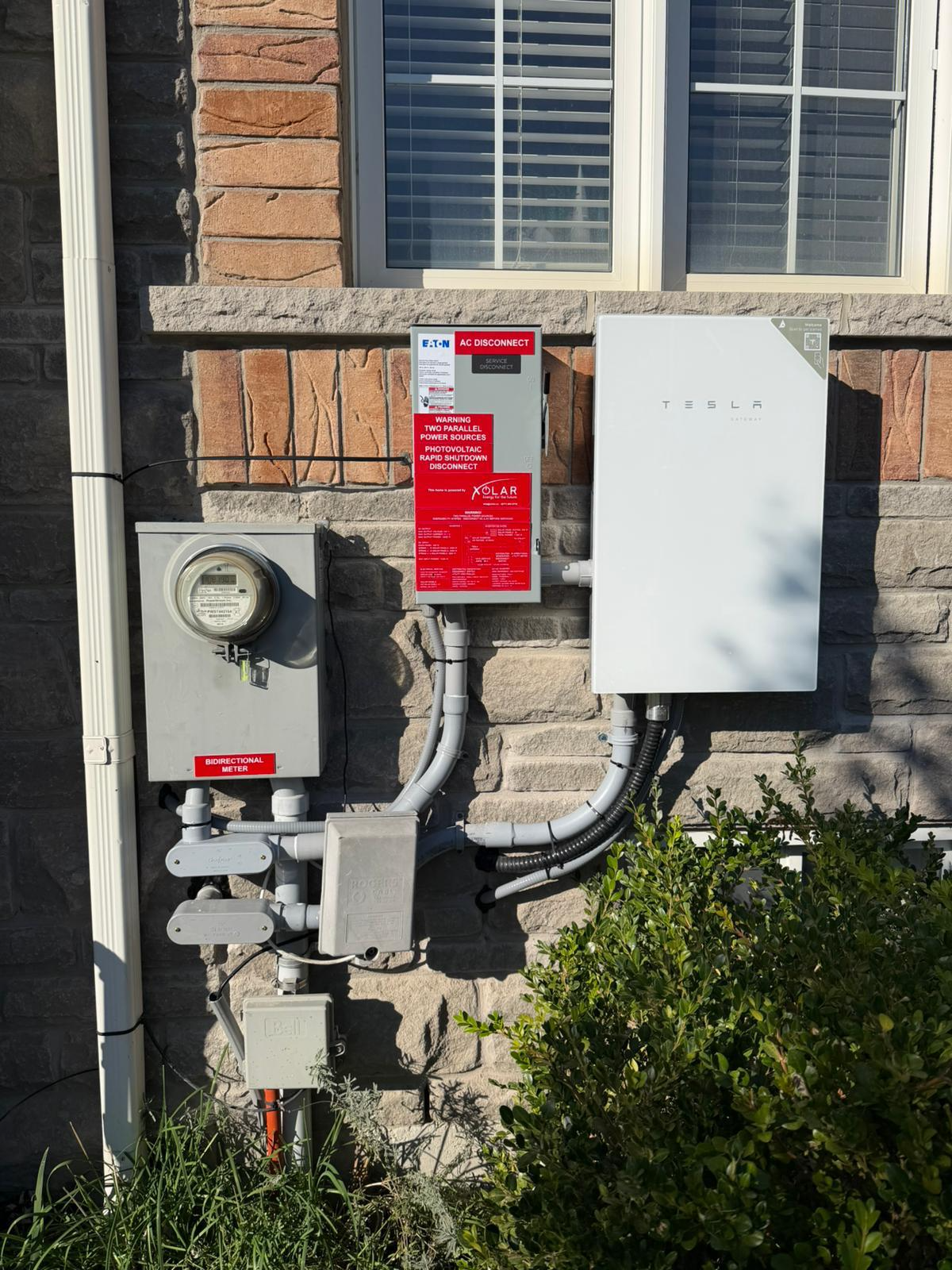
Your panels power the home and top up the Powerwall through the day.
Surplus energy is banked at 13.5 kWh instead of exported for less.
The home runs on stored energy when grid rates are highest.
Transparent pricing with no hidden fees. Choose the package that fits your needs.
Prices before incentives. Every install includes design, permits, installation and warranty.
Ontario's Home Renovation Savings Program covers up to $5,000 on a battery installed with new solar panels, on top of up to $5,000 for the solar. A system that takes these rebates can't also use net metering. BC Hydro's battery rebate doesn't cover Tesla products.
Charge from solar or cheap overnight power, then run your home on the battery during expensive peak hours. In time-of-use provinces that shift alone trims hundreds off your annual bill.
Cost, whole-home backup, solar pairing, runtime, rebates and warranty.
The Tesla Powerwall is a rechargeable lithium-ion battery designed to store energy for
residential use. When paired with
solar panels, the Powerwall stores excess
solar energy generated during the day so you can use it at night, during peak rate
hours, or when the grid goes down. Without a battery, any solar energy your home
doesn’t use immediately gets exported to the grid. With a Powerwall, you keep that
energy for yourself.
The system works automatically. During daylight hours, your solar panels generate
electricity. Your home uses what it needs first, and the surplus charges your
Powerwall. Once the battery is full, any remaining excess flows to the grid through
net metering. At night or during an outage, the Powerwall
discharges to power your home. The Tesla app gives you real-time visibility into
energy production, consumption, and battery charge level.
Powerwall pricing in Canada depends on your province, installation complexity, and
whether you’re adding it to an existing solar system or installing both together. A
single Powerwall 3 is about $23,997 before tax (~$27,100 with HST) installed. 5 kW of solar with one Powerwall 3 is $37,101 before tax.
Provincial rebates can reduce the net cost significantly. Ontario’s Home Renovation Savings Program pays $300 per kWh for a battery installed with new solar, up to $5,000 (about $4,050 for one Powerwall 3), on top of up to $5,000 for the solar. BC Hydro’s battery rebate excludes Tesla products, so a Powerwall doesn’t qualify there. Several other provinces have
active or upcoming battery incentive programs. See our
full pricing breakdown for system-specific costs, or check
rebates available in your province.
The financial return depends on your electricity rate structure. In provinces with
time-of-use pricing (Ontario, parts of BC), the Powerwall pays for itself faster by
charging during off-peak hours and discharging during expensive peak periods. In
provinces with flat rates, the primary value is backup power and maximizing solar
self-consumption.
Net metering lets you earn credits for excess solar energy sent to the grid. The
Powerwall adds a strategic layer: instead of exporting all your excess at whatever
your utility pays, you can store it and use it during peak rate hours when electricity
costs the most. In Ontario’s time-of-use system, this means charging your Powerwall at
9.8¢/kWh overnight and avoiding 20.3¢/kWh on-peak rates.
Estimate your own time-of-use savings with our battery calculator
.
In provinces with true 1:1 net metering (Ontario, Nova Scotia), the Powerwall’s
primary value is backup power and peak-shaving rather than avoiding export. In
provinces with lower export rates like BC (10¢/kWh for new systems since July 1, 2026), Manitoba (7.17¢/kWh) or Saskatchewan
(7.5¢/kWh), keeping that energy for self-consumption via Powerwall is worth
considerably more than exporting it.
One important note: under Ontario’s HRSP, systems that receive the solar or battery rebate cannot participate in net metering. They must be sized for your own consumption, and the program’s terms rule out a net-metering agreement. We help every customer model the optimal configuration for their
province and rate plan.
Learn more about net metering across Canada.
Real reviews from real customers who made the switch to solar.
"Ross was very knowledgeable, explained well, and answered all my questions politely and thoroughly."
"THEY WERE VERY FREINDLY AND SEEM TO KNOW THERE STUFF."

"Abe was very attentive to my needs, he thoroughly explained the proposal he sent, and answered all my questions in detail. We chatted about a few other subjects and I discovered that he is a pleasant and knowledgable person to deal with."

"Ross was very knowledgeable, explained well, and answered all my questions politely and thoroughly."
"THEY WERE VERY FREINDLY AND SEEM TO KNOW THERE STUFF."
"Abe was very attentive to my needs, he thoroughly explained the proposal he sent, and answered all my questions in detail. We chatted about a few other subjects and I discovered that he is a pleasant and knowledgable person to deal with."

Protect your home with Tesla Powerwall battery storage.
Xolar installs the whole setup — here's what pairs well with this.
Cut your power bill with a custom rooftop solar system.
Learn more →Whole-home backup power for when the grid goes down.
Learn more →Efficient heating and cooling that runs on your solar.
Learn more →Charge your EV at home from your own clean solar power.
Learn more →Powerwall 3
13.5 kWh
Usable Storage Capacity
Usable energy per unit
11.5 kW
Continuous Power Output
2.3x more than Powerwall 2
Built-in
Solar Inverter (up to 20 kW)
Simplifies installation
The Powerwall 3 integrates a solar inverter directly into the battery unit, handling up to 20 kW of solar input. This eliminates the need for a separate string inverter, reducing installation complexity and cost. The 11.5 kW continuous output means you can run high-draw appliances (air conditioning, EV chargers, heat pumps) simultaneously during an outage. Operating range is -20°C to 50°C. A home can have up to 4 Powerwall 3 units plus up to 3 Expansion units, 7 units in all (94.5 kWh). Figures from Tesla's Powerwall 3 datasheet.
Powerwall 3 is rated to run from -20°C to 50°C. Near those limits it may reduce how fast it charges or discharges to protect the battery, so in colder areas we install it in a garage or another sheltered spot. Snow on your panels cuts solar output for a while, but the battery still carries your home through an outage on what it has stored.
Storm Watch: when a severe weather watch or warning is issued for your area, the Tesla app can charge Powerwall to full ahead of a possible outage, then return to normal once the event passes. It needs grid charging turned on, and you can opt out for any storm. See Tesla's Storm Watch guide.
In summer the same battery stores midday solar for the evening, when time-of-use prices are highest. See how that works on your rate plan with our battery savings calculator.
Rebates
The Home Renovation Savings Program pays $300 per kWh for a battery installed with new solar, up to $5,000 (about $4,050 for one Powerwall 3), plus up to $5,000 for the solar. Systems that take it can't use net metering. Toronto HELP and Ottawa Better Homes loans can finance the rest.
BC Hydro's battery rebate has excluded all Tesla products since 12 March 2025, so a Powerwall doesn't qualify; the solar rebate (up to $5,000) still applies to the panels. BC Hydro closed 1:1 net metering (Rate Schedule 1289) to new customers on 1 July 2026 — new systems go on RS 2289, which buys surplus at 10¢/kWh each billing cycle.
No active battery-specific rebate, but 1:1 net metering at ~19.1¢/kWh and high outage frequency make Powerwall a strong investment for backup + savings.
The Arctic Energy Alliance renewable energy rebate pays up to $20,000 for a home solar project, batteries included, in communities not served by hydro power (such as Inuvik).