Tag: Solar Power

  • How Do I Pick Which Equipment to Use for My Solar System?

    How Do I Pick Which Equipment to Use for My Solar System?

    How Do I Pick Which Equipment to Use for My Solar System?

    Navigating the Solar Market

    Picking the right equipment for your solar system is key to getting the best efficiency, durability, and long-term savings. With everything from panels to inverters and batteries to think about, choosing the best options can feel like a lot. To help, we’ve broken down the essential components and the main factors to consider for your setup.

    Solar Panel Efficiency and Performance

    The efficiency and performance of your solar panels are big factors in how much energy your system generates. High-efficiency panels capture more sunlight per square foot, a huge plus if roof space is tight.

    Also, think about style. Some panels come in sleek, all-black designs that blend right in, while others have a classic look. Pick a style that suits your home and fits your taste.

    Choosing an Inverter

    The inverter is crucial to converting the DC electricity generated by your panels into AC electricity that your home can use.

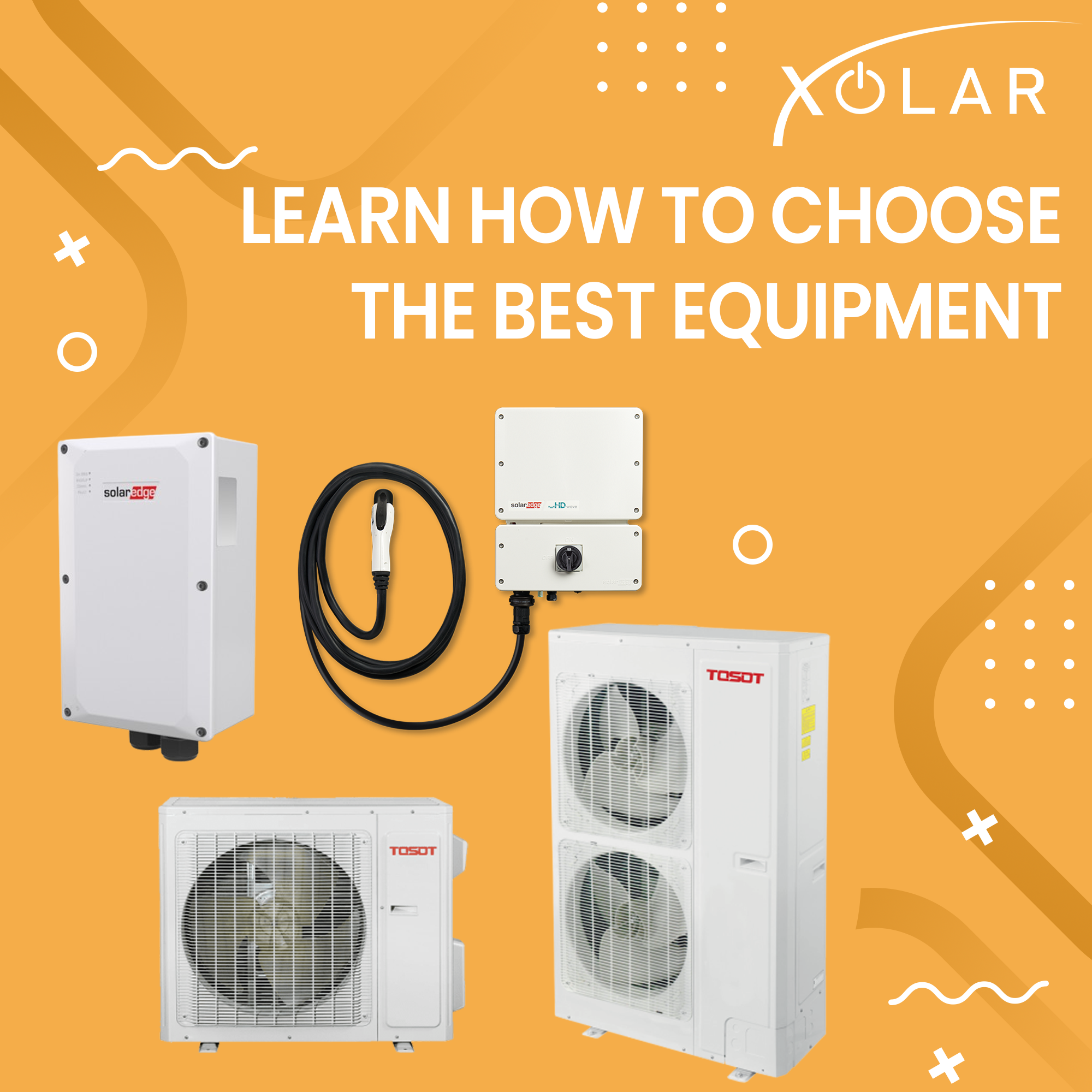
    String inverters with DC optimizers are the best option for a home solar setup. Adding DC optimizers to each panel achieves efficiency levels similar to microinverters. This setup allows you to over-size your system, meaning you can generate more energy per dollar spent. Plus, because string inverters are located near your electric panel instead of on the roof, maintenance is easier and troubleshooting is more straightforward.

    Energy Storage: Battery or Net Metering?

    Energy storage choices depend on your main goal for going solar:

    • Grid-Tied System with Net Metering: If saving money is your top priority, a grid-tied system with Net Metering might be your best option. Net Metering allows you to sell excess electricity back to the grid in exchange for credits, which you can use to offset your energy costs when your panels aren’t producing, like at night. This is how one way you can cover 100% of your power bills with solar.
    • Battery Backup: If energy security is your priority and you want to have electricity during outages, consider adding battery storage to your system. A battery allows you to store solar energy and use it during a power outage, providing peace of mind if reliability is a concern.

    Durability and Warranties

    Choosing top-quality equipment with solid warranties brings peace of mind and keeps your investment secure for the long haul.

    Solar panels often come with 25-year warranties, meaning they’re built to keep producing reliably for decades. This long-term coverage means you’ll have a dependable source of power without constantly worrying about panel performance.

    Inverters and batteries, generally have warranties lasting 10-15 years. Having a good warranty helps you manage future maintenance and budget for any potential replacements.

    Strong warranties aren’t just a nice perk—they protect you from unexpected repair costs and show that the manufacturer stands behind their product. It’s a sign that they’re confident in their equipment’s ability to last and perform.

    Compatibility of Components

    Solar equipment isn’t always plug-and-play, so picking compatible components is a must. For example, some inverters are built to perform best with specific solar panels or battery setups. And don’t forget about your electric panel—it may need an upgrade to handle the extra power from a solar system. A top-notch installer will make sure everything works together smoothly, giving you the best performance and reliability possible.

    Local Climate Considerations

    Your local climate plays a big role in selecting the right solar equipment. Choose components that will perform well under your specific environmental conditions:

    • Cold or Snowy Areas: For regions prone to heavy snowfall, consider adding snow guards to prevent large snow slides from your solar panels, which can protect both your system and your roof.
    • Hot Climates: High temperatures can impact efficiency, so select panels and inverters that have a good track record for heat tolerance.

    A knowledgeable installer will be able to guide you toward equipment that matches your local climate’s demands, ensuring your system operates effectively year-round.

    Cost vs. Value

    Budget matters, but think about the long-term value and savings your solar equipment can bring. Investing a bit more upfront in high-quality, efficient components can pay off big over time—these parts tend to perform better and last longer. With a well-chosen solar system that could last up to 40 years, starting with quality means you’ll enjoy reliable performance and savings for decades.

    Final Thoughts

    Choosing the right equipment for your solar system is a big deal, but with a little research and the right guidance, you can build a setup that matches your energy goals, fits your budget, and delivers for decades. A home solar system can last 30 to 40 years, so make sure you’re getting gear that’s built to go the distance. Work with a trusted installer who’ll help you pick components suited to your home, lifestyle, and local climate.

    Interested in going solar?

    The first step is to acquire a solar proposal. By understanding your energy consumption, sunlight exposure, and roof orientation and space, we can design a solar solution that meets your needs both now and in the future. A well-sized solar system can help you achieve your energy goals and reduce your carbon footprint.

    Our Solar Specialists and Project Managers can cleanly walk you through the steps of what is required and make sure you maximize the value of any provincial or federal programs in your area. We’ll also get you started on the vital first step of acquiring a tailor-made solar proposal for your residential project’s energy needs.

    Schedule a consultation for our solar specialist’s expert guidance here.

    On Key

    Related Posts

  • What is Energy Arbitrage? Optimizing Your Solar Energy Usage

    What is Energy Arbitrage? Optimizing Your Solar Energy Usage

    What is Energy Arbitrage? Optimizing Your Solar Energy Usage

    What is Energy Arbitrage?

    If you’re looking into solar energy or strategies to lower your electricity bill, you may have come across something referred to as “energy arbitrage.” Energy arbitrage allows you to take advantage of fluctuating electricity prices, especially in areas with time-of-use (TOU) rates.

    If you are on a time-of-use (TOU) billing system with your electricity provider, it means that you are getting charged different rates for your electricity usage at different times of day. TOU rates vary throughout the day based on demand—electricity costs are lower during off-peak hours (often late at night) and higher during peak hours (typically late afternoon and early evening).

    In the simplest terms, energy arbitrage means buying electricity when it’s cheapest and using or storing it for times when rates are higher. Your Net Metering program, which sells your excess energy generated from solar back to the grid, make solar the most potent way save money through energy arbitrage and gives you the potential to cover 100% of your power bill.

    How Does Energy Arbitrage Work with Solar?

    Solar energy pairs perfectly with energy arbitrage, especially if you’re in a TOU billing area. With solar panels, you’re generating electricity during the day—when TOU rates are generally at their highest.

    Daytime Solar Production at Peak Rates

    During daylight hours, your solar panels are generating power for your home, which happens to coincide with the highest energy rates in a TOU plan. This means you’re using the solar power you produce without paying the high daytime rates from the grid. Any excess solar energy you don’t use is sold back to the grid at those high daytime rates through the Net Metering program, where you will earn energy credits for the power you generate.

    This is how you build up excess energy credits that can be used any time throughout the year to cover your energy spent at nighttime or during the winter, allowing you to effectively cover 100% of your power bills with solar.

    Nighttime Energy Use at Off-Peak Rates

    In the evening and nighttime, when your solar panels aren’t generating power, you might need to draw from the grid. This is where energy arbitrage comes in: you’re now buying electricity at the cheaper, off-peak rates. With the credits earned from selling your excess daytime power at higher rates, you can easily cover these off-peak energy costs, reducing your overall bill.

    The Financial Benefits of Solar-Powered Energy Arbitrage

    The strategy of energy arbitrage with solar has financial perks that go beyond just producing your own electricity. Here’s how it benefits your budget:

    1. Lower Overall Costs: By using electricity generated by your solar system during peak rate times and buying from the grid only when rates are low, you reduce how much you spend on electricity overall.
    2. Maximizing Solar Efficiency: Solar energy is most effective when you can leverage TOU rates. Instead of just generating power, you’re optimizing its value by selling it back at peak prices and “repurchasing” at lower costs, maximizing every kilowatt produced.
    3. Energy Independence: Although you’re still connected to the grid, energy arbitrage increases your control over energy costs, making your home less reliant on grid price fluctuations.

    Flat-Rate vs. Time-of-Use (TOU) Rates

    In areas with flat-rate billing, the cost of electricity remains constant throughout the day.
    Energy arbitrage is still possible with solar and Net Metering because you earn credits for
    the energy you send back to the grid, even if there’s no price difference between day and
    night. However, the financial benefits of energy arbitrage are most pronounced in areas
    with TOU billing, where rate fluctuations create clear opportunities for savings.

    Get a State-of-the-Art Solar Setup with XOLAR

    Energy arbitrage, especially when paired with solar, is a powerful way to slash your energy costs and ease off the grid. By storing or using your solar energy during peak hours and pulling from the grid only during off-peak times, you make the most of TOU rates and Net Metering credits. This strategy lets you maximize your renewable energy, making solar even more cost-effective. For homes with TOU billing, Net Metering, or battery storage, energy arbitrage is a game-changer, storing cheaper electricity to use when rates are highest.

    Interested in going solar?

    The first step is to acquire a solar proposal. By understanding your energy consumption, sunlight exposure, and roof orientation and space, we can design a solar solution that meets your needs both now and in the future. A well-sized solar system can help you achieve your energy goals and reduce your carbon footprint. Our Solar Specialists and Project Managers can cleanly walk you through the steps of what is required and make sure you maximize the value of the provincial or federal programs in your area. We’ll also get you started on the vital first step of acquiring a tailor-made solar proposal for your residential project’s energy needs.

    Schedule a consultation for our solar specialist’s expert guidance here.

    On Key

    Related Posts

  • How Do I Pick the Right Solar Installer?

    How Do I Pick the Right Solar Installer?

    How Do I Pick the Right Solar Installer?

    Choosing the right solar installer

    Choosing the right solar installer is a more important than many people may realize. High- quality panels and equipment are indeed essential, but it’s the expertise and reliability of your installer that will shape your system’s performance, lifespan, and even the validity of warranties, for the next 30-40 years.

    A reputable installer builds a system designed to last, while an inexperienced or budget installer could leave you with long term headaches. We’ve put together a guide to help you choose an installer you can trust.

    Steps to Pick the Right Solar Installer

    1. Look for Experience and Expertise

    Solar installation projects are highly specialized – they require electrical, structural, and regulatory expertise. Go with an installer who has a solid track record and real experience in solar energy systems. They’ll know how to handle the unique details of your setup. A seasoned installer understands local permits, government programs, and should have a skilled team of project managers to oversee every step, ensuring all approvals and permits are in place. Experience isn’t just about a smooth install; it’s the key to a system that performs safely and reliably for years.

    2. Check Reputation and Customer Reviews

    A company’s reputation is a strong indicator of the quality of service and results you can expect. Take a few minutes to look up online reviews, customer testimonials, and ratings on sites like Google, Yelp, and other review sites. Look for consistent positive feedback, especially around installation quality, customer service, and post-installation support. Don’t hesitate to ask your installer for references or case studies of their work. Talking to past customers gives you a real sense of how satisfied they were and how reliable the company is over time.

    3. Assess Warranty Options and Support

    Good solar equipment comes with extensive warranties—often being as long as 25 years for Tier 1 solar panels and around 10-15 years for inverters and batteries. These warranties only hold value if the company behind them remains in business and is committed to honoring them. When evaluating installers, make sure that they use reputable, durable equipment backed by strong warranties, and ask how they handle warranty claims. Knowing that your investment is protected by reliable warranties and a responsive installer provides peace of mind that any issues will be addressed, should they arise.

    4. Look for Transparent Pricing and Financing Options

    Understanding the full cost of your solar system upfront is essential. Any reputable installer will offer clear, itemized pricing that includes all necessary components, such as taxes, permits, and fees, leaving no hidden surprises. Be cautious of installers who offer prices that are significantly below market rates, as this can sometimes mean cutting corners on equipment or omitting critical components of a high value system. Additionally, a quality installer should offer transparent financing options and work with you to find a solution that fits your budget. They should clearly explain each financing option, ensuring you fully understand the terms and long-term value of your investment.

    5. Consider Consultation Quality and Communication

    The best installers prioritize a no-pressure consultation to assess your energy goals, home setup, and budget. During a consultation, they should listen carefully to your preferences and provide solutions tailored to your unique needs. Quality communication is key—your installer should respond promptly to your questions, explain each step of the installation process, and keep you informed from start to finish. Clear and open communication ensures there are no surprises and that you fully understand what to expect.

    6. Evaluate Post-Installation Services and Support

    For the vast majority of home solar setups there is very little maintenance required. However sometimes a system may need a replace inverter as it ages, or someone there to troubleshoot your energy production if your tracking apps show that the system might be underperforming. There are companies who are nowhere to be found when their customers need system maintenance. Ask potential installers about their approach to post-installation services, including system monitoring, regular maintenance, and troubleshooting. A reliable installer will have a structured plan for addressing issues after installation, and they’ll be available to assist with repairs, performance checks, and warranty claims.
    Why Quality Matters: The Value of Choosing the Right Installer

    Choosing the right equipment and installer will help you walk away with a home solar system that can you last you 30 to 40 years, paying for itself many times over. With today’s power rates, a home solar installation has the potential to save you up to $100,000 or more over its lifetime. The savings potential and long lifetime of solar energy makes it even more important to choose an installer who is committed to quality and has the resources to remain in business for years to come.

    While some installers may offer low prices, cutting corners can lead to reduced energy production, subpar workmanship, and future expenses due to frequent repairs or replacements. Paying a bit more upfront for a premium, reliable installer often pays off in the long run through better performance, higher energy production, and an overall more satisfying experience.

    The Dangers of Choosing the Lowest-Cost Option

    Choosing a budget installer can sometimes be tempting, especially if they offer seemingly substantial savings. However, companies that offer low prices may not have the resources or stability to be there for you in the long run. These companies are offering lower than market prices because they may use cheaper materials, offer less responsive customer service, or lack the experience required to deliver quality installations.

    Additionally, if an installer goes out of business, you could be left with no recourse for warranty claims or necessary repairs, meaning you may have to pay out of pocket to fix issues or maintain your system.

    Key Takeaway: Investing in a Trusted Installer is Worth It

    A properly installed solar system can last 30 to 40 years, providing energy savings and reliable performance if done right. When selecting an installer, prioritize experience, quality, and reputation over immediate savings. At Xolar Inc., we are committed to providing solar solutions that stand the test of time. Our commitment to high-quality equipment, transparent pricing, and ongoing customer support means we’re here to support you through every stage of your solar journey. We take pride in ensuring our customers get the most out of their investment and are backed by a team they can rely on.

    Interested in going solar?

    The first step is to acquire a solar proposal. By understanding your energy consumption, sunlight exposure, and roof orientation and space, we can design a solar solution that meets your needs both now and in the future. A well-sized solar system can help you achieve your energy goals and reduce your carbon footprint.

    Our Solar Specialists and Project Managers can cleanly walk you through the steps of what is required and make sure you maximize the value of any provincial or federal programs in your area. We’ll also get you started on the vital first step of acquiring a tailor-made solar proposal for your residential project’s energy needs.

    Schedule a consultation for our solar specialist’s expert guidance here.

    On Key

    Related Posts

  • Electricity Demand in Ontario Set to Grow by 75% by 2050

    Electricity Demand in Ontario Set to Grow by 75% by 2050

    Electricity Demand in Ontario Set to Grow by 75% by 2050

    Electricity Demand in Ontario Set to Grow by 75% by 2050: What It Means for Solar Energy

    What’s Driving the Surge in Demand?

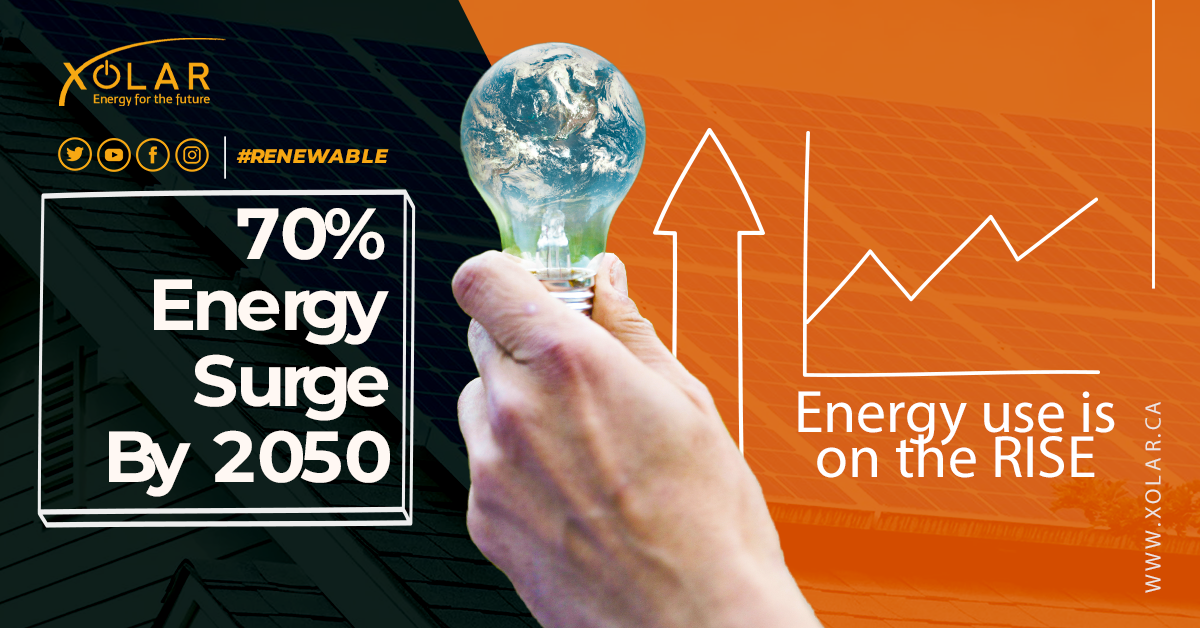
    Rapid and transformative innovations in new technology, and the demand for such technology, will cause a sharp rise in demand for electricity within Ontario in the next 25 years. According to the Independent Electricity System Operator (IESO), the province’s electricity demand is expected to rise by 75% by the year 2050. This equates to the annual consumption of electricity increasing from 151 terawatt-hours (TWh) in 2025 to 263 TWh in 2050. This biggest surges in electricity demand are right around the corner, and are expected to happen by 2035.

    The accelerated increase in demand growth in this year’s forecast is mostly attributed to industrial sector growth. This is attributed to the growth of electric vehicle production and the supply chain for manufacturing electric vehicles. By 2035 it is projected that industrial sector growth will increase by 58% which accounts for 23 terawatt-hours (TWh) of electricity demand in that short time.

    Since the industrial sector’s growth is primarily based on electric vehicle production, electric vehicles themselves are also going to garner a large chunk of electricity demand. electric vehicles are predicted to account for 31% of the new electricity demand by the same year, accounting for 20 TWh of increased electricity demand. 

    A compounding factor of energy demand in Ontario is our rising population. Ontario households are expected to grow 15% by 2035, which will project one million more homes. This population growth will account for 6 TWh or 9% of new electricity demand in the province. 

    The advancement and proliferation of Artificial Intelligence (AI) is also pushing up the demand for electricity as more energy intensive data centers are being built to support AI. Data centers account for 13% of new electricity demand by the year 2035, or 15 TWh.

    How Solar Energy Fits Into the Picture

    As electricity demand keeps climbing in Ontario, renewable energy is more important than
    ever. That’s where solar steps in—offering a clean, sustainable way to balance the scales
    and keep things running.

    Here’s why solar is the perfect fit as Ontario’s electricity demand keeps climbing:

    • Solar Grows with Demand: As Ontario’s energy needs go up, solar can scale right
      along with it. Both homeowners and businesses can install panels to save money
      on energy while also easing the load on the grid and boosting the overall electricity
      supply.
    • Solar Saves You Money: With electricity costs soaring, solar gives you a long-term
      way to cut those bills. With electricity demand now expected to increase by 75%,
      prices on energy will increase even more. Once your system’s up and running, you
      generate your own power—and can even sell extra energy back to the grid with net
      metering.
    • Solar Powers Peak Demand: As the IESO works to bring in new power sources,
      solar steps up by producing energy during peak daylight hours when demand is
      highest.
    • Energy Independence: Installing solar panels means less reliance on an already
      strained grid. With demand set to spike by 75%, that energy independence will be
      more valuable than ever.

    Why Now Is the Time to Go Solar

    The IESO’s forecast is a wake-up call for anyone thinking about solar. With electricity demand set to soar and governments pushing for sustainability, there’s no better time to go solar than now. Energy prices in Ontario have already increased by 20% in October of 2023, and these increases are only slated to rise with the demand for electricity.

    You’re not just investing in cleaner energy—you’re shielding yourself from the unpredictability of rising electricity costs. Plus, with government programs like the Canada Greener Homes Loan, going solar is more affordable than ever, offering zero-down financing and 0% interest loans to make the switch easy.

    Solar can last you as long as 30 to 40 years. If you choose to go solar now, you are effectively locking in your energy costs for the lifetime of the system. No matter how many times electricity rates go up, you won’t feel the pinch—your solar system takes care of your power bill. If you want to see in more detail how solar saves you money, check out our blog post on the topic.

    The Future of Ontario’s Energy Landscape

    The government is already taking steps to tackle the rising electricity demand, investing in nuclear power and other large-scale energy projects to secure supply through the 2030s. But as demand keeps outpacing expectations, more needs to be done to keep energy both affordable and reliable. 

    Solar will be key in this future. Whether it’s powering homes, businesses, or electric vehicles, solar energy can help ease the load on the grid and contribute to a cleaner, more sustainable Ontario.

    Prepare for the future with XOLAR

    Any upcoming rate hikes will be far less noticeable to individuals who have invested in solar power. By paying a fixed cost to install solar, you are effectively freezing your cost of electricity for the next 30 or more years. 

    Being able to self-generate your energy will place you in a unique position to capitalize on rate increases by increasing the value of your investment as time goes by. 

    The good news is that government rebate programs remain available, rendering the initial costs of acquiring a solar installation well within financial reach. These incentives make transitioning to solar energy an economically viable choice for both environmentally conscious and budget-savvy consumers. 

    It’s not uncommon for homeowners to generate 90% or more of their annual electricity with solar. Due to recent changes allowing homeowners to sell energy back at time-of-day rates, it’s possible to net even more value for each kWh you generate during peak hours. 

    If you are thinking of going solar, our Solar Specialists and Project Managers can cleanly walk you through the steps of what is required in your province and make sure you maximize the value of any government programs in your area. We’ll also get you started on the vital first step of acquiring a tailor-made solar proposal for your personal energy needs at home. 

    Read more about the projected electricity demand increase at the IESO website. 

    Schedule a consultation for our solar specialist’s expert guidance here.

    On Key

    Related Posts

  • Eliminate your power bill, Up to $10,000 with BC Solar Rebate

    Eliminate your power bill, Up to $10,000 with BC Solar Rebate

    Eliminate your power bill, Up to $10,000 with BC Solar Rebate

    Eliminate your power bill with the BC Hydro Solar Rebate for up to $10,000

    BC Hydro Rebate

    As of July 23, 2024, British Columbia homeowners can save up to $10,000 on eligible solar panels and battery storage systems. The BC Hydro Rebate Program offers rebate money for grid tied solar panel setups and solar panel setups that also have the optional battery storage systems. Whether you choose to install just solar panels, just a battery, or both, you can unlock significant savings on your monthly electricity costs by eliminating your power bill with solar.

    Outlining the requirements for the BC Hydro Rebate

    The rebate is only available for BC Hydro customers, but the rebate still covers almost everyone in the province since BC Hydro services 95% of British Columbia.

    A grid connected home solar system allows you to sell your excess energy back to the power company for credits on your power bill via the Net Metering program. This is how you can cover 100% of your power bills by your excess energy production generating credits to cover your power costs at times when you aren’t producing electricity from solar – like at night. Let’s look at the requirements for a grid tied home solar panel system.

    Grid Tied Home Solar Rebate Details

    • Rebate Amount: Up to $5,000
    • Details: $1,000 per kilowatt (kW) of installed generator capacity
    • Cap: Rebate is limited to 50% of the total installation cost (including both labor and materials)
    • Maximum rebate: $5,000

    This means that a 5KW system will net you the full available rebate amount. Most people need a larger system than this to cover 100% of their power bill, so this rebate makes it easy to access a system that can eliminate your electricity bill.

    Home Solar + Solar Batteries Rebate Details

    Battery storage systems allow you to store excess energy generated by your solar panels for use at night, on cloudy days, or during power outages. If your home solar system is only grid tied, then a power outage will mean that you won’t have electricity at night when your panels can’t produce energy from sunlight. Storing your excess electricity locally in solar batteries allows you to still have power during a grid outage. This technology adds resilience to your home energy system, ensuring you always have power when you need it. Eligible battery energy storage systems qualify for:

    • Rebate Amount: Up to $5,000
    • Details: $500 per kilowatt-hour (kWh) of installed storage capacity
    • Cap: Rebate is limited to 50% of the total installation cost (including both labor and materials)
    • Maximum rebate: $5,000
    • Minimum storage size: 5 kWh

    By combining both solar panels and battery storage, you can maximize your savings and create a more efficient home energy system.

    Should you Invest in Solar Batteries?

    For most people, a grid tied home solar setup is more suitable than also investing in solar batteries. Solar panels with modern solar technology can last as long as 30 to 40 years, and a home solar system will typically return its value to you by eliminating your power bills within a 7-12 year timeframe depending on how much you pay for power. Electricity prices tend to increase over time with inflation, so the more you pay for power the more rate increases will impact your bills as years go by.

    If your primary concern is long term energy savings, then it may be better to go with a strictly grid tied system at a lower cost. This is because your system will pay itself off sooner. After that you’ll have decades of essentially free electricity.

    If you are concerned about power outages in your area and your goal is 100% uptime on your access to electricity, then it will be better to go with a system that has batteries installed as well. This does mean your system will take longer to return its value to you by eliminating your power bill, but you will still have decades of free energy where solar is covering your electricity costs.

    Rebate Eligibility

    These eligibility requirements were pulled directly from the BC Hydro Rebate website which can be found at this link.

    Eligible customers and properties

    • You must have a BC Hydro residential account.
    • The property must be a grid-connected residential home.
    • You must own or lease the home

    Eligible Installations

    • Solar generation must connect to our distribution system through the self-generation program (Net Metering)
    • Systems must have a combined aggregate nameplate capacity of no more than 100 kW.
    • Installations and connections must be completed after June 27, 2024.
    • As of June 2024, a new rate structure for self-generation has been proposed to the B.C. Utilities Commission (BCUC). By applying for and accepting these rebates, you’re accepting this potential future rate.

    Eligible Solar Panels

    • Must be new, not previously installed in another home or property.
    • Must be purchased in Canada; products can be manufactured outside of Canada.
    • Cannot replace an existing solar photovoltaic system. However, additional solar panels added to an existing system will qualify.
    • Has a Canadian Standards Association certification, has a nameplate rating of no more than 100 kW, and is compliant with CSA C22.2 No. 107.1:16 (R2021), CSA C22.3 No. 9:20 and CSA C22.2 No. 61730. See terms and conditions [PDF, 108 KB] for more details.

    Eligible Battery Storage Systems

    • Must be new, not previously installed in another home or property.
    • Must be purchased in Canada; products can be manufactured outside of Canada.
    • Can not replace an existing battery energy storage system.
    • Is compliant with CSA C22.2 No. 107.1:16 (R2021), CSA C22.3 No. 9:20.
    • Battery energy storage systems must be certified to CUL 1973 and CUL 9540, and if installed in the habitable or living space of a dwelling must be tested to pass CUL9540A requirements. Lithium-ion batteries must be certified to CUL 1642. See terms and conditions [PDF, 108 KB] for details.

    How to Apply for the Rebates

    Getting started is simple, the first thing to do is make sure the above eligibility requirements apply to you. Most of the eligibility requirements are standard procedure for any solar install, so if you are a BC Hydro customer and you own your home then this is worth looking into.

    The next step is to pick a qualified contractor and then complete the rebate application. After reaching out to a contractor you should receive the vital first step of a solar proposal, which will show you your system design, the system costs, and how much you stand to save from going solar.

    Then you would apply for BC Hydro Net Metering here and login to your BC Hydro website to complete the online rebate application.

    Get the most out of the BC Hydro Rebate Program

    If the rebate application process sounds overwhelming, don’t worry – there is an easy path forward. Our Solar Specialists and Project Managers can cleanly walk you through the steps of what is required for the BC Hydro Solar Rebate and make sure you maximize the value of any other government programs in your area. We’ll also get you started on the vital first step of acquiring a tailor-made solar proposal for your personal energy needs at home.


    Schedule a consultation for our solar specialist’s expert guidance here.

    On Key

    Related Posts

  • Guelph Homeowners Can Receive $25,600 for Green Renovations

    Guelph Homeowners Can Receive $25,600 for Green Renovations

    Guelph Homeowners Can Receive $25,600 for Green Renovations

    How Guelph homeowners can get colossal $25,600 in grant money to cover their energy efficient renovations

    There’s great news for residents in the Guelph area of Ontario with the new Guelph Greener Homes program.

    If you’ve read our article on the Canada Greener Homes Grant, then you know that there is already $10,600 on the table in rebate money for homeowners in Ontario for making energy efficient retrofits like solar panel installations. The Guelph Greener Homes program has been implemented to offer an additional up to $15,000 in grant money to applicants for installing an airsource heat pump. These two programs stack to a whopping $25,600 in potential rebate money that is available to you if you make the move to get a solar panel installation + a heat pump. Let’s take a look at the program details.

    Who’s eligible?

    • Residential low-rise buildings in Guelph with a property tax account with the City;
    • All registered owner(s) of the property must consent to participating in the Program;
    • Properties with no back taxes or liens or title disputes;
    • Property must be more than five (5) years old;
    • The home improvements haven’t started yet.
    • The Value Assessment of the property must be equal to or less than $350,000.

    There are also income qualifications for receiving the grant. You can see the income qualifications in the graph below. Qualifying is based on the number of people in the home and how much income the household makes

    Take advantage of the interest free loan opportunity

    There is also a loan aspect that is part of the Guelph Greener Homes program. The details of the loan program are listed below. It’s important to note this allows $10,000 more than is available under the Canada Greener Homes Loan.

    • 0% interest
    • Up to $50,000
    • 10-year payback (added to the property tax bill)
    • Lump sum repayments limited to one time in a year are allowed
    • A program administration fee of $500 will apply.

    Getting the most out of the Guelph Greener Homes Program

    Heat pumps can lower your energy bill by making your usage more efficient and solar panel installations are designed to eliminate the charges on your power bill by generating that energy yourself at home instead of buying it from the power company. These two retrofits work in tandem wonderfully. While everyone else is experiencing rising power costs year over year, you’ll be avoiding those costs by producing the energy yourself and then also using it more efficiently.

    Where do you start?

    The first step is to schedule a pre-property assessment with a Registered Energy Advisor. The program requires pre- and post- home energy assessments to measure how much more efficient your home will be after the retrofits are installed. After your pre-assessment is complete, you then gather your quotes and perform the upgrades. The retrofits that you choose to do and the equipment being installed will determine your total rebate size. If you’d like to take advantage of this amazing rebate program, we can help. Our Solar Specialists and Project Managers will guide you through the process and help you maximize the rebates you get back. If you are interested, let’s get started on the vital step of acquiring a tailor-made proposal for your personal energy needs at home.


    Schedule a consultation for our solar specialist’s expert guidance here.

    For full program details of the federal grant, you may visit the Canada Greener Homes Grant website.

    For full program details of the regional grant, you may visit the Guelph Greener Homes website.

    On Key

    Related Posts