How Do I Pick Which Equipment to Use for My Solar System?
Navigating the Solar Market
Picking the right equipment for your solar system is key to getting the best efficiency, durability, and long-term savings. With everything from panels to inverters and batteries to think about, choosing the best options can feel like a lot. To help, we’ve broken down the essential components and the main factors to consider for your setup.
Solar Panel Efficiency and Performance
The efficiency and performance of your solar panels are big factors in how much energy your system generates. High-efficiency panels capture more sunlight per square foot, a huge plus if roof space is tight.
Also, think about style. Some panels come in sleek, all-black designs that blend right in, while others have a classic look. Pick a style that suits your home and fits your taste.
Choosing an Inverter
The inverter is crucial to converting the DC electricity generated by your panels into AC electricity that your home can use.
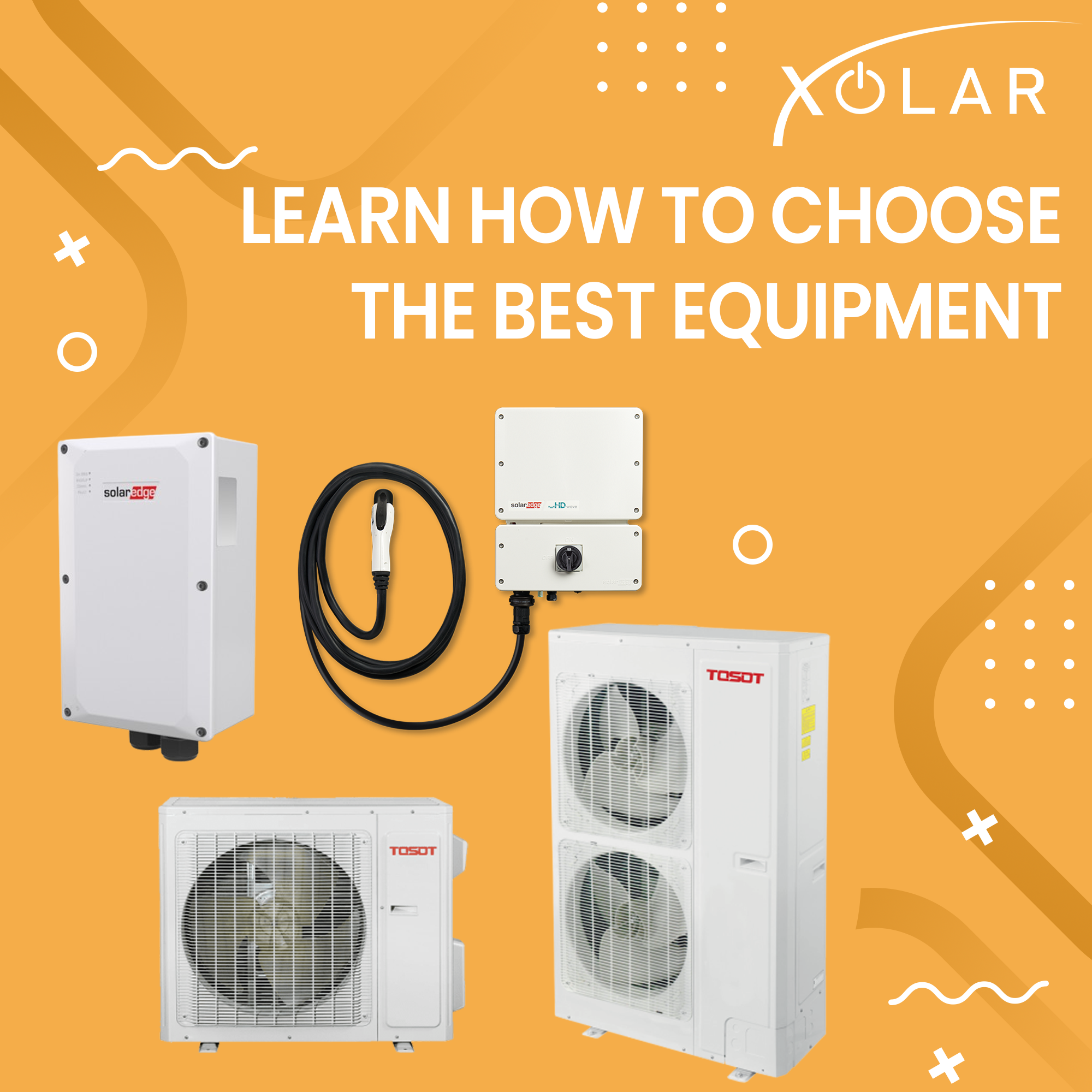
String inverters with DC optimizers are the best option for a home solar setup. Adding DC optimizers to each panel achieves efficiency levels similar to microinverters. This setup allows you to over-size your system, meaning you can generate more energy per dollar spent. Plus, because string inverters are located near your electric panel instead of on the roof, maintenance is easier and troubleshooting is more straightforward.
Energy Storage: Battery or Net Metering?
Energy storage choices depend on your main goal for going solar:
Grid-Tied System with Net Metering: If saving money is your top priority, a grid-tied system with Net Metering might be your best option. Net Metering allows you to sell excess electricity back to the grid in exchange for credits, which you can use to offset your energy costs when your panels aren’t producing, like at night. This is how one way you can cover 100% of your power bills with solar.
Battery Backup: If energy security is your priority and you want to have electricity during outages, consider adding battery storage to your system. A battery allows you to store solar energy and use it during a power outage, providing peace of mind if reliability is a concern.
Durability and Warranties
Choosing top-quality equipment with solid warranties brings peace of mind and keeps your investment secure for the long haul.
Solar panels often come with 25-year warranties, meaning they’re built to keep producing reliably for decades. This long-term coverage means you’ll have a dependable source of power without constantly worrying about panel performance.
Inverters and batteries, generally have warranties lasting 10-15 years. Having a good warranty helps you manage future maintenance and budget for any potential replacements.
Strong warranties aren’t just a nice perk—they protect you from unexpected repair costs and show that the manufacturer stands behind their product. It’s a sign that they’re confident in their equipment’s ability to last and perform.
Compatibility of Components
Solar equipment isn’t always plug-and-play, so picking compatible components is a must. For example, some inverters are built to perform best with specific solar panels or battery setups. And don’t forget about your electric panel—it may need an upgrade to handle the extra power from a solar system. A top-notch installer will make sure everything works together smoothly, giving you the best performance and reliability possible.
Local Climate Considerations
Your local climate plays a big role in selecting the right solar equipment. Choose components that will perform well under your specific environmental conditions:
Cold or Snowy Areas: For regions prone to heavy snowfall, consider adding snow guards to prevent large snow slides from your solar panels, which can protect both your system and your roof.
Hot Climates: High temperatures can impact efficiency, so select panels and inverters that have a good track record for heat tolerance.
A knowledgeable installer will be able to guide you toward equipment that matches your local climate’s demands, ensuring your system operates effectively year-round.
Cost vs. Value
Budget matters, but think about the long-term value and savings your solar equipment can bring. Investing a bit more upfront in high-quality, efficient components can pay off big over time—these parts tend to perform better and last longer. With a well-chosen solar system that could last up to 40 years, starting with quality means you’ll enjoy reliable performance and savings for decades.
Final Thoughts
Choosing the right equipment for your solar system is a big deal, but with a little research and the right guidance, you can build a setup that matches your energy goals, fits your budget, and delivers for decades. A home solar system can last 30 to 40 years, so make sure you’re getting gear that’s built to go the distance. Work with a trusted installer who’ll help you pick components suited to your home, lifestyle, and local climate.
Interested in going solar?
The first step is to acquire a solar proposal. By understanding your energy consumption, sunlight exposure, and roof orientation and space, we can design a solar solution that meets your needs both now and in the future. A well-sized solar system can help you achieve your energy goals and reduce your carbon footprint.
Our Solar Specialists and Project Managers can cleanly walk you through the steps of what is required and make sure you maximize the value of any provincial or federal programs in your area. We’ll also get you started on the vital first step of acquiring a tailor-made solar proposal for your residential project’s energy needs.
Eliminate your power bill, Up to $10,000 with BC Solar Rebate
Eliminate your power bill with the BC Hydro Solar Rebate for up to $10,000
BC Hydro Rebate
As of July 23, 2024, British Columbia homeowners can save up to $10,000 on eligible solar panels and battery storage systems. The BC Hydro Rebate Program offers rebate money for grid tied solar panel setups and solar panel setups that also have the optional battery storage systems. Whether you choose to install just solar panels, just a battery, or both, you can unlock significant savings on your monthly electricity costs by eliminating your power bill with solar.
Outlining the requirements for the BC Hydro Rebate
The rebate is only available for BC Hydro customers, but the rebate still covers almost everyone in the province since BC Hydro services 95% of British Columbia.
A grid connected home solar system allows you to sell your excess energy back to the power company for credits on your power bill via the Net Metering program. This is how you can cover 100% of your power bills by your excess energy production generating credits to cover your power costs at times when you aren’t producing electricity from solar – like at night. Let’s look at the requirements for a grid tied home solar panel system.
Grid Tied Home Solar Rebate Details
Rebate Amount: Up to $5,000
Details: $1,000 per kilowatt (kW) of installed generator capacity
Cap: Rebate is limited to 50% of the total installation cost (including both labor and materials)
Maximum rebate: $5,000
This means that a 5KW system will net you the full available rebate amount. Most people need a larger system than this to cover 100% of their power bill, so this rebate makes it easy to access a system that can eliminate your electricity bill.
Home Solar + Solar Batteries Rebate Details
Battery storage systems allow you to store excess energy generated by your solar panels for use at night, on cloudy days, or during power outages. If your home solar system is only grid tied, then a power outage will mean that you won’t have electricity at night when your panels can’t produce energy from sunlight. Storing your excess electricity locally in solar batteries allows you to still have power during a grid outage. This technology adds resilience to your home energy system, ensuring you always have power when you need it. Eligible battery energy storage systems qualify for:
Rebate Amount: Up to $5,000
Details: $500 per kilowatt-hour (kWh) of installed storage capacity
Cap: Rebate is limited to 50% of the total installation cost (including both labor and materials)
Maximum rebate: $5,000
Minimum storage size: 5 kWh
By combining both solar panels and battery storage, you can maximize your savings and create a more efficient home energy system.
Should you Invest in Solar Batteries?
For most people, a grid tied home solar setup is more suitable than also investing in solar batteries. Solar panels with modern solar technology can last as long as 30 to 40 years, and a home solar system will typically return its value to you by eliminating your power bills within a 7-12 year timeframe depending on how much you pay for power. Electricity prices tend to increase over time with inflation, so the more you pay for power the more rate increases will impact your bills as years go by.
If your primary concern is long term energy savings, then it may be better to go with a strictly grid tied system at a lower cost. This is because your system will pay itself off sooner. After that you’ll have decades of essentially free electricity.
If you are concerned about power outages in your area and your goal is 100% uptime on your access to electricity, then it will be better to go with a system that has batteries installed as well. This does mean your system will take longer to return its value to you by eliminating your power bill, but you will still have decades of free energy where solar is covering your electricity costs.
Rebate Eligibility
These eligibility requirements were pulled directly from the BC Hydro Rebate website which can be found at this link.
Eligible customers and properties
You must have a BC Hydro residential account.
The property must be a grid-connected residential home.
You must own or lease the home
Eligible Installations
Solar generation must connect to our distribution system through the self-generation program (Net Metering)
Systems must have a combined aggregate nameplate capacity of no more than 100 kW.
Installations and connections must be completed after June 27, 2024.
As of June 2024, a new rate structure for self-generation has been proposed to the B.C. Utilities Commission (BCUC). By applying for and accepting these rebates, you’re accepting this potential future rate.
Eligible Solar Panels
Must be new, not previously installed in another home or property.
Must be purchased in Canada; products can be manufactured outside of Canada.
Cannot replace an existing solar photovoltaic system. However, additional solar panels added to an existing system will qualify.
Has a Canadian Standards Association certification, has a nameplate rating of no more than 100 kW, and is compliant with CSA C22.2 No. 107.1:16 (R2021), CSA C22.3 No. 9:20 and CSA C22.2 No. 61730. See terms and conditions [PDF, 108 KB] for more details.
Eligible Battery Storage Systems
Must be new, not previously installed in another home or property.
Must be purchased in Canada; products can be manufactured outside of Canada.
Can not replace an existing battery energy storage system.
Is compliant with CSA C22.2 No. 107.1:16 (R2021), CSA C22.3 No. 9:20.
Battery energy storage systems must be certified to CUL 1973 and CUL 9540, and if installed in the habitable or living space of a dwelling must be tested to pass CUL9540A requirements. Lithium-ion batteries must be certified to CUL 1642. See terms and conditions [PDF, 108 KB] for details.
How to Apply for the Rebates
Getting started is simple, the first thing to do is make sure the above eligibility requirements apply to you. Most of the eligibility requirements are standard procedure for any solar install, so if you are a BC Hydro customer and you own your home then this is worth looking into.
The next step is to pick a qualified contractor and then complete the rebate application. After reaching out to a contractor you should receive the vital first step of a solar proposal, which will show you your system design, the system costs, and how much you stand to save from going solar.
Then you would apply for BC Hydro Net Metering here and login to your BC Hydro website to complete the online rebate application.
Get the most out of the BC Hydro Rebate Program
If the rebate application process sounds overwhelming, don’t worry – there is an easy path forward. Our Solar Specialists and Project Managers can cleanly walk you through the steps of what is required for the BC Hydro Solar Rebate and make sure you maximize the value of any other government programs in your area. We’ll also get you started on the vital first step of acquiring a tailor-made solar proposal for your personal energy needs at home.