Tag: EnergyEfficiency

  • The Canada Greener Homes Loan

    The Canada Greener Homes Loan

    The Canada Greener Homes Loan

    In May 2021 the Government of Canada launched the Canada Greener Homes Initiative to help Canadians make energy-efficient home upgrades to combat climate change and create good jobs – all while helping homeowners save on their monthly energy bills. Canada has made a commitment to reach net-zero emissions by 2050 when the Canadian Net-Zero Emissions Accountability Act was signed in June 2021 and the Canada Greener Homes Loan lies at the core at the initiative to achieve this goal.

    Understanding the Canada Greener Homes Loan

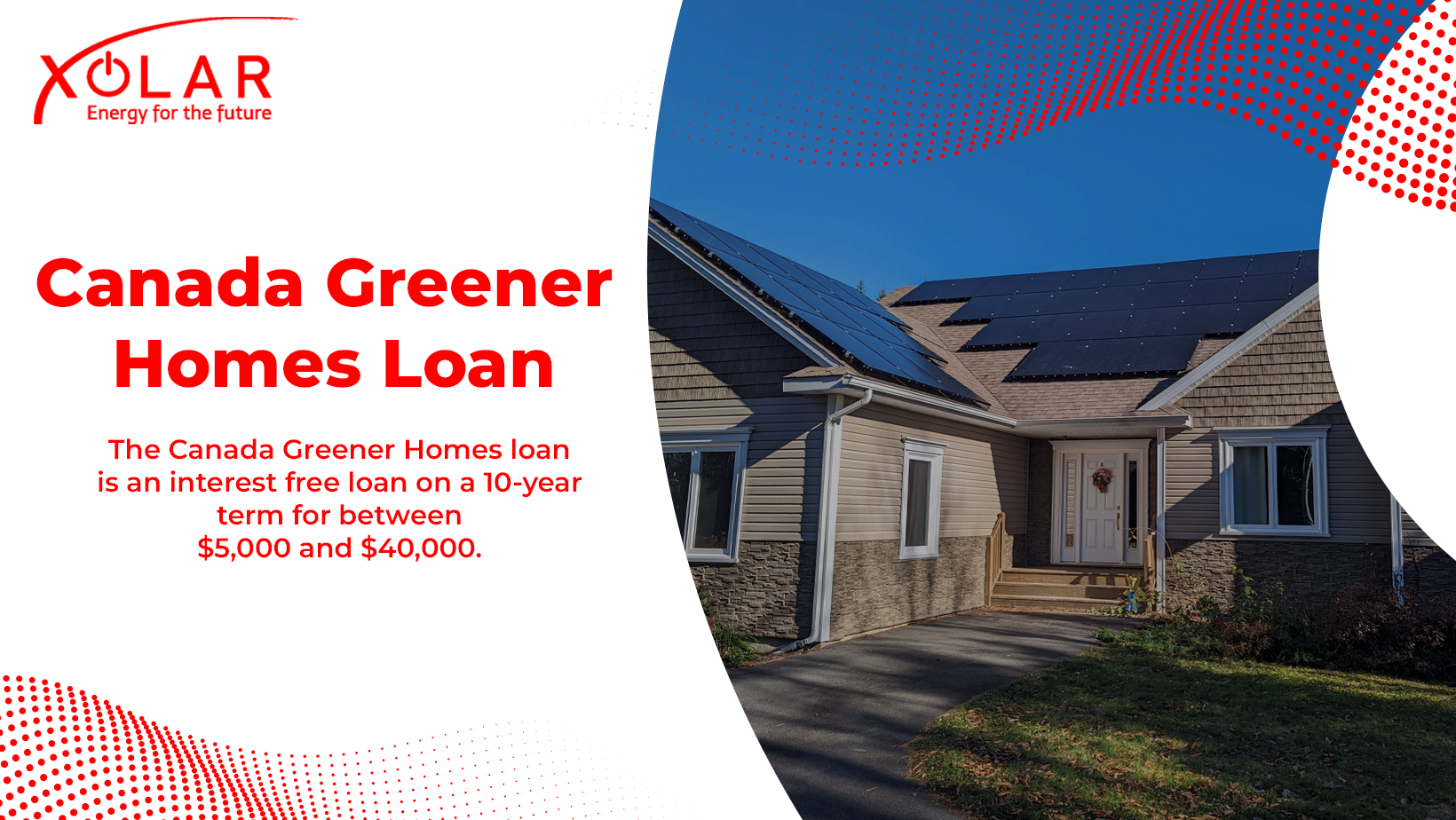
    The Canada Greener Homes loan is an interest free loan on a 10-year term for between $5,000 and $40,000. The loan can be taken out for home solar projects or other clean energy retrofits like an air source heat pump. The maximum eligible loan amount is based on the retrofits selected in the application and the quotes you have received to complete their installation.

    The most attractive feature of the Canada Greener Homes Loan is that it is completely interest-free. A 15% portion of the loan can be disbursed to you up front, to cover your project’s down payment. This makes the Canada Greener Homes Loan the most affordable financing option for homeowners looking to go solar.

    The Canada Greener Homes Loan Criteria

    A maximum of one loan is available per eligible property and homeowner. For all loan
    applicants the following eligibility requirements must be met before applying for the loan:

    • You must be a Canadian citizen, permanent resident, or non-permanent resident
      who is legally authorized to work in Canada.
    • You must own the home, and your home must be your primary residence
    • You have completed a pre-retrofit evaluation of your home dated April 1, 2024, or later

    You have a good credit history and aren’t under:

    • a consumer proposal
    • an orderly payment of debt program
    • a bankruptcy or equivalent insolvency proceeding

    In addition to the above requirements that pertain to all loan applicants, there are
    additional requirements for Low-rise multi-unit residential buildings and Indigenous group
    applicants.

    Low-rise multi-unit residential buildings

    Indigenous group applicants

    • You are eligible to register multiple homes
    • You must own the home(s) or have a formal partnership to represent the owners, but the homes do not need to be the owner’s primary residence
    • Your home must be occupied by an Indigenous household
    • You must select at least one eligible retrofit for each property subject to the loan

    How the Canada Greener Homes Loan Works

    Applying for and using the Canada Greener Homes Loan involves several steps:

    1. Energy Assessment: Before you can apply for the loan, your home must undergo
      an energy assessment conducted by a certified energy advisor before undergoing
      any retrofits. This assessment evaluates your home’s current energy performance
      and identifies areas where improvements can be made.
    2. Plan Your Retrofits and Obtain Quotes: The next step is to receive a solar
      assessment by a contractor. Do not start any work until your loan application has
      been submitted. Retrofits started before submitting your loan application are not
      eligible.
    3. Application Process: After the energy assessment, you can apply for the Canada
      Greener Homes Loan. The application process involves submitting your energy
      assessment report, outlining the proposed upgrades, your photo ID, property tax
      bill/assessment, and proof of income.
    4. Completing the Solar Install: You can advance up to 15% of the loan value to pay
      any up-front costs of the solar installation. With the loan funds in hand, you can
      proceed with the solar installation or any other retrofits outlined in your energy
      assessment.
    5. Final Inspection and Repayment: After the upgrades are completed, a post retrofit
      evaluation will be done to provide you a new report showing the impact of your
      retrofits. Once this is confirmed, you will receive the rest of your loan and you’ll
      begin repaying the loan according to the agreed-upon terms.

    Why go Solar with the Canada Greener Homes Loan?

    Costs of electricity have increased steadily year over year. By going solar you are essentially paying up front at today’s costs for a system that will give you free energy for the next 30 to 40 years. Most homeowners have space on their roof to get a solar system that will eliminate 90-100% of their power bill.

    The Canada Greener Homes Loan is a perfect opportunity to invest in solar energy with no financial strain, since the home solar system will be covering the costs of your power bills once installed. You won’t see much of a change in your monthly budget since the financing is canceled out by your power bill being eliminated.

    You will experience savings even before your system is paid off, since power companies will still be raising rates yearly. Once you’re home solar system is paid off you will experience free electricity for decades.

    Make Going Solar Easy with XOLAR

    If the loan application process sounds overwhelming, don’t worry – there is an easy path forward. Our Solar Specialists and Project Managers can cleanly walk you through the steps of what is required for the Canada Greener Homes Loan and make sure you maximize the value of any other government programs in your area. We’ll also get you started on the vital first step of acquiring a tailor-made solar proposal for your personal energy needs at home.

    On Key

    Related Posts

  • Roof or Ground Mounting Which Is Better for Home Solar?

    Roof or Ground Mounting Which Is Better for Home Solar?

    Roof or Ground Mounting Which Is Better for Home Solar?

    Is Roof or Ground Mounting Better for Home Solar?

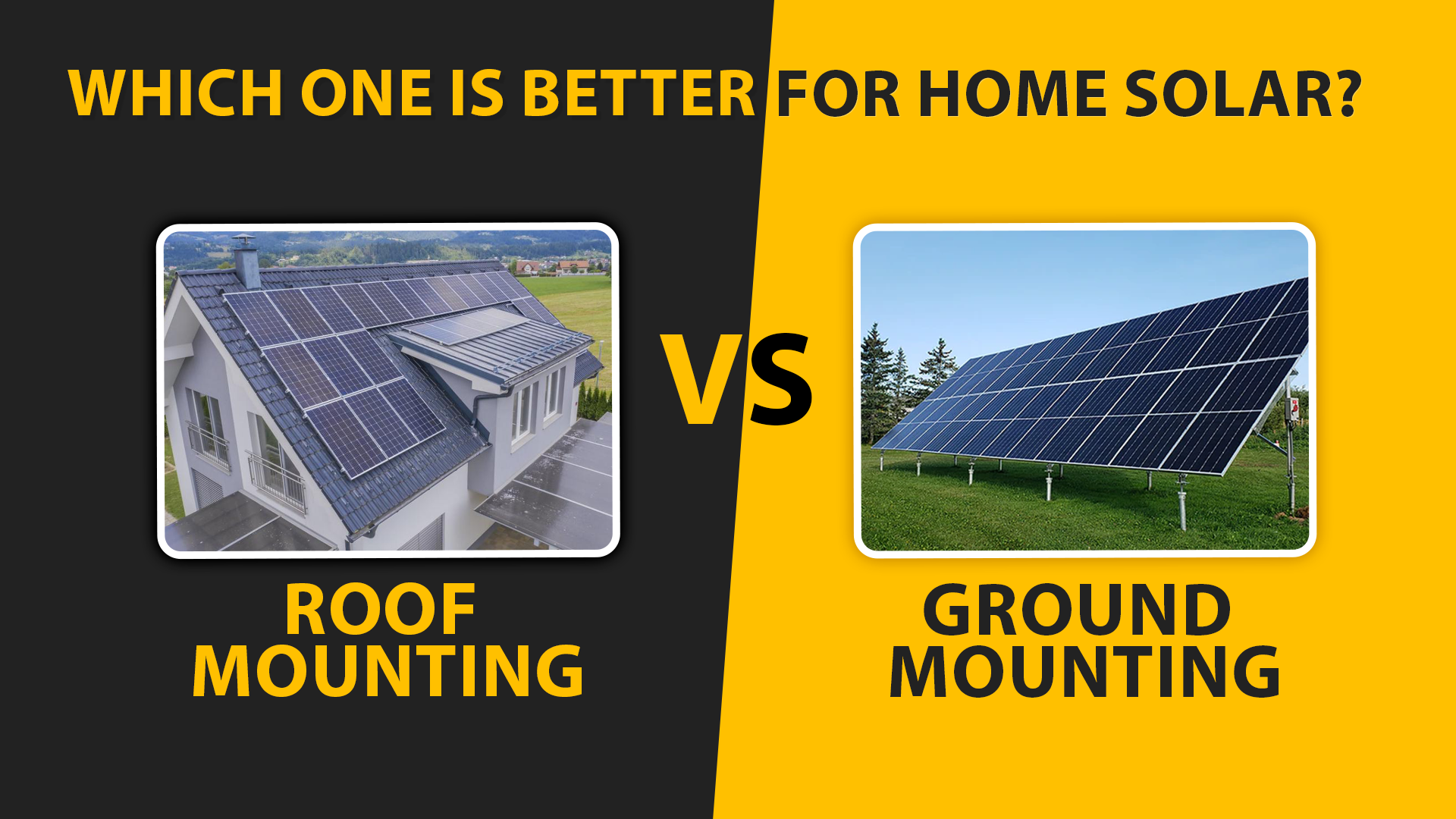
    Aside from the panels and inverter you choose for your solar project, the next most important factor is where and how you are mounting your system. Your two options would be either to mount the panels on your roof, or to ground mount the panels. Both methods have their merits, but roof mounting is often the superior choice for residential solar installations. Let’s compare the two methods and their benefits.

    What is a Roof Mount?

    A roof mount is a method of installing solar panels directly onto the roof of your home. This is the most common installation method for residential solar systems. The panels are attached to the roof using a racking system, which secures them in place on the most sunlight exposed portions of your roof and uses your homes natural roof slope to get the best angle on solar rays.

    How Roof Mounts Work:

    1. Racking System: The solar panels are secured to your roof using a specialized
      racking system. This system is designed to withstand various weather conditions,
      ensuring that your panels stay in place and function efficiently.
    2. Panel Orientation and Tilt: The racking system uses the natural pitch of your roof to
      get the best angle on sunlight. Canada is in the northern hemisphere, so our most
      direct sunlight comes from the south. This means solar panels would be placed on
      a south facing roof, or if your home has an east/west orientation then some will be
      placed on both sides to capture sunlight from both morning and evening.
    3. Minimal Roof Impact: Modern roof mounting systems are designed to have
      minimal impact on your roof. They are installed with care to prevent leaks or
      damage.

    Advantages of Roof Mounts:

    1. Space Efficiency: Roof mounts stylishly utilize the existing space on your roof, making them ideal for homes with limited yard space. This leaves your yard neat and free for other uses.
    2. Cost-Effectiveness: Roof mounts are much more cost-effective than ground mounts. Since they don’t require additional land preparation, trenching, or complex racking systems the installation costs are lower.
    3. Aesthetics: Roof-mounted solar panels are often more visually appealing, as they blend seamlessly with the roofline. Ground-mounted systems, on the other hand, can be more conspicuous and may not be as visually integrated with your property. Solar increases your home value. If you end up selling your property you also want to make sure your solar install is aesthetically pleasing by putting it on your roof.
    4. Optimized Sunlight Exposure: Roof mounts take advantage of your home’s height to capture more sunlight, especially if there are trees, buildings, or other obstructions in your yard. This will lead to better overall energy production compared to ground-mounted systems that may be subject to shading at some points of the day.

    Comparing Roof Mounts to Ground Mounts

    While roof mounts are popular, ground mounts may be needed for certain solar projects. Ground mounts involve installing solar panels on a racking system that is anchored to the ground in your yard or another open space on your property.

    Situations Where Ground Mounts Might Be Preferred:

    1. Limited Roof Space: If your roof is too small to accommodate the number of panels you need, a ground mount might be a better option. This is more common in homes with irregular roof shapes that have many obstructions like chimneys or skylights.
    2. Commercial Projects: We’ve all seen pictures of big fields of solar panels. Ground mounting is best used in larger scale commercial projects where there is a huge amount of space to cover with panels.
    3. Flexibility: Ground mounts offer more flexibility in terms of orientation and tilt, which can be adjusted easily if necessary.

    Why Roof Mounts Are Superior for Most Home Solar Installations

    For most homeowners, roof mounts are going to be the better choice for your home solar installation. Ground-mounted panels are more suited to very large commercial projects that require a large amount of space. Most homes only need about 15-20 solar panels to cover 100% of their power bills, making ground mounting a less-needed option for residential systems. Roof mounting is cheaper, blends better with the overall look of your home, and uses your home’s natural elevation and slope to get the best angle of sunlight.

    Our Solar Specialists and Project Managers can cleanly walk you through the steps of what you need for your solar project as well as making sure you maximize the value of any government rebates in your area. We’ll also get you started on the vital first step of acquiring a tailor-made solar proposal for your personal energy needs at home.

    On Key

    Related Posts

  • What does it mean to have a Net-Zero home?

    What does it mean to have a Net-Zero home?

    What does it mean to have a Net-Zero home?

    Understanding Net-Zero

    Net-zero in the scope of our combined human carbon footprint refers to the balance between the amount of greenhouse gas emissions produced and the amount removed from the atmosphere. The Canadian Net-Zero Emissions Accountability Act, which became law in June 2021, set a goal for Canada’s carbon footprint to be Net-Zero by 2050. Achieving Net-Zero is done one home at a time.

    For a building or home, achieving net-zero means that the energy you consume is equal to the energy you produce from renewable sources, resulting in zero net emissions over a year.

    Ultimately for a bill paying homeowner, net-zero means is that your power bill is 100% covered – through a combination of solar and efficient energy use. The most important factor towards reaching Net-Zero is installing solar on your home so you generate your own energy.

    How Net-Zero Works:

    1. Energy Production: To achieve net-zero, your home must generate renewable
      energy, often through solar panels. This energy powers your home’s electricity
      needs, reducing reliance on the grid and fossil fuels. You’ll also get energy credits
      through Net Metering ensuring that energy you produced with solar is powering your
      home at night and on dim winter days.
    2.  Energy Consumption: Alongside generating renewable energy, you need to
      minimize your energy consumption. Use energy-efficient appliances, improved
      insulation, and efficient heating like air source heat pumps.
    3. Balancing the Equation: The goal is to balance the energy you produce with the
      energy you consume. If your solar panels produce as much (or more) electricity as
      your home uses over the course of a year, you’ve achieved net-zero and completely
      offset your power bill.

    Two Main Steps to Achieve Net-Zero

    Achieving net-zero requires a combination of renewable energy production and energy
    efficiency. Here’s how you can work towards a net-zero home:

    1. Install Solar Panels

    Solar panels are the cornerstone of any net-zero home. They allow you to generate clean, renewable energy directly from the sun. The amount of energy your solar panels produce should be sufficient to meet or exceed your home’s annual energy needs.

    To determine the right size for your solar panel system, we will assess your home’s yearly energy consumption, available roof space, roof orientation, sunlight exposure, and any future energy needs.

    2. Improve Energy Efficiency

    Reducing your energy consumption is as important as generating renewable energy. Energy efficiency measures can drastically cut the amount of energy your home requires, making it easier to achieve net-zero.

    Switch to energy-efficient appliances that use less electricity without compromising performance. Look for ENERGY STAR-rated products that meet strict efficiency guidelines.

    Effective insulation and sealing work to prevent heat from escaping during the winter and help keep your home cool in the summer, lowering your reliance on heating and cooling systems.

    Installing smart thermostats, air source heat pumps, and energy-efficient lighting, like LED bulbs, can further reduce your energy usage by optimizing heating, cooling, and lighting based on your actual needs.

    Why Net-Zero Matters

    Reaching Net-Zero with home solar isn’t a purely altruistic undertaking. It’s a win-win situation where you are taking a proactive approach to preserving natural resources and improving the health of the planet while also eliminating your power bill.

    Beyond the environmental advantages of adopting solar energy, there are also significant financial benefits. As mentioned earlier, for a homeowner, reaching Net-Zero means that your energy bills are 100% covered, allowing you to enjoy life without that added expense.

    Net-zero homes are less reliant on external energy sources, providing greater independence from utility companies and fluctuating energy prices. You can also go as far as installing solar batteries which will completely make your home self-sufficient without any reliance on the power company.

    By producing as much energy as you consume, you effectively neutralize your home’s carbon emissions. This is a significant step towards reducing your overall carbon footprint and combating climate change.

    Reach Net-Zero with XOLAR

    There is no path to Net-Zero without renewable energy, and solar remains by far the best option to generate your own energy. By producing your own energy at home, you can cut your power bills by up to 100% and play a role in reducing carbon emissions for a more sustainable future.

    Our Solar Specialists and Project Managers can cleanly walk you through the steps of going solar and reaching Net-Zero as well as make sure you maximize any government programs in your area. We’ll also get you started on the vital first step of acquiring a tailor-made solar proposal for your personal energy needs at home.

    On Key

    Related Posts

  • String vs Micro Inverters: Which is better for your home?

    String vs Micro Inverters: Which is better for your home?

    String vs Micro Inverters: Which is better for your home?

    What is a solar inverter?

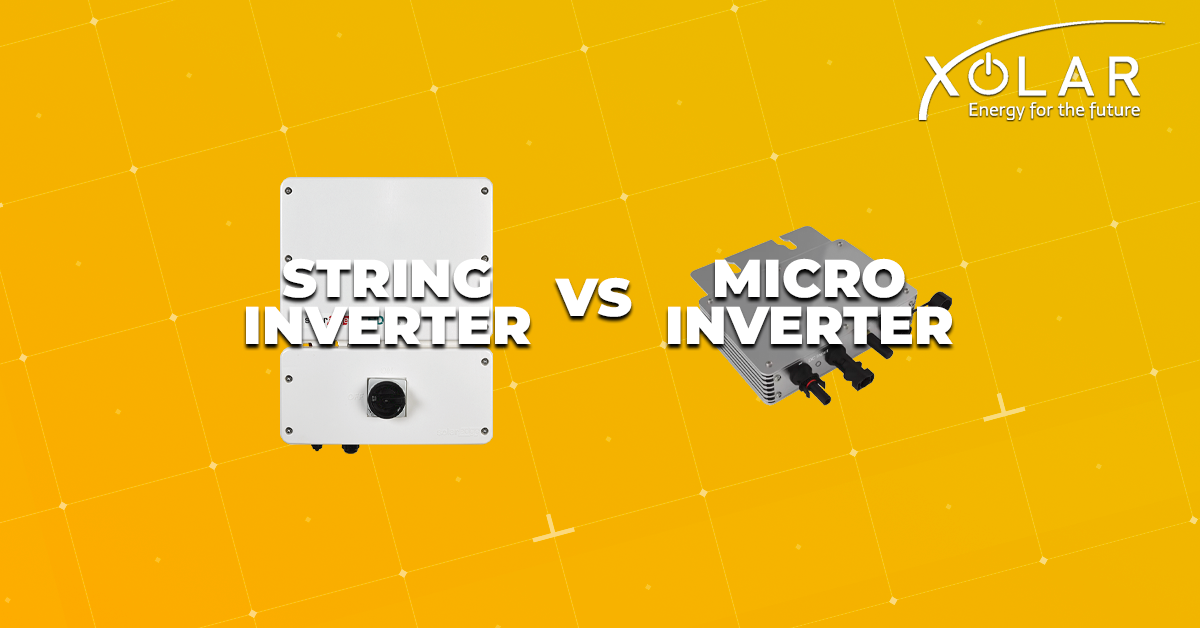
    When it comes to installing solar for your home, it’s important to select a provider that uses high quality panels, but the next most important component in your system is your solar inverter. There are two types of solar inverters: the string inverter and the micro- inverter. But what exactly is a string inverter, and how does it compare to micro inverters? We’ll break down both types of inverters below and go over why a string inverter is the best option for residential solar systems.

    Solar panels generate direct current (DC) electricity from sunlight. However, most homes and appliances use alternating current (AC) electricity. The inverter’s job is to convert the DC electricity produced by the solar panels into usable AC electricity for your home.

    What is a String Inverter?

    A string inverter is a central inverter that connects a series (or “string”) of solar panels together. All the DC electricity generated by the connected panels is sent to a single inverter, where it is converted into AC electricity.

    How String Inverters Work:

    1. Panel Connection: Solar panels are connected in series, forming a “string.”
      Multiple strings can be connected to a single string inverter. Essentially your entire
      solar installation would be connected to the one string inverter.
    2. Centralized Conversion: The DC electricity from the entire string is fed into the
      string inverter, which converts it to AC electricity. AC electricity is the type of
      electricity that is usable by your home and the grid.
    3. Power Distribution: The converted AC electricity is then distributed to your home
      for use, with any excess potentially being sent back to the grid through net metering.

    What is a Micro Inverter?

    A micro inverter is a small inverter installed directly on each individual solar panel. Instead of a single inverter handling the conversion for multiple panels, each panel has its own dedicated micro inverter that converts the DC electricity to AC right at the source.

    How Micro Inverters Work:

    1. Panel-Level Conversion: Each solar panel has its own micro inverter attached to it.
      The DC electricity generated by each panel is converted to AC immediately by its
      respective micro inverter.
    2. Independent Operation: Since each panel operates independently, shading, dirt,
      or damage to one panel doesn’t significantly affect the output of the others.
    3. Power Distribution: The AC electricity from each panel is then combined and sent
      to your home for use, just like with a string inverter system.

    Comparing String Inverters and Micro Inverters

    While both string inverters and micro inverters serve the same basic function—converting DC to AC electricity—they do so in different ways, with distinct advantages and disadvantages.

    Advantages of String Inverters:

    1. Cost-Effective: String inverters are generally more affordable than micro inverters,
      both in terms of initial cost and long-term maintenance. This makes them a more
      cost-effective solution for most home solar installations.
    2. Proven Reliability: String inverters have been used for decades in solar
      installations and have a proven track record of reliability. They are robust and
      durable, making them a dependable choice for homeowners. For example, in a 20
      panel home solar system, micro-inverters have a 2% failure rate each year where
      one might need to be replaced. String inverters are much more suitable for home
      solar systems because they are more durable and reliable than micro-inverters.
    3. Simpler Installation and Maintenance: Since only one string inverter is needed for
      an entire solar system, installation is simpler and often quicker than with micro
      inverters, which require individual installation on each panel. Also, because string
      inverters are much more durable than micro-inverters, your solar system with a
      string inverter has next to no maintenance.
    4. Efficient in Unshaded Areas: If your roof is free from shading and your panels are
      installed at the same angle and orientation, a string inverter system will operate
      efficiently, maximizing the energy production from your solar panels.

    Advantages of Micro Inverters:

    1. Panel-Level Optimization: Micro inverters optimize the performance of each individual panel. This means that the panels may operate more efficiently, but this level of optimization is only needed on large scale commercial systems. With a smaller home solar system, the added benefit of micro-inverters doesn’t outweigh the added maintenance of replacing each individual inverter when it fails. Micro- inverters are more suitable for commercial systems that may have hundreds of panels.
    2. Scalability: If you plan to expand your solar system in the future, adding more panels is easier with micro inverters since each new panel simply gets its own inverter.
    3. Increased Monitoring Capabilities: Micro inverters often come with panel-level monitoring, allowing you to see the performance of each individual panel. This can help identify issues more quickly. This is important for micro-inverter based systems since an individual inverter may fail and need replacing in this setup.

    Why String Inverters Are Often Better for Home Solar Installations

    String inverters are the better choice for home solar installations. The lower cost of string inverters makes them a more budget-friendly option, allowing homeowners to invest in higher-quality panels or other system enhancements. With fewer components to install and maintain, string inverters simplify the installation process and reduce the likelihood of failure. This results in a system that is easier to manage and more reliable over the long term. A homeowner wouldn’t want a system that requires they monitor the panel efficiency often and have to schedule replacements for parts.

    If your roof is unshaded and your panels are installed uniformly, a string inverter system will also deliver excellent performance without the added cost of micro inverters. With only one inverter to monitor, maintenance is straightforward and constant monitoring isn’t required.. In the event of a rare string inverter failure, repairs are simpler and less expensive than dealing with multiple micro inverters.

    Get the right system for your home with XOLAR

    If you’re looking to do a commercial project, then micro inverters might be an option you choose. Even in the event of a commercial install, you may choose to go with multiple string inverters to simply your maintenance.

    A homeowner looking to install solar for their personal energy needs would want to choose a string inverter. Not only does it cost you less, but its more reliable and durable than micro-inverters. The goal of solar is to fully cover your electricity bills without you having to add another worry to your life about something that needs to be managed. This is why string inverters are the best choice for your personal home solar system.

    If you’re looking to go solar, our Solar Specialists and Project Managers can cleanly walk you through what type of system is needed to cover your energy needs and make sure you maximize the value of any government programs in your area. We’ll also get you started on the vital first step of acquiring a tailor-made solar proposal for your personal energy needs at home.

    Schedule a consultation for our solar specialist’s expert guidance here.

    On Key

    Related Posts

  • 6 Ways Solar Energy and Heat Pumps Can Supercharge Your Home

    6 Ways Solar Energy and Heat Pumps Can Supercharge Your Home

    6 Ways Solar Energy and Heat Pumps Can Supercharge Your Home

    SolarHomeInstallations

    The Solar Panel + Heat Pump Power Duo

    Discover the Power Duo: 6 Ways Solar Energy and Heat Pumps Can Supercharge Your Home’s Energy Efficiency!

    Combining solar energy with heat pumps is a great way to achieve net-zero energy
    performance and reduce overall energy costs. By integrating these technologies, you can not
    only achieve significant cost savings but also make a substantial environmental impact. Here
    are 6 ways solar and heat pumps can revamp how you use power in your home.

    Achieve Net Zero Energy Consumption

    The number 1 overall benefit of combining a heat pump with your solar panel installation is to
    achieve net zero energy consumption. Net zero energy consumption is when you are producing
    enough power from your solar installation to cover all of your energy needs.


    By using a heat pump to replace less efficient heating and cooling methods, your solar panel
    system can be expanded to accommodate the electricity consumption of the entire home –
    including all heating and cooling needs. This helps you save money by significantly reducing
    your reliance on expensive grid-based electricity and fossil fuels. Electric heat pumps alsooperate more efficiently than conventional heating systems and gas furnaces, which allows solar
    panels to offset a larger percentage of the combined energy consumption, effectively bringing
    homes closer to achieving net zero energy usage.

    Financial Savings

    Another compelling aspect of combining solar energy and a heat pump is the potential for
    significant financial savings. By generating electricity through solar panels and using it to power
    heat pumps for heating and cooling, you can eliminate heating/gas and electric bills. This not
    only reduces monthly expenses but also provides protection against fluctuating electricity prices,
    offering long-term financial stability

    Efficient Heating and Cooling

    Unlike traditional HVAC systems, heat pumps offer a versatile solution for maintaining indoor
    comfort throughout the year. Operating quieter than air conditioners, heat pumps serve as a
    single device for both heating and cooling, simplifying maintenance and enhancing overall
    comfort. Additionally, electric heat pumps consume less energy compared to gas furnaces,
    aligning with sustainability goals, reducing environmental footprint, and helping you save money
    you would have spent on energy.

    Local Energy Consumption

    The integration of solar energy with heat pumps allows you to optimize your solar panel
    systems. By employing electric energy through a heat pump for home heating and cooling
    purposes, solar panels can effectively power a larger portion of household energy demands.
    This strategy mitigates the need to export surplus energy to the grid, enabling you to consume a
    greater proportion of locally generated energy. Such a localized approach not only fosters
    energy independence but also decreases your dependence on centralized power grids, thereby
    improving your energy independence and sustainability

    Cold Climate Performance

    Modern heat pump technology has advanced to the point where even cold climate regions can
    benefit from efficient operation. Cold climate heat pumps can function effectively in extreme
    temperatures, operating down to -30 degrees Celsius. In instances of extreme cold, the
    temperature sensor automatically transitions from the heat pump to your furnace, ensuring
    uninterrupted comfort while minimizing gas usage for the majority of the year.

    Increased Property Value

    Beyond the immediate cost savings and environmental benefits, the integration of solar energy
    and heat pumps can increase the overall value of a property. More and more potential buyers
    are drawn to homes equipped with renewable energy systems and energy-efficient
    technologies. By eliminating both electric and gas/heating bills, homeownership becomes more
    affordable and attractive.

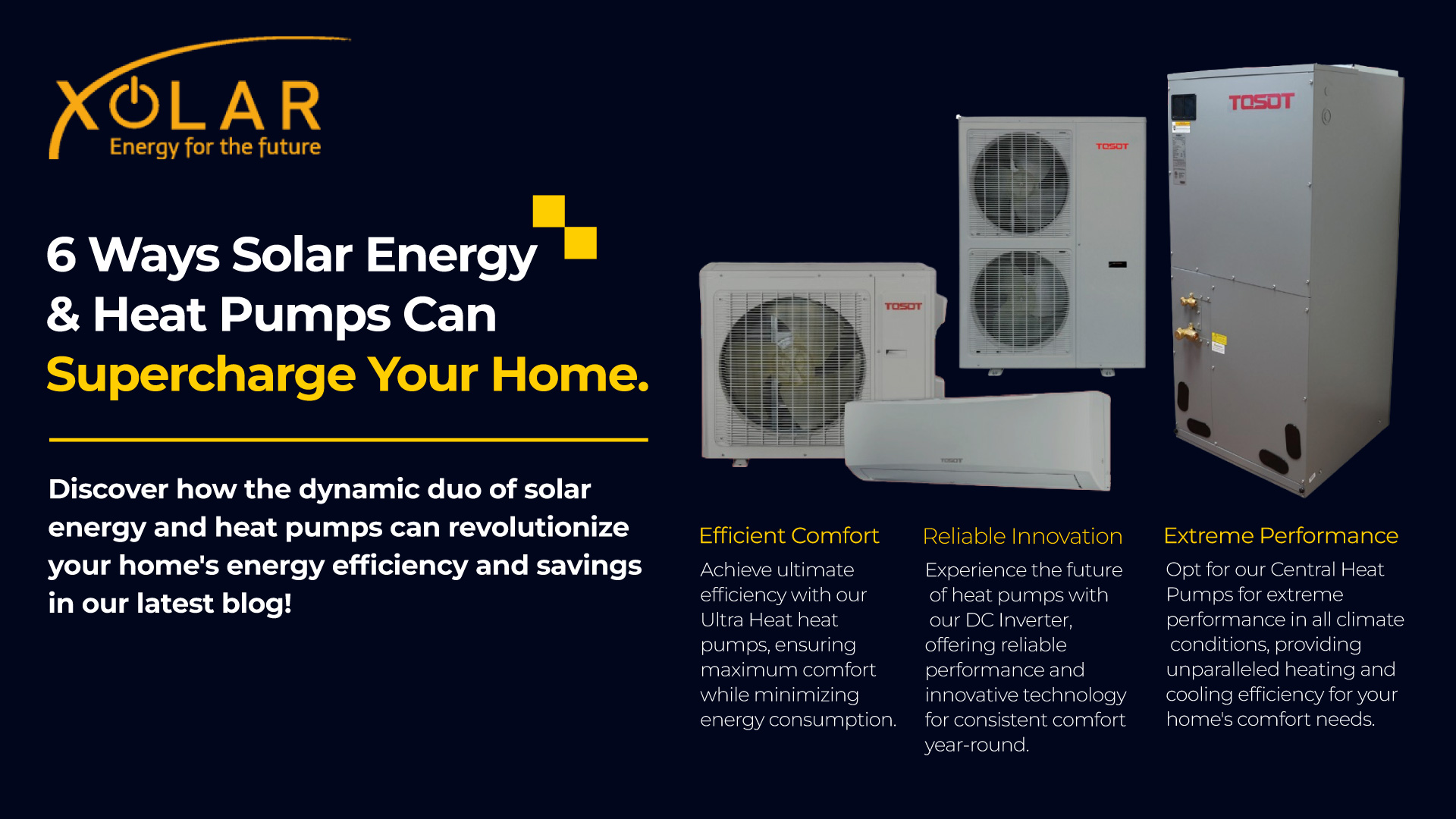
    The TOSOT Bathica Heat Pump

    Reliability, compatibility, and performance in varied conditions are key when we select the best
    heat pump for our clients. The TOSOT APEX Heat Pump series is tailored to excel in the North
    American climate, guaranteeing consistent operation in our harsh Canadian winters and hot
    summer seasons. Below are some of the product’s key features:

    Extreme Climate Performance:
    Heating Performance*: 100% Capacity at -5°F/-20°C and 78% Capacity at -22°F*/-30°C
    Cooling Performance*: 100% Capacity at 115°F/46°C and 78% Capacity at 130°F/54°C


    Universal Thermostat Options:
    Compatible with any third-party thermostat including NEST®


    Side Discharge: No Clogging/Less Space: The APEX takes half the area and, unlike conventional condensers, doesn’t fill up with leaves,
    snow and debris.

    Corrosion Resistant:Live on the coast? Don’t worry, our condenser is built to resist long-term corrosion.

    Energy Efficient – Up to 20 SEER:
    The APEX DC Inverter moderates operating load, increasing efficiency for lower operating costs
    for both cooling and heating.


    Reliable Comfort – Inverter Compressor:
    The APEX DC Inverter moderates operating load, heating & cooling with less fluctuation for
    more comfortable climate control, extending component life for fewer breakdowns.


    Universal System -Compatible with any 3rd Party Air Handler or Furnace:
    Replaces larger/louder outdoor unit and increases conventional heat pump performance ranges
    and efficiency for All-Climate Applications.


    Quiet Operation – Ideal for Sound Restrictions and Outdoor Peace of Mind
    For every 10 Decibels (dBa) a sound is twice as loud – making the APEX Series at 55 dB(a) less
    than half as loud as a conventional top discharge condenser at 73 dB(a).


    Slim Design – Ideal for Zero Dot Lines
    Side discharge design takes less than half the area of conventional condensers. Perfect for city
    lots and between building applications where access and space is limited.
    Maximize Your Solar Investment with Xolar

    Being able to self-generate your energy will place you in a unique position to capitalize on rate increases by increasing the value of your investment as time goes by. It’s not uncommon for homeowners to generate 90% or more of their annual electricity with solar. By modernizing your home with a heat pump to supplant less efficient and costlier methods of temperature control, you can reduce expenses on bills while optimizing the efficiency and value of your solar panel system. If you are thinking of going solar, our Solar Specialists and Project Managers can cleanly walk you through the steps of what is required in your province for your grid hookup. We’ll also get you started on the vital first step of acquiring a tailor-made solar proposal for your personal energy needs at home.

    Request a consultation with one of our solar energy expert

    On Key

    Related Posts